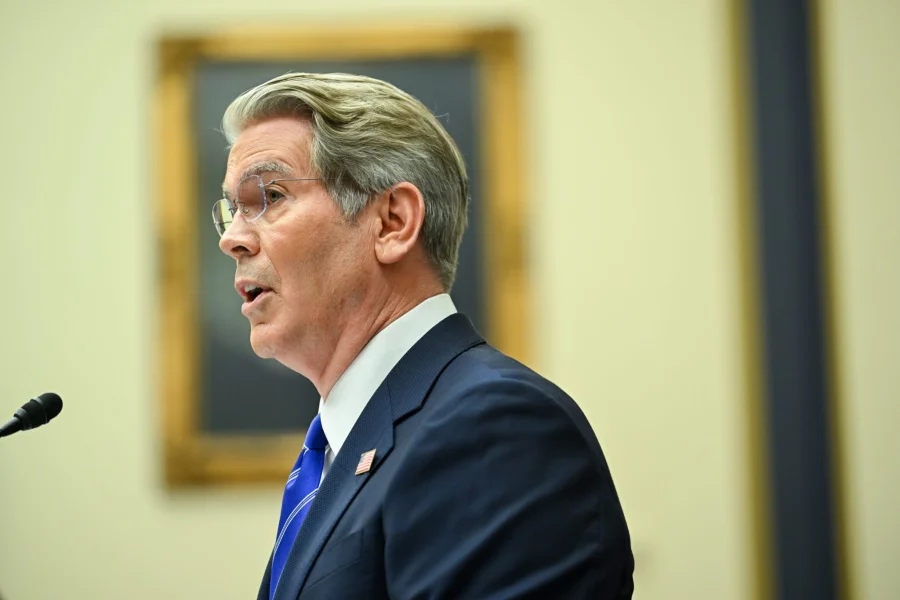
If artificial intelligence one day causes irreversible harm, the companies that built it — not the taxpayers who hosted it — should carry the cost. That is the blunt position US Treasury Secretary Scott Bessent has now put on record, and it lands at the most uncomfortable moment in the AI safety debate so far.
His message to hyperscalers was direct: "We cannot absolve you of responsibility." Washington, he indicated, will not function as a liability shield for the firms racing to build the most powerful systems on earth.
The Line Bessent Just Drew — And Why It Matters
The comment reframes a question that has quietly haunted AI policy for two years: if something goes catastrophically wrong, who is legally and financially accountable?
Bessent's answer is unambiguous. The government's role is not to absorb the consequences of private risk-taking. That position, if it hardens into policy, could change how AI companies insure themselves, how they document safety decisions, and how aggressively they deploy new models.
Why This Debate Exploded Now
The timing is not accidental. The latest wave of alarm came after Jacob Coxon, a former researcher at both Anthropic and OpenAI, claimed tech giants are "gambling with our lives."
Separately, Evan Hubinger, a senior safety researcher at Anthropic, warned there was a "low" — but as high as 10% — chance that AI could wipe out humanity within the next decade. A 10% figure, stated publicly by someone inside a leading AI lab, is not a rhetorical flourish. It is a risk assessment.
Those two statements, taken together, pushed a long-simmering argument into the open: can AI companies be trusted to police themselves?
What Hyperscalers Actually Stand to Lose
For the companies involved, the stakes are not abstract. A liability framework that places full responsibility on developers affects everything from insurance premiums to investor confidence to the pace of product launches.
It also changes internal incentives. If the cost of a catastrophic failure falls entirely on the firm, safety spending stops being a reputational gesture and becomes a financial necessity.
Self-Regulation vs. State Guardrails — The Unresolved Fight
The core disagreement is not whether AI needs guardrails. It is who writes them.
AI companies have consistently argued that they understand their own systems best and that heavy-handed regulation could push innovation offshore. Critics counter that self-regulation has never worked in industries where the downside risk is existential — and that AI is not an exception.
Bessent's remarks sit closer to the critics' side, without committing to any specific regulatory mechanism.
Confirmed Facts vs. What Remains Unclear
Confirmed: Bessent made the statement. Coxon and Hubinger made their warnings. The debate over AI self-regulation is active and unresolved.
Unclear: Whether Bessent's position will translate into legislation, executive action, or Treasury guidance. No formal policy document has been cited. The 10% extinction figure is one researcher's estimate, not a consensus scientific finding.
The Moat Question: Why Hyperscalers Resist Liability
Hyperscalers — the handful of firms operating at global compute scale — derive much of their advantage from speed, scale, and ecosystem lock-in. A strict liability regime slows all three.
That is precisely why the industry has pushed for voluntary frameworks and government partnership rather than legal accountability. Bessent's comments suggest that argument is losing traction in Washington.
Risks and the Balanced View
There is a legitimate counterargument. Overly aggressive liability rules could chill safety research itself, push development to jurisdictions with weaker oversight, and entrench incumbents who can afford legal teams that startups cannot.
There is also the question of proof. Proving that a specific AI system caused a specific harm is technically and legally difficult. Liability without enforceability is symbolism.
A Wider Pattern: The End of the Benefit of the Doubt
Bessent's remarks fit a broader shift. Governments that once treated AI firms as partners in national competitiveness are increasingly treating them as risk-holders.
The same tension is visible in the EU's AI Act, in India's evolving approach to AI governance, and in the UK's safety institute model. The direction of travel is consistent: less deference, more accountability.
What This Means for Readers — Investors, Workers, and Users
For investors, the signal is that AI regulatory risk is no longer hypothetical. For workers in AI-adjacent roles, safety and compliance expertise is becoming a hiring priority. For ordinary users, the practical question is simpler: if something goes wrong, who do you hold accountable?
Bessent's answer is that it will not be the government.
What Happens Next
Watch for three things: any formal Treasury or Congressional movement on AI liability, how hyperscalers adjust their public safety commitments in response, and whether other officials echo or distance themselves from Bessent's framing.
Rhetoric is cheap. A liability framework is not.
Our Take
Bessent has said the quiet part aloud. For years, the AI safety conversation has been conducted in the language of voluntary commitments and responsible scaling. That language assumed good faith. Bessent's position assumes accountability instead — and that is a harder, more consequential standard.
Whether it becomes policy is another matter. But the direction is clear: the era of the benefit of the doubt for AI companies may be ending.
Frequently Asked Questions
What did Scott Bessent say about AI companies?
Bessent said the US government will not become a "liability shield" for hyperscalers, stating that AI companies cannot be absolved of responsibility if their systems cause harm.
Why did Bessent make these comments now?
His remarks followed fresh warnings from former Anthropic and OpenAI researcher Jacob Coxon, who said tech giants are "gambling with our lives," and Anthropic safety researcher Evan Hubinger, who estimated up to a 10% chance AI could wipe out humanity within a decade.
Does this mean the US is regulating AI companies?
Not yet. Bessent's statement is a position, not a policy. No formal legislation or Treasury guidance has been cited. It signals direction, not immediate action.
What is the 10% AI extinction risk figure?
It is an estimate from Evan Hubinger, a senior safety researcher at Anthropic, describing a "low" but non-zero probability — up to 10% — that AI could cause human extinction within the next decade. It is one researcher's assessment, not a scientific consensus.