Wall Street breathed a collective sigh of relief Sunday night as US and Iran finally confirmed a real deal — one that markets actually believe this time. Dow futures shot up 430 points, oil prices crashed more than 5%, and gold surged as investors rushed to price in a world where the Strait of Hormuz flows freely again.
Why This Deal Feels Different From Previous False Starts
After weeks of "almost there" headlines that fizzled into disappointment, both sides confirmed Sunday that this agreement is final. Trump told the Wall Street Journal the Strait of Hormuz would reopen on Friday when the deal is formally signed. He added that more time was needed to remove mines from the narrow waterway — a logistical detail that suggests real implementation planning.
The Numbers That Tell the Story: Markets Vote With Money
The market reaction was swift and unambiguous. S&P 500 futures jumped 1.08%, Nasdaq futures surged 1.77%, and the Dow climbed 0.87%. But the real signal came from oil: US crude futures sank 5.1% to $80.54 a barrel, while Brent crude tumbled 4.3% to $83.58. That's a dramatic reversal from weeks of war-risk premiums that had pushed prices above $90.
Gold and Bonds: The Safety Trade Unwinds
Gold rose 2.6% to $4,349.30 per ounce — a counterintuitive move that suggests investors see the deal as reducing immediate war risk but not eliminating broader geopolitical uncertainty. The 10-year Treasury yield dropped 5.9 basis points to 4.426%, indicating a flight to safety even as equities rallied. The US dollar slipped slightly against the euro and yen.
Trump's Message: 'I Never Cared About Regime Change'
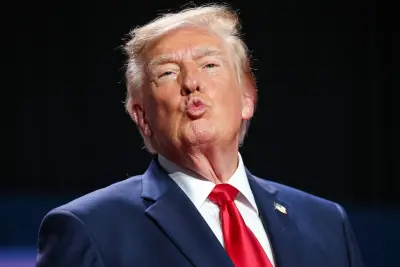
In a striking shift in tone, Trump told the Wall Street Journal that "as far as regime change, I never cared about regime change," adding that Iran's current leadership is "the ..." — a statement that signals a pragmatic, transactional approach rather than the maximalist position some hawks had pushed for. "Deal with the Islamic Republic of Iran is now complete. Congratulations to all!" Trump posted, authorizing the "toll free opening" of the Strait.
What the Strait of Hormuz Reopening Actually Means
The Strait of Hormuz is the world's most critical oil chokepoint, through which about 20% of global petroleum passes. Its closure had sent shockwaves through energy markets, threatening supply chains from Tokyo to Rotterdam. The reopening, if it holds, could bring immediate relief to consumers facing high fuel prices and to central banks battling inflation.
Confirmed Facts vs What Remains Unclear
Confirmed: Both US and Iran have agreed to a deal. The Strait of Hormuz will reopen Friday. Trump has authorized the opening. Markets have reacted positively. Oil prices have dropped sharply.
Unclear: The exact terms of the agreement beyond the Strait reopening. Whether Iran's nuclear program is addressed. How mines will be cleared safely. Whether both sides will adhere to the timeline. What happens if implementation faces delays.
Risks and Skepticism: Why Some Traders Are Cautious
Not everyone is celebrating. Some analysts point out that previous "final" deals fell apart at the last minute. The mine-clearing operation adds complexity and potential for accidents or blame games. Critics also question whether Trump's "I never cared about regime change" stance signals a broader strategic retreat that could embolden Iran in other areas. The deal's long-term durability remains unproven.
Wider Pattern: Markets Pricing Peace After Months of War Risk
This deal fits a broader pattern of markets aggressively pricing in de-escalation after months of geopolitical tension. From Ukraine grain corridors to US-China trade talks, investors have repeatedly shown they will reward any credible move toward stability. The question is whether this deal has the staying power that previous agreements lacked.
What Investors and Consumers Should Watch Now
For investors: watch Friday's signing ceremony and the actual flow of oil through the Strait. Any delay or dispute could reverse today's gains. For consumers: if oil stays below $80, expect some relief at the pump in the coming weeks. For businesses reliant on shipping through the Gulf: this is a positive signal, but keep contingency plans in place until oil actually moves.
What Happens Next: The Friday Deadline
All eyes are now on Friday, when the deal is scheduled to be signed and the Strait is expected to reopen. The mine-clearing operation will be a critical test of cooperation. Markets will be watching for any signs of friction or last-minute demands. If the reopening goes smoothly, expect further oil price declines and continued equity gains.
Our Take
This is genuinely big news — not just for markets but for global stability. The Strait of Hormuz closure was one of the most dangerous economic flashpoints in years, threatening both energy supplies and global inflation. A credible deal that holds could provide significant relief. But the history of US-Iran negotiations is littered with broken promises and last-minute collapses. Markets are right to celebrate, but they should also remain cautious until oil actually flows through the Strait on Friday. The real test isn't the announcement — it's the execution.
Frequently Asked Questions
Why did markets react so strongly to the US-Iran deal?
Because the Strait of Hormuz is the world's most important oil chokepoint. Its closure threatened global energy supplies and pushed oil prices above $90. The deal removes that immediate risk, which is why oil crashed and stocks surged.
When will the Strait of Hormuz actually reopen?
Trump said the Strait will reopen on Friday, when the deal is formally signed. He noted that additional time is needed to remove mines from the waterway, so full operations may take a bit longer.
What did Trump say about regime change in Iran?
Trump told the Wall Street Journal, "As far as regime change, I never cared about regime change," signaling a pragmatic approach focused on the deal rather than broader political goals.
Is this deal different from previous failed US-Iran agreements?
Both sides have confirmed this deal is final, and markets are treating it as credible. But previous agreements have collapsed, so the real test will be Friday's signing and actual implementation.