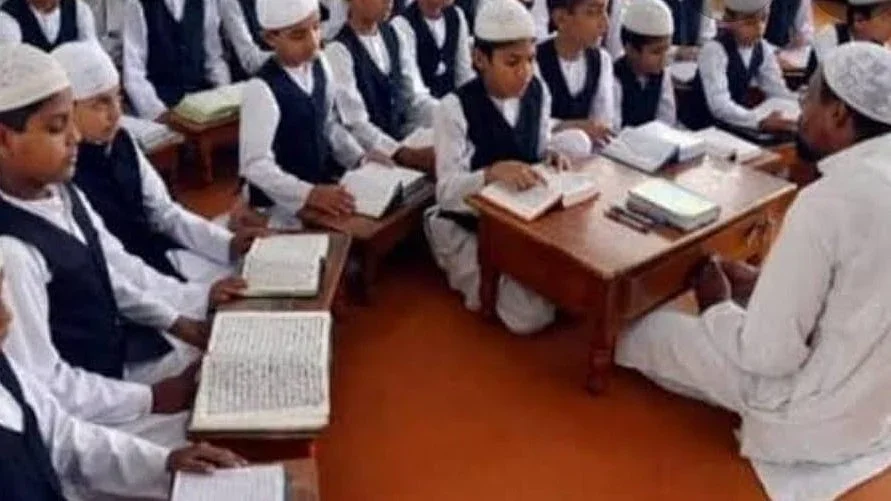
The decision lands quietly, but its echo will be felt in classrooms across Uttar Pradesh. Two years after the Supreme Court clipped the wings of the state Madarsa Board's degree-awarding powers, the state government has finally moved to make that ruling a reality. For thousands of students who saw Kamil and Fazil as their ticket to higher education and employment, the ground has just shifted.
A ruling that redefined madarsa degrees
In November 2024, the Supreme Court delivered a verdict that changed the academic landscape for madarsas in Uttar Pradesh. The court ruled that the UP Madarsa Board could not award degrees equivalent to graduation and post-graduation. The board, it said, could issue matriculation or Aalim certificates, but not Kamil or Fazil degrees — which were loosely treated as bachelor's and master's equivalents.
The reasoning was clear: only universities approved by the University Grants Commission (UGC), or institutions empowered by Parliament or state legislatures, have the authority to issue such degrees. A state madarsa board, the court held, did not fit that definition.
Why the timing of the cabinet approval matters
The UP government's approval of amendments in August 2026 is not just a procedural step. It comes at a politically sensitive moment, with the state assembly in focus. The timing suggests the government is keen to formalise the court's direction into state policy, closing a chapter that had remained in limbo for nearly two years.
For observers, this is a signal that the state is aligning its madarsa framework with national higher education standards. But for the institutions and students caught in the transition, the move raises more questions than answers.
What the numbers tell us about scale
Uttar Pradesh is believed to have around 25,000 madarsas. Of these, roughly 16,500 are recognised by the state Madarsa Board. A smaller subset — about 560 — receive government grants. That means the ruling and the subsequent amendments touch a vast network of institutions, but the financial and academic dependence varies widely.
The recognised madarsas are the ones most directly affected, as they operate under the board's certification system. The grant-receiving institutions may face additional scrutiny, given their reliance on state funds.
Who is most affected by the degree clampdown
The immediate impact falls on students who enrolled in Kamil and Fazil programmes with the expectation that these degrees would help them pursue higher studies or secure government jobs. For many, these qualifications were a bridge to social mobility — a way to move from religious education into mainstream academic and professional spaces.
Now, that bridge has been formally removed. Students currently enrolled in these programmes face uncertainty about the value of their certificates. Those who have already completed Kamil or Fazil may find their qualifications questioned in academic and employment settings that previously accepted them.
How the state government is responding
The UP government has framed the amendments as a necessary alignment with the Supreme Court's directive. Officials have indicated that the move is about ensuring that degrees issued in the state meet legal and academic standards. The government's position is that no institution should award degrees it is not legally empowered to confer.
However, the state has not yet detailed how it plans to support students affected by the change. There is no clear word yet on equivalency arrangements, alternative certification pathways, or bridge programmes that could help students transition to UGC-recognised institutions.
What this means for madarsa education in India
This decision is not just about Uttar Pradesh. It sets a precedent for how madarsa education is viewed within the broader Indian higher education framework. The Supreme Court's ruling and the state's implementation signal a push toward standardisation — where degrees must come from recognised authorities, and religious education must find its place within that structure.
For madarsas, the challenge is to retain their religious and cultural identity while adapting to state and national academic norms. For students, the challenge is to find pathways that preserve the value of their learning without losing out on formal recognition.
Confirmed facts vs what remains unclear
What is confirmed: the Supreme Court ruled in November 2024 that the UP Madarsa Board cannot award Kamil and Fazil degrees. The UP government approved amendments in August 2026 to implement this. The board can still issue matriculation and Aalim certificates.
What remains unclear: how existing Kamil and Fazil degree holders will be treated, whether any equivalency framework will be introduced, and how the state plans to help students transition. These details have not been officially announced.
Risks and the road ahead for students
The biggest risk is a gap in educational continuity. Students who were mid-way through Kamil or Fazil programmes may find their years of study devalued overnight. There is also the risk of confusion in employment markets, where employers may no longer recognise these degrees for roles that previously accepted them.
On the other hand, supporters of the ruling argue that it protects students from receiving qualifications that lack legal standing. In the long run, they say, this could push madarsas to partner with recognised universities, giving students access to degrees that carry genuine academic and professional weight.
Practical guidance for affected students
Students currently enrolled in Kamil or Fazil programmes should first check with their institutions about the status of their courses. They should also explore options for transferring credits to UGC-recognised universities, where possible. Those who have already completed these degrees should keep their certificates and documentation safe, and seek clarity from the state government or the Madarsa Board on equivalency.
For parents and students considering madarsa education, it is worth asking institutions about their affiliation and the recognition status of the certificates they issue. Not all madarsas are affected equally, and understanding the distinction between recognised and unrecognised institutions is crucial.
Future outlook: what happens next
The coming months will likely bring more clarity on how the amendments are implemented. The state may issue guidelines on student transitions, equivalency, and institutional partnerships. There is also the possibility of legal challenges or petitions seeking relief for affected students.
What is certain is that the era of Kamil and Fazil degrees as de facto bachelor's and master's qualifications in Uttar Pradesh has ended. The next chapter will be about how the system adapts — and whether students are left behind or carried forward.
Our Take
This decision is legally sound but emotionally heavy. The Supreme Court's ruling was about upholding academic standards, and the state's implementation is a necessary follow-through. But the human cost — students whose qualifications are now in question — cannot be ignored. The government's next move will define whether this is a reform or a disruption. If the state pairs this clampdown with clear transition pathways and equivalency options, it can turn a difficult ruling into a constructive reset. If not, it risks leaving a generation of students in academic limbo.
Frequently Asked Questions
What did the Supreme Court rule about UP Madarsa degrees?
In November 2024, the Supreme Court ruled that the UP Madarsa Board cannot award Kamil and Fazil degrees, which were treated as equivalent to bachelor's and master's degrees. The board can only issue matriculation or Aalim certificates.
Why can't madarsas award Kamil and Fazil degrees anymore?
The court held that only UGC-approved universities or institutions empowered by Parliament or state legislatures can award degrees equivalent to graduation and post-graduation. A state madarsa board does not have that legal authority.
How many madarsas are affected in Uttar Pradesh?
Uttar Pradesh is believed to have around 25,000 madarsas. Of these, about 16,500 are recognised by the state Madarsa Board, and around 560 receive government grants.
What should students with Kamil or Fazil degrees do now?
Students should check with their institutions about the status of their programmes, keep their certificates safe, and seek clarity from the state government or Madarsa Board on equivalency and transition options.