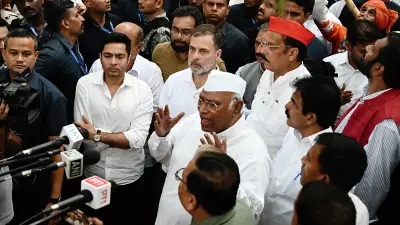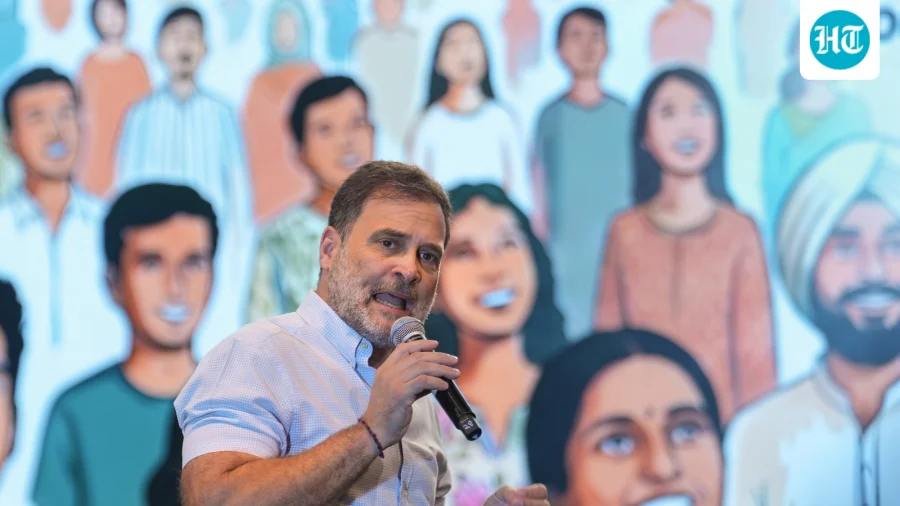
Rahul Gandhi on Monday launched a blistering attack on India’s education system, calling it an “extortion machine” and a “rejection system” at a student rally in Kota, Rajasthan. The Congress leader’s sharp words came as thousands of students gathered under the ‘Chhatron Ki Goonj’ campaign, demanding a re-NEET after the massive paper leak scandal that has shaken the country’s exam system.
‘Dreams crushed, not just exams failed’
Addressing the crowd in Kota — a city synonymous with coaching centres and student suicides — Gandhi said the education system is designed to exploit rather than empower. “This is not just a system failure. It is a blow on the dreams of millions,” he said, according to reports. He accused the system of turning education into a business where students are forced to pay exorbitant fees for coaching, only to face corrupt exams.
Why Kota became the epicentre of the protest
Kota, home to over 1.5 lakh students from across India preparing for competitive exams, has become the symbol of the education crisis. The NEET paper leak, which led to the cancellation of exams in some centres and demands for a re-test, has amplified long-standing grievances. For students and their families, the leak is not just a scandal — it is a betrayal of years of sacrifice. Gandhi’s rally tapped into this raw emotion, positioning the protest as a fight for fairness.
How the NEET paper leak sparked the crisis
The NEET-UG 2024 paper leak, first reported in early June, involved question papers being circulated on social media hours before the exam. The Central Bureau of Investigation (CBI) has since taken over the probe, arresting several suspects. But for students, the damage is done. Many fear their hard work has been rendered meaningless. The demand for a re-NEET has grown louder, with protests spreading across states like Bihar, Uttar Pradesh, and Rajasthan.
Who is affected — and why it matters to every Indian family
This is not just about NEET. The anger reflects a deeper crisis in India’s education system: skyrocketing coaching costs, intense competition, and a lack of institutional accountability. For millions of middle-class and lower-income families, a single exam can determine a child’s future. When that exam is compromised, it feels like the system has cheated them. Gandhi’s language — “extortion machine” — resonated because it names what many families feel but cannot articulate.
Congress leader’s call to action: ‘Raise your voice louder’
Gandhi urged students to join the June 17 protest, saying, “Need to raise your voice louder.” He framed the movement as non-political, focused on student rights. The Congress party has announced a series of rallies and outreach programmes targeting young voters, who form a crucial demographic ahead of the 2024 general elections. However, critics argue that the protest is politically motivated, aimed at embarrassing the ruling BJP.
What the ‘extortion machine’ remark really means
Gandhi’s choice of words is deliberate. By calling the education system an “extortion machine,” he is accusing the government and private coaching industry of colluding to profit from student desperation. The “rejection system” label points to the brutal filtering process where only a tiny fraction of students succeed, while the rest are left with debt and shattered dreams. This framing shifts the debate from a single exam leak to a systemic critique of how India educates its youth.
Confirmed facts vs what remains unclear
Confirmed: The NEET-UG 2024 paper leak occurred; CBI is investigating; multiple arrests have been made; Gandhi held the Kota rally on June 17, 2024; he used the phrases “extortion machine” and “rejection system.”
Unclear: The exact number of students affected by the leak; whether a re-NEET will be announced; the political impact of the protests on upcoming elections. All claims about government complicity remain allegations, not proven facts.
Why the Congress is betting big on student anger
For the Congress party, the education crisis is a potent political weapon. With youth unemployment at a 45-year high and exam scandals becoming routine, the party sees an opportunity to mobilise young voters. Gandhi’s ‘Chhatron Ki Goonj’ campaign is designed to channel this anger into electoral momentum. However, the party’s own record on education during its years in power is also under scrutiny, making the attack a double-edged sword.
Risks and balanced view: Is the protest justified or opportunistic?
Supporters argue that the protest is a legitimate response to a broken system. They point to the NEET leak as proof of institutional failure. Critics, however, say Gandhi is exploiting student pain for political gain. Some also note that the demand for re-NEET is impractical — re-conducting exams for millions of students would be logistically nightmarish. The government has not yet responded to the demand, leaving students in limbo.
Wider trend: Exam leaks and the crisis of trust in India’s education system
The NEET leak is not an isolated incident. In recent years, there have been multiple cases of paper leaks in exams like UGC-NET, CTET, and state-level recruitment tests. Each scandal erodes public trust further. For students, the message is clear: hard work does not guarantee success if the system is rigged. This crisis of trust is what Gandhi’s rally tapped into — and it is unlikely to fade soon.
What students and parents should do now
For students affected by the NEET leak, experts recommend staying informed through official channels like the NTA website. Parents are advised to avoid panic and focus on mental health support, as the uncertainty can be traumatic. For those demanding re-NEET, legal avenues — such as petitions in the Supreme Court — remain the most effective route. Meanwhile, coaching centres in Kota are under pressure to reduce fees and provide transparent counselling.
What happens next: re-NEET, probe, or status quo?
The coming weeks will be crucial. The CBI probe may lead to more arrests, but it will not restore student confidence. The government faces a choice: announce a re-NEET to pacify protesters, or defend the current system and risk further unrest. Political analysts believe the issue will remain a flashpoint until the 2024 elections, with both the BJP and Congress using it to rally their bases.
Our Take
Rahul Gandhi’s “extortion machine” remark is powerful because it names a truth many Indians live: education has become a high-stakes, high-cost gamble where the odds are stacked against students. But the real test is whether this anger translates into systemic change — or just another election slogan. The NEET leak is a symptom of a deeper rot, and no rally alone can fix it. What is needed is a bipartisan push for exam reform, transparency, and affordable education. Until then, students will keep paying the price.
Frequently Asked Questions
What did Rahul Gandhi say at the Kota rally?
Rahul Gandhi called India’s education system an “extortion machine” and a “rejection system,” accusing it of exploiting students and crushing their dreams. He spoke at the ‘Chhatron Ki Goonj’ rally in Kota, demanding a re-NEET after the paper leak scandal.
Why is the Kota rally significant?
Kota is India’s coaching hub, home to over 1.5 lakh students preparing for competitive exams. The rally tapped into widespread anger over the NEET paper leak and the broader education crisis, making it a symbolic protest site.
What is the ‘Chhatron Ki Goonj’ campaign?
It is a Congress-led outreach campaign aimed at students and young job seekers, focusing on issues like exam leaks, unemployment, and education reform. The Kota rally was its first major event.
Is a re-NEET likely to happen?
As of now, the government has not announced a re-NEET. The demand is under legal and political debate, with the Supreme Court likely to hear petitions. A decision is expected in the coming weeks.