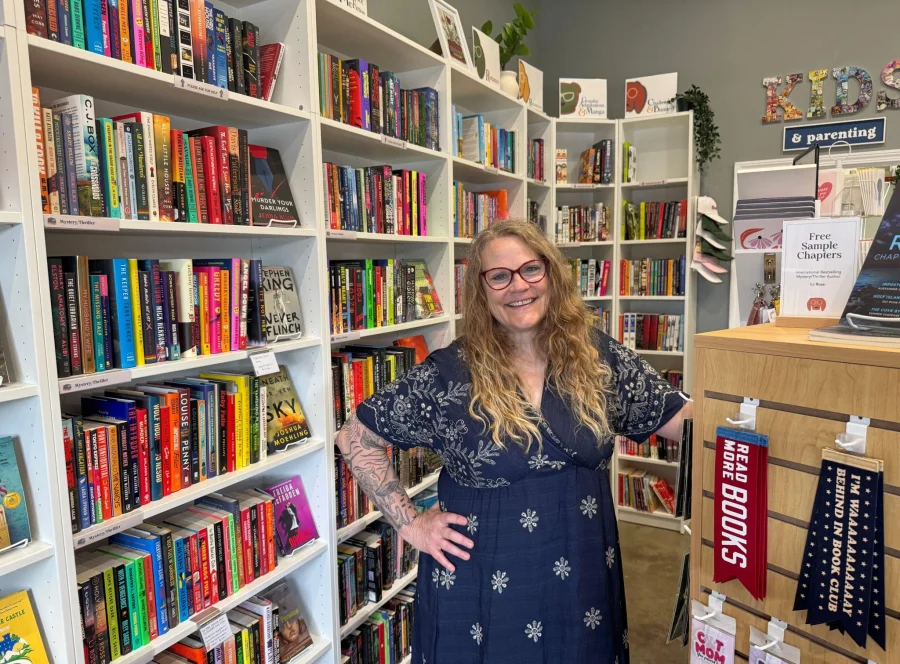
There's a persistent cultural script that independent bookstores are dying. It shows up in movies, in casual conversation, and even in the sympathetic looks Allison Hill receives when she tells people what she does for a living.
"It's all so funny," says Hill, CEO of the American Booksellers Association (ABA). "When I tell them I run the trade association for independent stores, they'll say, 'It's just so sad that they're disappearing.' I don't think they're really keeping track."
But the data tells a very different story. The decline of physical bookstores ended years ago. And the latest numbers from the ABA confirm something surprising: independent bookstores are not just surviving — they are growing.
Why Independent Bookstores Are Making a Comeback
The revival is being driven by something deeper than a love of reading. People are increasingly looking for community in local spaces, and independent bookstores are uniquely positioned to provide it.
Unlike the sterile efficiency of online retail, indie bookstores offer something intangible: a sense of belonging. They host author events, book clubs, and children's story hours. They become neighborhood anchors where people recognize each other.
According to the ABA, the number of independent bookstore members has risen steadily in recent years. New stores are opening in cities and small towns alike, often in spaces previously abandoned by chain retailers.
Why This Matters Right Now
This shift matters because it reflects a broader cultural change in how people want to spend their time and money. After years of digital dominance, there is a growing hunger for physical, human experiences.
Independent bookstores are becoming third places — spaces that are not home and not work, but somewhere in between where community happens. Coffee shops once filled this role. Now bookstores are reclaiming it.
The economic impact is also significant. Local bookstores keep money in the community, support local authors, and create jobs that cannot be outsourced. They are small business anchors in an era of retail consolidation.
How the Perception Gap Persists
Despite the growth, the narrative of decline remains stubbornly embedded in popular culture. In the upcoming film "The Devil Wears Prada 2," a character laments that bookstores are "getting downsized and consolidated."
This perception gap is understandable. When a beloved local bookstore closes, it is deeply felt. But the aggregate trend tells a different story. The closures that dominated headlines in the 2000s and 2010s have given way to a quieter but steady resurgence.
Hill points out that many people simply haven't updated their mental model. "They just know about a store that closed or heard about one closing," she says. The reality is that for every store that closes, several new ones are opening.
What Independent Bookstores Are Doing Differently
The new wave of independent bookstores is not simply replicating the old model. They are adapting to modern consumer expectations while preserving what makes them special.
Many are leaning into a local indie vibe, cultivating social media presences to build community around physical books. They are finding creative ways to personalize the book-buying experience — curated recommendations, signed copies, and events that feel intimate rather than commercial.
Technology is being used strategically, not defensively. Bookstores are using social media to announce new arrivals, host virtual author talks, and create online communities that drive foot traffic to physical locations.
Who Is Affected and What the Data Shows
The growth is benefiting a wide range of stakeholders: authors who now have more venues for readings and signings, publishers who see independent stores as crucial for building word-of-mouth, and readers who value personalized recommendations over algorithms.
The ABA's membership numbers provide the clearest evidence. After decades of contraction, the association has reported consistent growth in recent years. New stores are opening in neighborhoods that previously had no bookstore at all.
This is not just a coastal or urban phenomenon. Independent bookstores are thriving in midwestern towns, southern suburbs, and rural communities where residents are eager for a gathering place.
Risks, Concerns, and the Balanced View
The revival is real, but it is not without challenges. Independent bookstores still face intense competition from Amazon, which offers lower prices and faster delivery. Rising commercial rents in many cities make it difficult for new stores to survive their first few years.
There is also the risk of over-romanticizing the trend. Not every independent bookstore will succeed. The ones that thrive tend to have strong community ties, savvy business practices, and a clear identity.
Critics also point out that the bookstore revival is partly driven by demographics — affluent, educated consumers who can afford to pay a premium for the experience. Ensuring access to bookstores in underserved communities remains an ongoing challenge.
Why Similar Trends Are Increasing
The bookstore revival is part of a larger pattern. Across retail, consumers are gravitating toward experiences over transactions. Farmers markets, local coffee roasters, and independent record stores are all seeing similar resurgences.
This reflects a deeper psychological shift. After years of screen-dominated life, people are craving physical spaces where they can connect with others in real time. Bookstores offer a low-pressure environment for that connection.
- Independent bookstores are opening at a rate not seen in decades
- The ABA reports steady membership growth year over year
- New stores are leveraging social media to build community
- The trend mirrors a broader shift toward local, experiential retail
"It's all so funny. When I tell them I run the trade association for independent stores, they'll say, 'It's just so sad that they're disappearing.' I don't think they're really keeping track." — Allison Hill, CEO, American Booksellers Association
What Readers and Local Shoppers Should Know Now
If you want to support the independent bookstore revival, the most direct action is simple: visit your local store. Buy a book. Attend an event. Bring a friend.
Many independent bookstores now offer online ordering with local pickup, making it easier to support them even when convenience matters. Some have subscription boxes or membership programs that provide steady revenue.
For aspiring bookstore owners, the ABA offers resources, mentorship, and networking opportunities. The barriers to entry are lower than they have been in years, thanks to improved distribution and technology tools designed for independent retailers.
What Could Happen Next
The trajectory suggests continued growth, but the pace will depend on several factors. If the economy softens, discretionary spending on books may decline. But the community function of bookstores could make them more resilient than other retail categories.
There is also potential for further innovation. Some bookstores are experimenting with hybrid models — part bookstore, part café, part event space. Others are partnering with local schools and libraries to become community literacy hubs.
The long-term outlook is cautiously optimistic. The cultural hunger for real-world connection is unlikely to fade, and independent bookstores are well-positioned to satisfy it.
Our Take: Why This Story Matters Beyond One Industry
The independent bookstore revival is not just a retail story. It is a story about what people value in an increasingly digital world.
The fact that bookstores are growing — against all conventional wisdom — tells us something important about human nature. We still want to touch things. We still want to talk to people who share our interests. We still want to feel part of something local and real.
This is not nostalgia. It is a forward-looking response to the loneliness and fragmentation of modern life. Independent bookstores are not relics of the past. They are prototypes for the kind of community spaces we need more of.
The next time someone tells you bookstores are dying, you can tell them the truth: they are just not paying attention.
FAQs
Are independent bookstores actually growing?
Yes. The American Booksellers Association reports steady growth in its membership in recent years, with new stores opening across the country. The decline that dominated the 2000s has reversed.
Why are people choosing independent bookstores over Amazon?
Many consumers are seeking community connection and personalized experiences that online retailers cannot provide. Independent bookstores offer events, curated recommendations, and a sense of belonging that algorithms cannot replicate.
What is driving the independent bookstore revival?
The revival is driven by a broader cultural shift toward local, experiential retail. People want physical spaces where they can connect with others, and bookstores are uniquely suited to fill that role.
How can I support my local independent bookstore?
Visit the store, buy books, attend events, and spread the word. Many independent bookstores also offer online ordering with local pickup, subscription boxes, and membership programs that provide steady support.