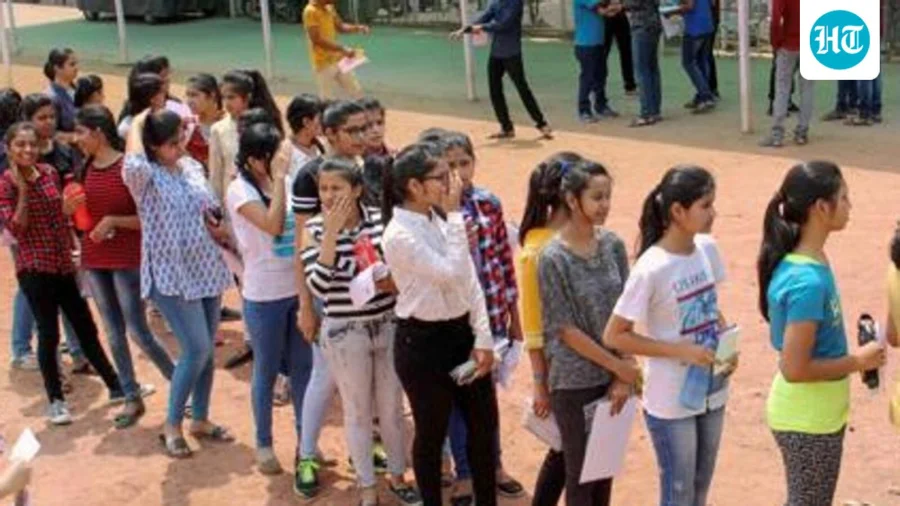
For decades, an IIT lecture hall looked a certain way. Rows of young men, a handful of women, and an unspoken assumption about who engineering was for. The supernumerary seats scheme was the quiet intervention that began to change that picture — not by taking seats away from anyone, but by adding new ones.
What the Supernumerary Seats Scheme Actually Does
The word "supernumerary" simply means "in addition to the fixed number." Under this scheme, IITs create extra seats beyond their sanctioned intake, and these additional seats are open specifically to female candidates.
This is a crucial distinction. It is not a reservation that displaces existing aspirants. It expands the total pool. A male candidate's chances under the general category are not directly reduced by the creation of these seats — a point that shaped how the policy was received.
Why IITs Needed a Gender Correction in the First Place
The gender gap at IITs was not accidental. It reflected deeper patterns — coaching culture, family expectations, school-level encouragement, and the sheer cost of preparing for JEE Advanced.
Girls who cleared the exam were often a small minority in each batch. That imbalance had a compounding effect: fewer women on campus meant fewer role models, fewer peer networks, and a campus culture that quietly assumed male default.
The supernumerary scheme was designed to break that cycle at the entry point.
How the Scheme Was Rolled Out
The policy emerged from discussions within the IIT system and was backed by the Ministry of Education, which had set a broader goal of improving gender parity in technical education.
Each IIT was given a target and a mechanism: additional seats, filled through the existing JEE Advanced merit process, but only among female candidates. The number of supernumerary seats at each institute was linked to how far that institute was from its gender-balance goal.
Institutes further from parity received more additional seats. Those closer to balance received fewer. The design was deliberately self-correcting.
Who This Actually Affected
The most direct beneficiaries were female JEE Advanced qualifiers who, in an earlier era, might have missed an IIT seat by a narrow margin.
But the impact extended further. Families weighing whether to invest in a daughter's engineering preparation now had a clearer signal: the system was actively making room.
On campus, the change was visible in hostel allocations, classroom dynamics, and student body composition — slow, uneven, but real.
What the IITs and Ministry Said
Officials framed the scheme as a corrective measure, not a permanent quota. The stated objective was to reach a healthier gender ratio in undergraduate programmes within a defined period.
IIT leadership emphasised that merit remained the sole selection criterion — the supernumerary seats changed who was eligible to compete for the additional seats, not the standard required to earn them.
The Deeper Logic Behind Adding Seats Instead of Reserving Them
Reserving existing seats would have triggered immediate resistance from general-category aspirants. Adding seats sidestepped that conflict while still achieving the gender-balance goal.
It was, in policy terms, a clever workaround. It expanded the pie rather than re-cutting it — a design choice that made the scheme politically and socially easier to implement.
But it also meant the scheme's success depended on IITs actually having the infrastructure — hostels, labs, faculty — to absorb more students.
Confirmed Facts vs What Remains Unclear
Confirmed: Supernumerary seats exist at IITs, are open only to female candidates, and are filled through JEE Advanced merit. The scheme was introduced to improve gender ratios in undergraduate programmes.
Unclear: Whether the scheme has achieved its intended ratio targets at every IIT, how long it will continue, and whether it will be extended, tapered, or made permanent. These are policy decisions that have not been definitively settled in the public domain.
Why This Matters Beyond the Numbers
A campus is not just a set of classrooms. It is a social environment where careers, networks, and confidence are built. When women are a small minority, that environment subtly disadvantages them.
Changing the ratio changes the environment. It normalises women's presence in engineering, shifts peer dynamics, and creates a pipeline of female engineers who later enter industry, academia, and leadership.
The supernumerary scheme was never just about seats. It was about what those seats signal.
Risks and the Balanced View
Critics have raised legitimate questions. Does adding seats dilute the perceived rigour of IIT admissions? Does it place additional strain on infrastructure that was not designed for larger batches?
Supporters counter that merit is unchanged — the same exam, the same cutoff logic, just a wider door. And that the alternative — waiting for society to fix its own biases — has proven far too slow.
Both views have merit. The scheme is a policy intervention, not a moral verdict.
The Wider Pattern in Indian Higher Education
The IIT supernumerary model is part of a broader push across Indian institutions to address gender imbalance in technical and professional education.
Similar conversations have unfolded in other premier institutes, though the IIT scheme remains one of the most visible and closely watched experiments in admissions reform.
What Aspirants and Families Should Understand
For female candidates preparing for JEE Advanced, the supernumerary seats represent an additional pathway — not a shortcut. The exam standard is the same. The competition within the supernumerary pool is real.
For families, the message is simpler: the system has made structural room. The decision to prepare is now less about fighting odds and more about seizing an opening.
What Could Happen Next
The scheme's future depends on whether IITs reach their gender-ratio targets. If they do, the additional seats may be gradually reduced or absorbed into the regular intake.
If progress stalls, the scheme may be extended or strengthened. Either way, the experiment has already changed the conversation about who belongs in an IIT.
Our Take
The supernumerary seats scheme is a rare example of an admissions reform that expanded access without triggering a zero-sum fight. It worked because it added rather than subtracted.
Whether it becomes a permanent feature or a transitional correction, its legacy is already clear: it made the IIT classroom look a little more like the country it serves.
Frequently Asked Questions
What are supernumerary seats at IITs?
Supernumerary seats are additional seats created beyond an IIT's regular sanctioned intake. These seats are open exclusively to female candidates and are filled through the JEE Advanced merit list.
Do supernumerary seats reduce seats for male candidates?
No. Supernumerary seats are added on top of the existing intake. They do not displace or reduce the seats available to male candidates under the general category.
How are supernumerary seats allocated across IITs?
Each IIT receives a number of supernumerary seats based on how far it is from its gender-balance target. Institutes with a larger gender gap typically receive more additional seats.
Will the supernumerary seats scheme continue permanently?
That has not been definitively settled. The scheme was introduced as a corrective measure. Its continuation depends on whether IITs achieve their intended gender-ratio goals.