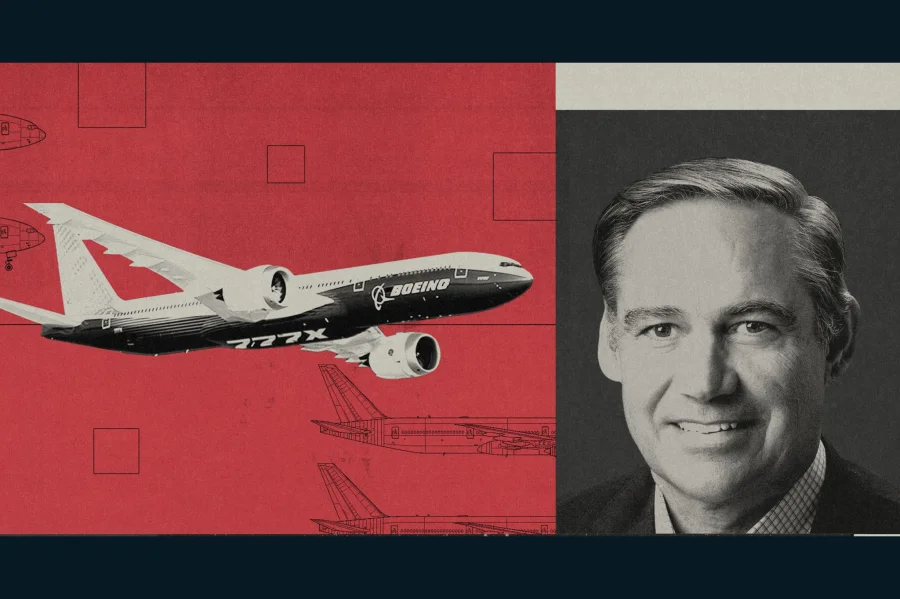
When Kelly Ortberg walked into Boeing’s headquarters in August 2024, he wasn’t just taking over a company in trouble. He was stepping into the cockpit of an American icon that had lost its way — and its trust. The 737 Max crashes that killed 346 people. The door-plug blowout over Portland. The billions lost in defense contracts. The federal freeze on production. Boeing wasn’t just broken. It was bleeding.
One year later, the freefall has stopped. But as Ortberg himself has admitted, the real work — rebuilding Boeing from the inside out — is far from over. This is the story of how one CEO is trying to save a company that many had written off.
How Kelly Ortberg is rebuilding Boeing from the inside out — one decision at a time
Ortberg’s strategy isn’t flashy. There are no grand press conferences or sweeping promises. Instead, he’s focused on the fundamentals: quality, safety, and culture. According to reports, he has personally visited factory floors, talked to assembly-line workers, and pushed for a return to engineering-first decision-making. The message is clear: Boeing will no longer put profits over planes.
One of his first major moves was to slow down production. Under federal pressure, Boeing capped 737 Max output at 38 planes per month — well below the 52 it was building before the crisis. Ortberg has defended this, saying that quality must come before quantity. “We’re not going to rush,” he told employees in an internal memo. “We’re going to get it right.”
Why This Matters Right Now
Boeing isn’t just any company. It’s a cornerstone of American manufacturing, a major employer, and a key player in global aviation. If Boeing fails, the ripple effects would be felt by airlines, passengers, suppliers, and entire communities. For the millions of people who fly every day, the safety of their journey depends on Boeing’s recovery. For investors, the company’s future determines billions in value. And for the 150,000 employees who work there, it’s about pride, purpose, and livelihoods.
This isn’t just a corporate turnaround. It’s a test of whether a once-great institution can learn from its mistakes and rebuild trust with the world.
How the Crisis Unfolded — and Where Ortberg Stepped In
To understand Ortberg’s challenge, you have to look at the wreckage he inherited. The 737 Max crashes in 2018 and 2019 exposed a culture where safety was sacrificed for speed. Then, in January 2024, a door plug blew out on an Alaska Airlines flight, revealing that manufacturing defects were still present. Federal regulators froze production. Boeing’s defense division was losing billions on fixed-price contracts. The company’s reputation was in tatters.
Ortberg, a former Rockwell Collins CEO with a reputation for operational discipline, was brought in to clean up the mess. He wasn’t a Boeing insider — and that was exactly the point. He could see the problems without the blinders of corporate loyalty.
Who Is Affected and What Officials Are Saying
The impact of Ortberg’s turnaround is being felt across the aviation ecosystem. Airlines like Southwest, United, and American have been forced to delay fleet expansions because of Boeing’s production slowdown. Suppliers are struggling with reduced orders. And passengers are left wondering if they can trust the planes they fly on.
Federal regulators, including the FAA, have been watching closely. They’ve maintained strict oversight, and Ortberg has publicly welcomed it. “We need to earn back the trust of regulators, customers, and the flying public,” he said in a recent interview. “That’s not going to happen overnight.”
What We Know So Far — and What Remains Unclear
What we know: Ortberg has stopped the freefall. Production is stable, though reduced. The company has settled some legal cases and is working through others. Employee morale, while still fragile, has improved. Ortberg has also made changes to the executive team, bringing in leaders focused on engineering and quality.
What remains unclear: Whether Boeing can return to its previous production levels without compromising safety. Whether the defense division can be turned around. And, most importantly, whether the cultural shift Ortberg is pushing will stick after he’s gone. The real test will come when the pressure to ramp up production returns.
Risks, Concerns, and the Balanced View
Optimists point to Ortberg’s track record and his willingness to make hard decisions. They say Boeing is on the right path. But critics warn that the company’s problems are structural, not just managerial. The culture of cost-cutting that led to the crashes was built over decades. Changing it will take years — and a lot of patience from investors.
There’s also the risk of over-correction. If Boeing becomes too cautious, it could lose market share to Airbus, which has been aggressively expanding. The balance between safety and competitiveness is delicate, and Ortberg is walking a tightrope.
Why Similar Trends Are Growing Across the Industry
Boeing’s crisis is part of a larger pattern in manufacturing and aviation. Across industries, companies are grappling with the consequences of prioritizing short-term profits over long-term quality. From automotive to pharmaceuticals, the lesson is the same: when you cut corners, you eventually pay a much higher price.
Boeing’s story is a cautionary tale — and Ortberg’s turnaround attempt is a case study in how to rebuild trust after a catastrophic failure.
- Boeing’s 737 Max production is capped at 38 planes per month, down from 52 before the crisis.
- The company has settled multiple lawsuits related to the crashes and the door-plug incident.
- Ortberg has replaced several top executives with leaders focused on engineering and quality.
“I want people to get back to where they look at Boeing and they say: ‘that’s what I want. I ain’t going if it ain’t Boeing.’” — Kelly Ortberg, Boeing CEO
What Readers, Users, or Investors Should Know Now
For investors, the key metric to watch is not just production numbers, but quality metrics and regulatory feedback. For travelers, the good news is that every Boeing plane flying today has passed rigorous inspections. The bad news is that the company’s recovery will take years, and delays in new aircraft deliveries will continue to affect airline schedules.
For employees, Ortberg’s message is one of patience and purpose. He’s asking them to believe in the mission — and to hold themselves accountable for quality.
What Could Happen Next
If Ortberg succeeds, Boeing could emerge as a stronger, safer company — one that has learned from its mistakes. If he fails, the consequences could be severe: further regulatory action, loss of market share, and possibly even a breakup of the company.
The next 12 months will be critical. Ortberg has said he expects to see “meaningful progress” by the end of 2026. Until then, the world will be watching — and hoping that this time, Boeing gets it right.
Our Take: Why This Story Matters Beyond One Incident
Kelly Ortberg’s effort to rebuild Boeing is about more than one company. It’s about whether a culture of accountability can be restored in an industry where mistakes can cost lives. It’s about whether investors, regulators, and the public can trust a company that has let them down before.
Boeing’s recovery won’t be measured in stock prices or production numbers alone. It will be measured in the safety of every flight, the pride of every employee, and the trust of every passenger. That’s a tall order. But if anyone can pull it off, Ortberg might be the one.
FAQs
What is Kelly Ortberg doing to fix Boeing?
Kelly Ortberg is focusing on quality over quantity, slowing production, improving factory-floor culture, and replacing executives with engineering-focused leaders. His goal is to restore trust with regulators, customers, and the public.
How is Boeing’s manufacturing quality improving under Ortberg?
Ortberg has implemented stricter quality checks, reduced production rates, and emphasized employee accountability. He has also personally visited factories to reinforce the message that safety comes first.
Will Boeing return to full production levels soon?
Not immediately. The FAA has capped 737 Max production at 38 planes per month, and Ortberg has said he will not rush to increase output until quality is assured. A return to pre-crisis levels could take years.
What are the biggest risks to Boeing’s turnaround?
The biggest risks include cultural resistance to change, pressure from investors to ramp up production, competition from Airbus, and the possibility of new safety issues emerging. Ortberg’s challenge is to balance safety with competitiveness.