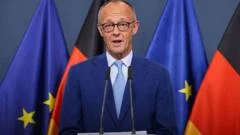
The numbers were barely on the screen before the word went out from the top: "disaster." For Chancellor Friedrich Merz, the state elections in Berlin and Mecklenburg-Vorpommern were not just a bad night — they were a verdict. Yet within hours, Merz made his position unmistakably clear: he is not going anywhere.
A Double Blow in Two Very Different States
Exit polls pointed to damaging losses for Merz's centre-right Christian Democratic Union (CDU) in both states. Berlin, a traditionally complex and fragmented political landscape, and Mecklenburg-Vorpommern, a northeastern state with its own distinct electoral dynamics, delivered the same message: voters are drifting away from the Chancellor's party.
The scale of the setback — described by Merz himself as a "disaster" — signals that the dissatisfaction is not confined to one region or one demographic.
Why These Two Results Hit Harder Than They Look
State elections in Germany are often treated as midterm report cards on the federal government. When a Chancellor's party loses ground in two states simultaneously, the political cost is rarely limited to local politics.
For ordinary Germans, the results matter because they shape the balance of power in the Bundesrat, the upper house of parliament, where state governments hold influence over national legislation. A weakened CDU at the state level can complicate the federal government's ability to pass laws smoothly.
How the Night Unfolded
As exit polls were released, CDU headquarters in Berlin and Schwerin would have been watching the same trend lines: losses that cut across the party's traditional support base. Merz's public acknowledgment of a "disaster" came quickly — a rare moment of blunt self-assessment from a sitting Chancellor.
But the same statement carried a second message: he intends to stay on. There was no hint of resignation, no suggestion of a snap party leadership contest.
Who Feels This Most — And Why It Matters Beyond Berlin
The immediate impact falls on CDU members, local candidates, and voters who backed the party expecting stability under Merz's leadership. For coalition partners, the results raise uncomfortable questions about whether the Chancellor still commands the political capital needed to hold the government together.
For Germany's European allies and financial markets, any sign of federal instability is watched closely. Germany remains the eurozone's largest economy, and political uncertainty in Berlin rarely stays contained within Germany's borders.
Merz's Defiant Message: 'I Stay'
Merz's decision to describe the result as a "disaster" while simultaneously refusing to step down is a calculated political move. By naming the severity himself, he preempts critics who would otherwise frame the losses as a leadership failure he was trying to hide.
At the same time, vowing to stay signals to his party that he intends to fight rather than hand over the reins during a vulnerable moment.
What the Numbers Actually Tell Us — And What They Don't
Exit polls are snapshots, not final results. Official counts can shift margins, and coalition arithmetic in state parliaments often depends on smaller parties crossing thresholds. Until final results are certified, the full picture of the damage — and its consequences for federal politics — remains incomplete.
What is clear is the political signal: voters in two states used their ballots to register discontent with the CDU under Merz.
The CDU's Structural Challenge
The CDU has historically been a broad-tent party, drawing support from business conservatives, rural voters, and urban professionals. Losses in both a major metropolis like Berlin and a rural-heavy state like Mecklenburg-Vorpommern suggest the party is struggling to hold that coalition together.
That fragmentation — rather than a single issue — may be the deeper problem Merz now faces.
Risks and the Road Ahead
Merz's decision to stay carries risks. If coalition partners interpret the results as a mandate for change, internal friction could grow. If the CDU's polling continues to slide, pressure from within the party may intensify in the coming months.
Conversely, a swift and visible course correction — on policy, communication, or both — could stabilize his position. Much depends on how Merz and his team respond in the next few weeks.
A Pattern, Not an Isolated Event
Across Europe, incumbent centre-right and centrist parties have faced similar voter backlash in recent years, often driven by economic anxiety, migration debates, and frustration with established leadership. Germany's results fit that broader pattern.
Whether this is a temporary dip or the start of a longer realignment will depend on how the CDU adapts.
What Readers Should Watch Next
Final certified results from both states will confirm the exact scale of the losses. Watch for statements from coalition partners, any internal CDU dissent, and whether Merz announces concrete policy or personnel changes.
For voters and observers, the key question is simple: does "I stay" come with a plan, or just a promise?
Future Outlook
Merz has bought himself time — but not indefinitely. If the CDU's position stabilizes, the "disaster" label may fade into a difficult chapter. If it doesn't, the same word could return to haunt him.
Our Take
Merz's blunt honesty about the result is unusual in politics, where leaders often spin losses as "learning opportunities." Calling it a "disaster" while refusing to resign is a high-risk, high-clarity move. It signals awareness — but awareness alone does not solve the underlying problem. The coming weeks will reveal whether this was a turning point or just the first chapter of a longer decline.
Frequently Asked Questions
What happened in the German state elections?
Exit polls showed damaging losses for Chancellor Friedrich Merz's CDU party in the states of Berlin and Mecklenburg-Vorpommern. Merz described the outcome as a "disaster" for his party.
Did Merz resign after the results?
No. Despite calling the results a "disaster," Merz vowed to stay on as Chancellor and CDU leader, signaling he intends to remain in office.
Why do these state elections matter nationally?
German state elections influence the Bundesrat, the upper house of parliament, where state governments affect national legislation. Losses at the state level can weaken a Chancellor's ability to govern effectively.
What happens next for Merz and the CDU?
Final official results are pending. Attention will focus on coalition stability, potential internal party pressure, and whether Merz announces policy or leadership changes in response.