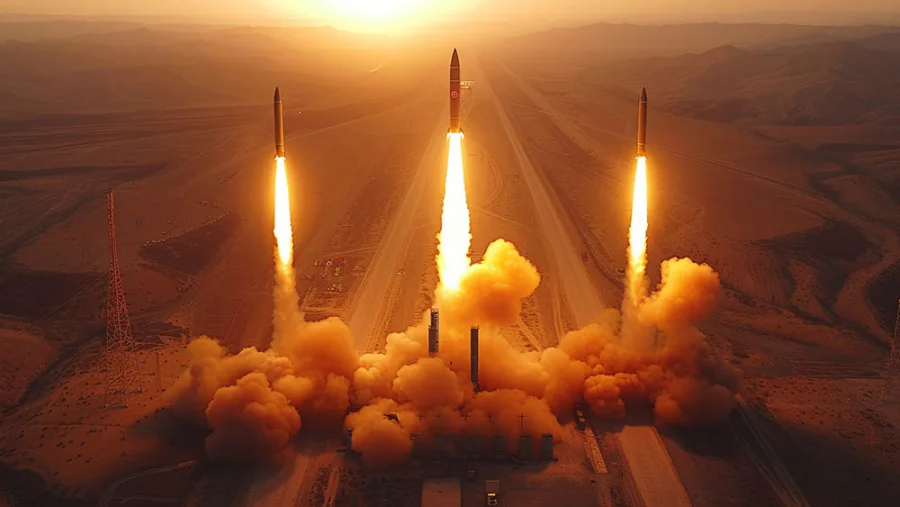
The stock market rally that had investors celebrating record highs just days ago hit a wall on Monday. Dow Jones futures tumbled, oil prices surged, and a familiar sense of unease returned to trading floors as news broke that Iran had launched attacks on Israel. For a market that had been pricing in rate cuts and AI-driven optimism, this is the first real geopolitical shock of the year — and it’s testing whether the rally has real legs or was built on fragile assumptions.
What Happened: Iran Attacks Israel, Oil Prices Spike
Iran launched a series of attacks on Israel, sending shockwaves through global markets. The immediate reaction was a sharp move into safe-haven assets. Dow futures dropped more than 300 points in early trading, while the S&P 500 and Nasdaq futures also fell. Oil prices surged over 4%, with Brent crude crossing $85 a barrel, as traders priced in the risk of supply disruptions from the Strait of Hormuz, a critical chokepoint for global oil shipments.
Why This Matters for Your Portfolio Right Now
For Indian and global investors, this is not just a headline — it’s a direct hit to portfolio value. The market rally had been driven by expectations of lower interest rates and strong corporate earnings. A geopolitical crisis in the Middle East changes the calculus. Higher oil prices mean higher input costs for companies, which can squeeze margins and delay rate cuts. If you’ve been sitting on gains from the recent rally, this is the moment when risk management becomes real.
Trump’s Response: Talks and a Halt to Strikes
President Donald Trump responded by confirming that the US and Iran have held talks. In a significant move, he said he was halting strikes on Iranian power plants and energy infrastructure, according to CNBC. This was seen as a de-escalatory signal, but markets remained cautious. The uncertainty lies in whether these talks will lead to a lasting resolution or if they are a temporary pause before further escalation. Trump’s words have moved markets before, and this time is no different.
Who Is Affected: From Day Traders to Long-Term Investors
The impact is broad. Day traders are seeing heightened volatility, which creates both opportunity and risk. Long-term investors are watching their retirement accounts take a hit. Indian investors, who have been pouring money into US equities through mutual funds and direct investing, are now exposed to this geopolitical risk. Sectors like airlines, logistics, and manufacturing — which depend on stable oil prices — are particularly vulnerable. On the flip side, energy stocks and defense companies may see gains.
What Officials and Analysts Are Saying
Analysts at major investment banks have issued warnings. Goldman Sachs noted that a sustained conflict could push oil prices above $100 a barrel, which would act as a tax on global growth. The International Energy Agency (IEA) said it is monitoring the situation closely and stands ready to release emergency oil reserves if needed. On the diplomatic front, the US State Department has urged restraint from all parties. The market is now pricing in a higher risk premium, and that is likely to persist until there is clarity on the conflict’s trajectory.
What This Means for the Market Rally
The S&P 500 had been on a tear, driven by AI stocks like Nvidia and rate-cut expectations. This geopolitical shock is the first real test of that rally. Historically, markets have recovered from such shocks, but the recovery time depends on the duration and intensity of the conflict. If this is a short-lived event, the dip could be a buying opportunity. If it escalates, the correction could be deeper. The key metric to watch is the VIX, which spiked above 25 — a level that signals high fear.
Confirmed Facts vs What Remains Unclear
Confirmed: Iran launched attacks on Israel. Dow futures fell sharply. Oil prices surged. Trump confirmed US-Iran talks and halted strikes on Iranian energy infrastructure. The VIX spiked.
Unclear: The full scale of the attacks and casualties. Whether the talks will lead to a ceasefire. How long the conflict will last. The potential for a broader regional war involving other actors. Whether the US will impose new sanctions on Iran.
Risks and Balanced View
The biggest risk is escalation. If Iran’s attacks draw in other regional powers or if the US retaliates militarily, the conflict could spiral. That would push oil prices much higher and trigger a global risk-off event. On the other hand, if diplomacy succeeds, the market could stage a sharp relief rally. Investors should not panic-sell but should also not assume this will blow over quickly. The situation is fluid, and the range of outcomes is wide.
Wider Trend: Geopolitical Risk Returns to Center Stage
For much of 2025 and early 2026, markets had been ignoring geopolitical risks, focusing instead on AI, earnings, and central bank policy. This event is a reminder that geopolitics can reassert itself at any time. The Middle East remains a flashpoint, and any disruption to oil supply has global consequences. Investors who had been complacent about tail risks are now being forced to reassess.
What Investors Should Do Now
First, do not make impulsive decisions. Panic selling locks in losses. Second, review your portfolio’s exposure to oil-sensitive sectors. Third, consider adding safe-haven assets like gold or short-term bonds as a hedge. Fourth, watch for diplomatic developments — any sign of de-escalation could trigger a bounce. Fifth, keep cash on hand to take advantage of buying opportunities if the market overcorrects. For Indian investors, monitor the rupee’s movement against the dollar, as a weaker rupee could amplify losses.
Future Outlook: What Could Happen Next
In the best-case scenario, US-Iran talks lead to a ceasefire, oil prices stabilize, and the market rally resumes within weeks. In a moderate scenario, the conflict remains contained but prolonged, keeping volatility elevated and capping upside. In the worst case, the conflict escalates into a regional war, oil prices spike above $100, and global markets enter a correction. The next 48 hours are critical. Markets will be watching for any statement from the Federal Reserve, which may signal a willingness to cut rates if the economic impact becomes severe.
Our Take
This is a genuine test of the market’s resilience. The rally had been running on optimism, and now it faces a real-world stressor. The good news is that markets have historically recovered from geopolitical shocks. The bad news is that the path to recovery is never smooth. For now, the smartest move is to stay informed, stay calm, and avoid making bets based on fear or greed. This story is still unfolding, and the market’s reaction in the coming days will tell us a lot about whether this rally has staying power.
Frequently Asked Questions
Why did Dow Jones futures fall after Iran attacked Israel?
Dow Jones futures fell because investors moved out of risky assets like stocks and into safe havens like gold and bonds. The attack raised fears of a broader Middle East conflict that could disrupt oil supplies and hurt global economic growth.
How did President Trump respond to the Iran-Israel conflict?
President Trump said the US and Iran have held talks and that he was halting strikes on Iranian power plants and energy infrastructure. This was seen as a de-escalatory move, but markets remained cautious.
What does this mean for oil prices?
Oil prices surged over 4% after the attack, with Brent crude crossing $85 a barrel. If the conflict escalates or disrupts the Strait of Hormuz, oil could rise further, potentially above $100 a barrel.
Should I sell my stocks now?
Panic selling is generally not advisable. Geopolitical shocks often create buying opportunities for long-term investors. However, you should review your portfolio’s exposure to oil-sensitive sectors and consider adding hedges like gold or bonds.