Sixty years ago, a cartoonist with a fiery pen and a vision for Maharashtra’s Marathi pride launched a political movement that would reshape the state’s identity. Today, that movement — the Shiv Sena — marks its diamond jubilee not with celebration, but with a bitter family feud that threatens to erase the very name Thackeray from its masthead.
The Birth of a Nativist Force: Bal Thackeray’s 1966 Vision
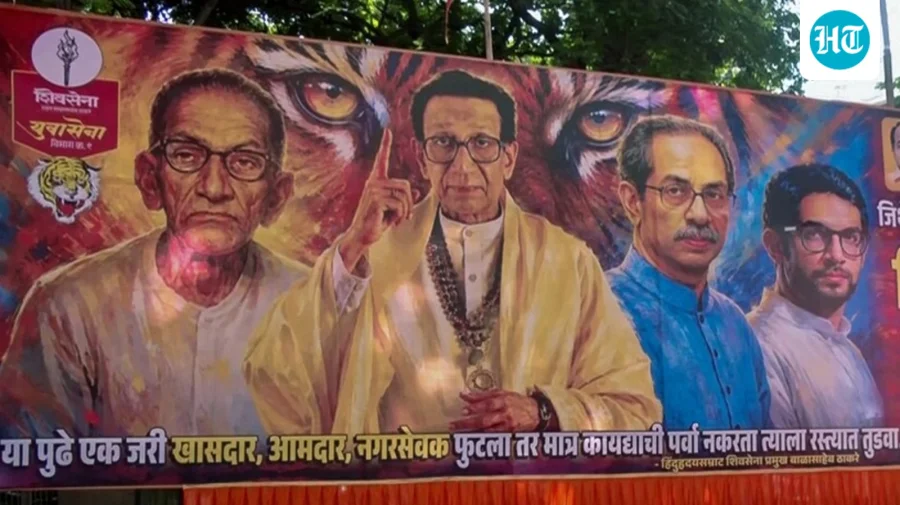
Bal Thackeray founded the Shiv Sena on June 19, 1966, in Mumbai, with a core demand: jobs and opportunities for Marathi speakers in their own state. The party’s early years were marked by aggressive street protests and a sharp anti-migrant rhetoric, particularly targeting South Indians and later North Indians. Thackeray, a former cartoonist for the Free Press Journal, used his newspaper Saamana as a powerful propaganda tool. The party’s symbol — a roaring tiger — captured its combative spirit.
From Street Power to Political Mainstream: The 1990s Rise
For decades, the Shiv Sena remained a fringe player in Maharashtra’s politics, often dismissed as a regional agitator. But the 1990s changed everything. In 1995, the Sena formed its first government in Maharashtra in alliance with the Bharatiya Janata Party (BJP), with Bal Thackeray’s close aide Manohar Joshi becoming Chief Minister. This period saw the party’s influence expand beyond Mumbai to the rest of the state, and its brand of Hindutva-aligned regionalism found a wider audience.
The Succession Question: Uddhav Takes Over After Bal Thackeray’s Death
Bal Thackeray’s death in November 2012 at the age of 86 left a leadership vacuum. His son, Uddhav Thackeray, took over the party, but he lacked his father’s oratorial fire and street-level charisma. Uddhav’s leadership style was more conciliatory and media-savvy, but internal dissent simmered. The party’s alliance with the BJP, which had been the bedrock of its electoral success, began to fray over seat-sharing and ideological differences.
The 2019 Betrayal and the Maha Vikas Aghadi Experiment
The most dramatic shift came after the 2019 Maharashtra assembly elections. The BJP-Shiv Sena alliance won a clear majority, but the Sena broke away, demanding a rotational chief ministership. When the BJP refused, Uddhav Thackeray formed an unlikely coalition with the Nationalist Congress Party (NCP) and the Congress — the Maha Vikas Aghadi (MVA). Uddhav became Chief Minister in November 2019, a move that stunned political observers and angered many within his own party who saw the alliance with ideological rivals as a betrayal of Bal Thackeray’s principles.
The Rebellion That Split the Party: Eknath Shinde’s 2022 Coup
In June 2022, the simmering discontent exploded. Eknath Shinde, a veteran Sena leader and minister in the MVA government, led a rebellion of 40 of the party’s 55 MLAs. Shinde claimed he was protecting the “true” Hindutva ideology of Bal Thackeray, which he said Uddhav had abandoned by allying with the Congress and NCP. The rebellion forced Uddhav to resign as Chief Minister, and Shinde formed a new government with the BJP. The Election Commission later recognized Shinde’s faction as the real Shiv Sena, awarding it the party name and the “bow and arrow” symbol.
The Human Cost: Families Divided, Workers Confused
For thousands of Shiv Sena workers across Maharashtra, the split has been deeply personal. Families that have been loyal to the Thackeray name for generations now find themselves choosing sides. Local party offices have been locked in legal battles, and street-level workers report confusion over which leader to follow. “We joined the Sena for Balasaheb’s vision,” said a party worker from Thane, speaking on condition of anonymity. “Now we don’t know who speaks for that vision.”
Official Responses: Uddhav vs Shinde — Two Claims to the Same Legacy
Uddhav Thackeray has consistently called the split a “betrayal” and insists that the Thackeray family is the soul of the Shiv Sena. “The name Shiv Sena without Thackeray is meaningless,” he said in a recent interview. Eknath Shinde, meanwhile, argues that he is the true inheritor of Bal Thackeray’s ideological legacy. “Balasaheb’s Hindutva cannot be compromised for power,” Shinde has said, referring to the MVA alliance. The Election Commission has yet to deliver a final verdict on the rival claims to the party’s assets.
Why This Split Is Different From Past Rebellions
The Shiv Sena has seen rebellions before — senior leaders like Chhagan Bhujbal and Narayan Rane left the party in the past. But those were individual exits. The 2022 split was a coordinated mass defection that stripped the Thackeray family of its political machinery. Analysts say this is the first time the party’s very identity is contested. “Bal Thackeray built the party around his personality. Without that personality, the party becomes a battleground for control,” said political analyst Suhas Palshikar.
Confirmed Facts vs What Remains Unclear
Confirmed: The Shiv Sena was founded by Bal Thackeray in 1966. Uddhav Thackeray became party chief after Bal Thackeray’s death in 2012. Eknath Shinde led a rebellion in June 2022, splitting the party. The Election Commission recognized Shinde’s faction as the official Shiv Sena. Six MPs from the Uddhav camp have reportedly sought a further split. Unclear: The final legal status of the party name and symbol. Whether the Uddhav faction can recover its political strength. The long-term impact on Maharashtra’s electoral math.
Shiv Sena’s Moat: The Thackeray Brand and the Marathi Identity
The Shiv Sena’s enduring strength has always been its deep emotional connection to Marathi identity. Bal Thackeray positioned the party as the defender of the “sons of the soil,” a message that resonated with millions. The Thackeray name itself became a brand — synonymous with aggressive regional pride. Even after the split, both factions claim this legacy. The party’s network of shakhas (local branches) and its control over Mumbai’s cooperative housing societies and local municipal wards remain valuable assets.
Risks and a Balanced View: The Fragile Future of Both Factions
Neither faction is in a comfortable position. Uddhav’s Shiv Sena (UBT) has lost its organizational muscle and faces an uncertain future without the party symbol. Shinde’s faction, while in power, is heavily dependent on the BJP and has struggled to build its own independent identity. Critics argue that Shinde’s rebellion was more about personal ambition than ideology. “Both sides are fighting over a corpse,” said one political commentator, pointing to the party’s declining vote share in recent by-elections.
The Wider Pattern: Regional Parties and the Succession Crisis
The Shiv Sena’s crisis is not unique. Across India, regional parties founded by charismatic leaders — from the DMK to the Samajwadi Party — have faced succession battles. The transition from a founder-leader to a second generation is often fraught with internal conflict. The Shiv Sena’s story is a textbook case of what happens when a party built around a personality fails to institutionalize its leadership structure.
What This Means for Maharashtra’s Voters
For the average voter in Maharashtra, the Shiv Sena’s split has created confusion. The party that once stood for a clear, aggressive ideology now appears fractured and directionless. Voters who once identified strongly with the Sena’s Marathi pride message are now forced to choose between two versions of the same promise. The upcoming local body elections in Mumbai and other cities will be a key test of whether either faction can retain the party’s traditional support base.
What Happens Next: The Road Ahead for Both Factions
The next few months will be critical. The Election Commission’s final decision on the party name and symbol could determine the fate of both factions. Uddhav is banking on legal challenges and public sympathy as the “wronged” son of Bal Thackeray. Shinde is relying on the power of incumbency and BJP support. Both factions are preparing for the 2027 Maharashtra assembly elections, but the political landscape has shifted irreversibly.
Our Take
The Shiv Sena’s 60-year journey is a story of extraordinary rise and painful fragmentation. Bal Thackeray built a party that gave voice to a regional identity and reshaped Maharashtra’s politics. But the failure to create a robust institutional structure beyond the founder’s personality has left the party vulnerable. The current split is not just a political crisis — it is a reckoning with the limits of dynastic politics in a democratic system. Whether the Shiv Sena survives as a unified force or remains permanently divided, its legacy as a powerful expression of Marathi pride is secure. But the question of who truly inherits that legacy remains unanswered.
Frequently Asked Questions
When was the Shiv Sena founded?
The Shiv Sena was founded on June 19, 1966, by Bal Thackeray in Mumbai.
Why did the Shiv Sena split in 2022?
Eknath Shinde led a rebellion against Uddhav Thackeray, citing ideological differences over the party’s alliance with the Congress and NCP in the Maha Vikas Aghadi government.
Who controls the Shiv Sena name and symbol now?
The Election Commission has recognized Eknath Shinde’s faction as the official Shiv Sena, awarding it the party name and the “bow and arrow” symbol. Uddhav Thackeray’s faction is known as Shiv Sena (UBT).
What is the future of the Shiv Sena?
The future remains uncertain. Both factions are contesting legal battles and preparing for upcoming elections. The final decision on the party’s name and symbol by the Election Commission will be crucial.