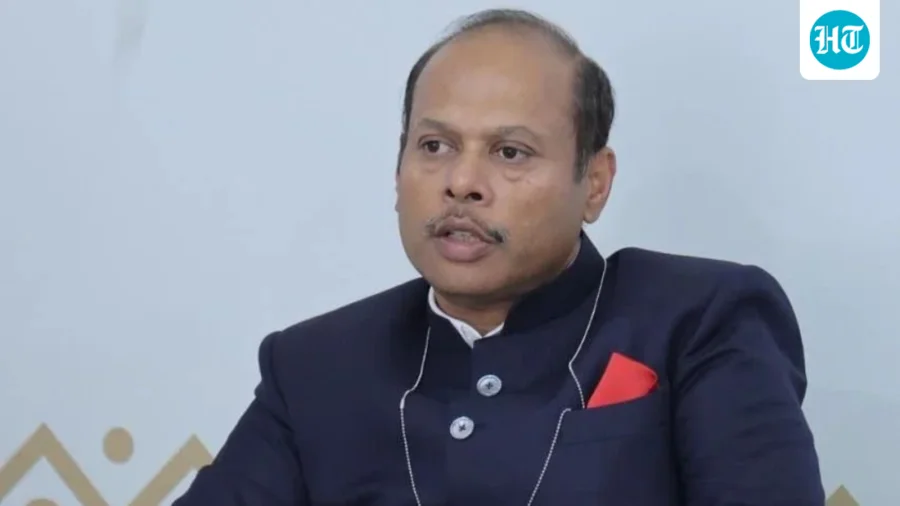
India has achieved a diplomatic milestone. For the first time, an Indian bureaucrat will hold the vice presidency of the Financial Action Task Force (FATF), the global watchdog that sets standards for combating money laundering and terrorist financing. Union Culture Secretary Vivek Aggarwal, a 1994-batch IAS officer, has been elected to the position for a one-year term starting July 2026. The appointment signals India's growing influence in global financial governance and its commitment to cracking down on illicit financial flows.
A 30-year administrative journey to the global stage
Vivek Aggarwal's career spans over three decades, beginning with his induction into the Indian Administrative Service in 1994. He belongs to the Madhya Pradesh cadre, a state where he served in various district and state-level roles before moving to central government positions. His experience includes stints in policy formulation, financial regulation, and cultural administration — a diverse portfolio that prepared him for the multilateral challenges of FATF.
Why this appointment matters for India
The FATF vice presidency is not a ceremonial post. It places India at the heart of global efforts to track dirty money, freeze terrorist assets, and enforce compliance among member nations. For a country that has long pushed for stronger action against cross-border terrorism and hawala networks, this role offers a direct platform to shape international norms. Analysts believe this could accelerate India's own compliance reviews and strengthen its hand in bilateral financial negotiations.
From culture secretary to financial watchdog leader
Aggarwal currently serves as the Secretary of the Ministry of Culture, a role that involves preserving India's heritage and promoting cultural diplomacy. His move to FATF represents a shift from soft power to hard financial governance. However, his earlier work in the finance and home ministries — where he dealt with economic regulation and internal security — provides the technical grounding needed for the FATF mandate. The transition underscores the Indian bureaucracy's ability to deploy seasoned officers across diverse domains.
What the FATF vice president actually does
The FATF vice president supports the president in setting the agenda, chairing meetings, and representing the organisation at international forums. The role also involves overseeing the mutual evaluation process, where member countries' anti-money laundering frameworks are assessed. Aggarwal will work closely with the FATF Secretariat in Paris and coordinate with regional bodies like the Asia/Pacific Group on Money Laundering. His term, though limited to one year, comes at a critical time when digital currencies and cross-border payment systems are complicating enforcement.
Confirmed facts vs what remains unclear
Confirmed: Aggarwal's election as FATF Vice-President for July 2026–June 2027. He is a 1994-batch IAS officer of the Madhya Pradesh cadre. He succeeds Giles Thomson of the UK. The Ministry of Culture officially announced the development.
Unclear: The exact voting margin or consensus process within FATF. Whether Aggarwal will continue as Culture Secretary during his FATF tenure or be reassigned. The specific policy priorities he will champion during his term.
India's long road to FATF leadership
India became a full member of FATF in 2010, after years of observer status. Since then, it has undergone multiple mutual evaluations, with the most recent review in 2024 highlighting progress in legal frameworks but noting gaps in prosecution rates. The vice presidency is seen as recognition of India's improved compliance and its active role in FATF's regional outreach. It also reflects the growing diplomatic weight of Indian bureaucrats in multilateral institutions, following similar appointments in the UN, WHO, and World Bank.
Risks and balanced view
While the appointment is a diplomatic win, the FATF vice presidency comes with scrutiny. India's own record on money laundering convictions remains mixed, and critics argue that enforcement against political corruption and shell companies is inconsistent. Aggarwal will need to balance national interests with the watchdog's impartial standards. Some experts also caution that the one-year term limits the scope for long-term policy impact. The role is largely facilitative, and the president — currently T. Raja Kumar of Singapore — holds greater agenda-setting power.
What this means for common citizens
For the average Indian, the FATF role may seem distant, but its effects are tangible. Stronger anti-money laundering norms mean stricter checks on bank accounts, property transactions, and cross-border remittances. It also means faster action against shell companies used for tax evasion. Aggarwal's tenure could influence how India's financial intelligence unit shares data with global counterparts, potentially reducing the time it takes to freeze assets linked to terror groups or drug cartels.
Future outlook
Aggarwal's term begins in July 2026, giving him nearly a year to prepare. He is expected to focus on three areas: strengthening FATF's oversight of virtual assets, improving mutual evaluation standards for developing countries, and deepening cooperation with financial intelligence units in South Asia. If successful, his tenure could pave the way for an Indian candidate to eventually lead FATF as president — a position that rotates among member nations.
Our Take
Vivek Aggarwal's elevation to FATF vice president is more than a personal achievement. It reflects India's strategic push to occupy leadership roles in global financial governance. For a bureaucracy often criticised for being reactive, this appointment signals proactive diplomacy. The real test, however, will be in execution — whether Aggarwal can translate India's concerns about terror financing into actionable global standards. The next year will show if this is a symbolic win or a substantive shift.
Frequently Asked Questions
Who is Vivek Aggarwal?
Vivek Aggarwal is a 1994-batch IAS officer of the Madhya Pradesh cadre, currently serving as Union Culture Secretary. He has over 30 years of administrative experience and has been elected as the Vice-President of the Financial Action Task Force (FATF) for the term July 2026 to June 2027.
What is FATF and why is this appointment important?
FATF is the global watchdog that sets standards for combating money laundering and terrorist financing. This is the first time an Indian has been elected as its vice president, giving India a direct role in shaping international financial crime policies.
When will Vivek Aggarwal take charge as FATF Vice President?
He will assume the position on July 1, 2026, succeeding Giles Thomson of the United Kingdom, and will serve a one-year term until June 30, 2027.
What does the FATF Vice President do?
The vice president supports the president in setting the agenda, chairing meetings, representing FATF internationally, and overseeing mutual evaluations of member countries' anti-money laundering frameworks.