On July 6, 2016, something unprecedented happened. Millions of people — young, old, and everyone in between — stepped out of their homes, phones in hand, chasing virtual creatures that appeared on their screens. It was the launch of Pokémon Go, and within a week, it had 21 million daily active players. In its first month, it earned $206 million. It was not just a game. It was a cultural shockwave.
Ten years later, the question is not whether the hype faded — it did, as all hype does. The real question is why millions are still playing. And the answer, according to the people who run it, has nothing to do with augmented reality or rare Pokémon. It is about something far more human.
The secret that kept Pokémon Go alive: Community over technology
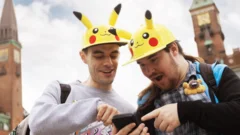
Michael Steranka, vice president at Scopely — the mobile game giant that now owns Pokémon Go — told the BBC that the game's longevity comes down to one thing: "It has always been about bringing people together." That might sound like corporate messaging, but the evidence is hard to ignore. Pokémon Go was never just a solo experience. From the beginning, players organised meetups, walked together in parks, and formed real friendships. The game became a social platform disguised as a mobile app.
Steranka's point is that while the technology — augmented reality, GPS tracking, real-time mapping — was impressive, it was the human connection that kept people coming back. "We see families, friends, even strangers bonding over a shared goal," he said. "That is the core of what we do."
Why the game still matters: More than nostalgia
For many, Pokémon Go is a link to a simpler time — the summer of 2016, when the world seemed to discover the joy of walking outside together. But nostalgia alone does not sustain a game for a decade. What keeps players engaged is the constant evolution of the experience. Seasonal events, new Pokémon generations, raid battles, and in-person community days give players reasons to return. The game has also become a tool for mental and physical health, with many players citing it as a reason to walk more, explore their neighbourhoods, and combat loneliness.
In an era of screen isolation, Pokémon Go remains one of the few digital experiences that actively pushes people outdoors and into shared physical spaces.
From Niantic to Scopely: A changing of the guard
Originally developed by Niantic, the game changed hands in 2025 when Scopely acquired the Pokémon Go business from Niantic for a reported $3.5 billion. The acquisition raised eyebrows — could a company known for mobile hits like Monopoly Go! preserve the spirit of a game built on exploration and community? Early signs suggest yes. Scopely has doubled down on live events, including the massive Pokémon Go Fest, which draws tens of thousands of players to cities around the world. Steranka insists the transition has been smooth, with the same development team largely intact.
Who is still playing? A surprisingly diverse community
The image of a Pokémon Go player has shifted. It is no longer just teenagers or nostalgic millennials. The game now attracts families, retirees, and even corporate teams using it for team-building. In many cities, local communities organise weekly walks, trading sessions, and raid groups. For some, it is a hobby. For others, it is a lifeline — a reason to leave the house, meet people, and stay active. The game's accessibility — free to play, simple mechanics, no high-end device required — has kept the barrier to entry low.
What Scopely says about the future
Steranka told the BBC that Scopely's vision for the next decade is not about radical reinvention. "We are not trying to replace the experience," he said. "We are trying to deepen it." That means more live events, better community tools, and features that encourage real-world interaction. The company is also exploring ways to integrate the game with other Scopely titles, though details remain vague. What is clear is that the strategy is conservative: protect the community, don't break what works, and keep adding reasons for people to gather.
Why Pokémon Go survived when other AR games faded
Augmented reality games were supposed to be the next big thing. They weren't. Most AR titles — from Harry Potter: Wizards Unite to Minecraft Earth — failed to sustain interest. Pokémon Go succeeded because it had something they didn't: a beloved intellectual property combined with a simple, addictive loop that rewarded real-world movement. But more importantly, it had community. Players built their own social infrastructure — WhatsApp groups, Discord servers, local Facebook pages — that kept the game alive even when official updates slowed. The game became a platform for human connection, not just a digital overlay.
Confirmed facts vs what remains unclear
Confirmed: Pokémon Go launched on July 6, 2016. It earned $206 million in its first month. It had 21 million daily active players in its first week. Scopely acquired the game in 2025. Michael Steranka is vice president at Scopely and has stated the game's focus is on community. The game still holds live events like Pokémon Go Fest.
Unclear: Exact current daily active user numbers have not been publicly disclosed by Scopely. The long-term impact of the Niantic-to-Scopely transition on game development is still unfolding. Specific future features beyond "deepening community" have not been detailed.
Scopely's moat: Why this game is hard to replicate
Pokémon Go's competitive advantage is not just the Pokémon brand — it is the network of real-world communities that have formed around it. No competitor can replicate years of local meetups, shared memories, and social trust. The game also benefits from a unique data advantage: years of location-based play patterns that help Scopely optimise events and spawns. The combination of brand loyalty, community infrastructure, and location data creates a moat that is difficult for any new AR game to cross.
Risks and balanced view
Not everything is perfect. Privacy concerns have dogged the game since launch, with critics pointing to the data collected through GPS tracking. The acquisition by Scopely — a company known for aggressive monetisation — has raised fears of increased microtransactions or pay-to-win mechanics. Some long-time players have expressed frustration with the pace of new content and the removal of certain features. There is also the risk of community burnout: live events require significant travel and expense, which can exclude casual players. The game's reliance on physical gatherings also makes it vulnerable to public health crises or safety concerns.
Wider trend: The rise of "social gaming" in the real world
Pokémon Go's success has inspired a wave of location-based social games, though none have matched its scale. The broader trend is clear: people crave digital experiences that lead to real-world connection. From fitness apps with social features to live-streaming platforms that host in-person meetups, the line between online and offline is blurring. Pokémon Go was ahead of its time, and a decade later, it remains the most successful example of this hybrid model.
Practical reader guidance: How to get started or return
If you haven't played since 2016, the game is still free and easy to pick up. Download it, create an account, and you will be guided through the basics. Join a local community group on Facebook or Discord to find raid partners and event information. For returning players, the game has added trading, PvP battles, and hundreds of new Pokémon. The 10th anniversary events in July 2026 are expected to include special bonuses, rare spawns, and in-person gatherings. Check the official Pokémon Go blog or Scopely's social channels for details.
Future outlook: What could happen next
Scopely is likely to continue investing in live events and community features, with potential expansion into new markets like India and Southeast Asia, where mobile gaming is growing rapidly. The company may also experiment with cross-game integrations, though the core experience is unlikely to change dramatically. The biggest risk is that the community — the game's true asset — could fragment if Scopely pushes monetisation too hard. For now, the outlook is cautiously optimistic: Pokémon Go has survived a decade of change, and its formula of walking, catching, and connecting shows no signs of becoming obsolete.
Our Take
Pokémon Go's 10-year anniversary is not just a milestone for a mobile game. It is a case study in how digital products can create lasting real-world value. The game succeeded not because of its technology, but because it gave people a reason to go outside and talk to each other. In an age of increasing digital isolation, that is no small thing. The real question for the next decade is whether Scopely can resist the temptation to monetise that community into exhaustion. If it can, Pokémon Go may well be around for another 10 years — and millions will still be trying to catch 'em all.
Frequently Asked Questions
Is Pokémon Go still active in 2026?
Yes. Pokémon Go remains active with millions of players worldwide. The game continues to receive regular updates, seasonal events, and in-person community gatherings. Scopely, the current owner, has committed to supporting the game long-term.
Who owns Pokémon Go now?
Scopely, a mobile game company, acquired Pokémon Go from Niantic in 2025 for approximately $3.5 billion. The development team largely remained in place after the acquisition.
How much money did Pokémon Go make in its first month?
Pokémon Go earned $206 million in its first month after launch in July 2016. It also had 21 million daily active players within its first week.
Why do people still play Pokémon Go after 10 years?
Players cite community, physical activity, nostalgia, and the game's constant evolution as reasons. Many have formed real friendships through local meetups and live events. The game also encourages walking and outdoor exploration.