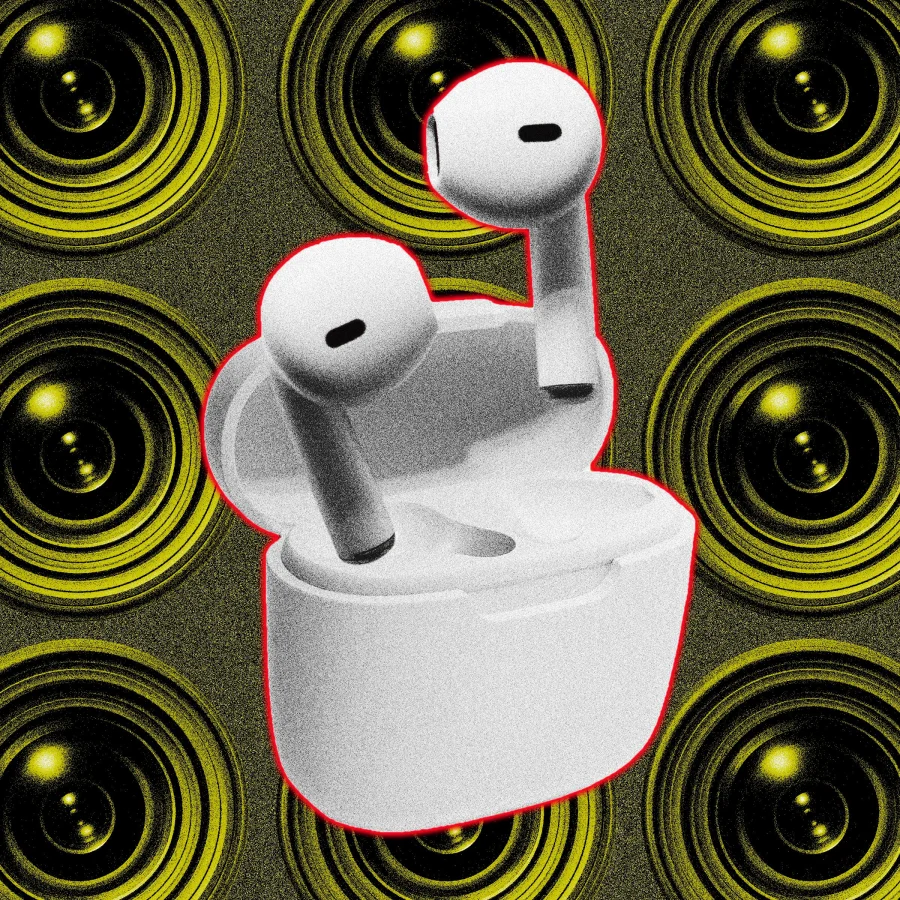
Imagine walking down a busy street, and your AirPods whisper the name of the restaurant you’re passing, warn you about an upcoming construction zone, or tell you the bus number approaching without you ever pulling out your phone. That future may be closer than you think.
Apple is reportedly testing a new generation of AirPods equipped with tiny cameras that can “see” the world around you. According to sources familiar with the project, the earbuds have reached an advanced testing stage, marking a significant step in Apple’s push to make AI a seamless, always-on part of daily life.
How AirPods With Cameras Would Work
The core idea is deceptively simple: embed a small infrared camera into each earbud. Unlike a traditional camera that captures photos, this sensor would constantly scan the user’s environment to understand spatial context. The data would then feed into Apple’s AI system, enabling the AirPods to identify objects, read signs, recognize faces, and even detect obstacles.
This is not about taking pictures. It’s about giving your earbuds a form of sight — a way to understand what you are looking at and where you are, without needing your iPhone’s camera to be active.
Why Apple Is Betting on Camera-Equipped Earbuds
For years, Apple has been building toward a future where devices fade into the background. The Apple Watch already tracks health without you thinking about it. The Vision Pro offers immersive computing, but it’s bulky and expensive. AirPods, by contrast, are already worn by hundreds of millions of people every day. Adding cameras turns them into a powerful, always-on AI interface that doesn’t require a screen.
The potential use cases are vast. Imagine walking into a grocery store and your AirPods tell you which aisle has the item on your shopping list. Or walking through a museum and hearing an audio guide triggered by the artwork you’re looking at. For people with visual impairments, this could be transformative — a discreet, audio-based way to navigate the world.
The Biggest Hurdles: Battery Life, Heat, and Privacy
But the road to a camera-equipped AirPod is not smooth. The most immediate challenge is battery life. A camera sensor running constantly, processing visual data, and communicating with an AI system would drain a tiny earbud battery in minutes, not hours. Apple would need to develop a new, ultra-efficient chip and likely a new battery technology to make this viable.
Heat is another problem. Continuous processing generates heat, and there is no room for a cooling fan inside an earbud. Engineers are reportedly working on novel thermal management solutions, but this remains a significant engineering barrier.
Then there is privacy. The idea of a device that is always “watching” — even if only the environment — raises serious concerns. Apple has built its brand on privacy, and any camera-equipped AirPods would need ironclad guarantees that the visual data never leaves the device and is not accessible to apps or third parties. Users would need to trust that the camera is not recording or transmitting anything without their explicit consent.
What Apple Has Learned From Vision Pro
Apple’s work on the Vision Pro headset has provided valuable lessons. The Vision Pro uses a sophisticated array of cameras and sensors to understand the user’s environment, but it is a large, expensive device. The challenge now is to miniaturize that technology into something that fits in your ear. The infrared camera being tested is likely a simpler, lower-resolution sensor than those in the Vision Pro, but it still needs to be reliable and power-efficient.
Confirmed Facts vs What Remains Unclear
Confirmed (via Bloomberg reporting): Apple is in advanced testing of AirPods with built-in cameras. The cameras are designed for spatial awareness and AI features. The project is not yet confirmed for mass production.
What remains unclear: The exact release timeline, the final design, the specific AI features that will launch, the battery life in real-world use, and the pricing. Apple has not made any public announcement.
Risks and Balanced View
Not everyone is convinced this is a good idea. Critics point to the privacy risks of an always-on camera, even if it is only processing data locally. There are also concerns about social awkwardness — wearing earbuds with cameras could make others uncomfortable, especially in private settings. And there is the question of whether users actually want this feature. Many people already find smart glasses intrusive; putting cameras in earbuds could amplify those concerns.
There is also the risk of technical failure. If the camera misidentifies objects or provides incorrect information, it could lead to confusion or even dangerous situations, such as giving wrong navigation instructions to a visually impaired user.
Wider Trend: The Rise of Ambient AI
Apple’s camera-equipped AirPods are part of a broader industry shift toward ambient AI — technology that is always on, always aware, and always helpful without demanding your attention. Meta’s Ray-Ban smart glasses, Google’s Project Astra, and even Samsung’s Galaxy Ring all point in the same direction: computing that disappears into everyday objects. Apple’s advantage is its existing ecosystem. AirPods already work seamlessly with iPhone, iPad, Mac, and Apple Watch. Adding cameras could make them the central hub for AI interactions.
Practical Guidance for Users
If you are considering buying new AirPods now, it is worth waiting. The current models are excellent, but a camera-equipped version could be a generational leap. For developers, this is a signal to start thinking about audio-first AI applications. For privacy-conscious users, watch for Apple’s privacy architecture — if the company can convincingly demonstrate that the camera data never leaves the device, that will be the key to adoption.
Future Outlook
If Apple solves the battery, heat, and privacy challenges, camera-equipped AirPods could launch within the next two to three years. They would likely debut as a premium model, possibly called AirPods Pro with Spatial Camera, priced significantly higher than current models. Over time, the technology could trickle down to standard AirPods and even Beats products. The bigger question is whether users will embrace a device that listens and sees — and whether society is ready for that level of ambient computing.
Our Take
This is one of the most ambitious projects Apple has attempted in the wearable space. The potential is enormous: a device that augments your reality through sound, without a screen, without glasses, without any visible technology. But the risks are equally significant. Battery life, heat, and privacy are not minor issues — they are existential for a product that must be worn all day. If Apple gets this right, it could redefine what a wearable can do. If it gets it wrong, it could become a cautionary tale about pushing technology too far, too fast.
Frequently Asked Questions
Will Apple AirPods with cameras record video?
No. The cameras are designed for spatial awareness and AI processing, not for recording video or photos. The data is processed locally on the device and is not stored or transmitted.
When will Apple launch AirPods with cameras?
Apple has not announced a release date. The technology is in advanced testing, but mass production is likely at least two years away, if it happens at all.
How will the cameras affect AirPods battery life?
Battery life is a major challenge. Apple is reportedly working on a new, ultra-efficient chip and possibly new battery technology to make the cameras viable without draining the battery too quickly.
Are camera-equipped AirPods safe for privacy?
Apple has not detailed its privacy architecture for this product. However, the company has a strong track record of on-device processing and privacy guarantees. Users should expect that visual data will not leave the device without explicit consent.