President Donald Trump has heralded a new deal with Iran, calling it a welcome birthday gift and a major step toward resolving a long-standing confrontation. But as the initial euphoria fades, the hard questions are just beginning. The agreement has been announced, but it has not been signed, and its success or failure may hinge on the details that remain shrouded in uncertainty.
A breakthrough announced, but not yet sealed
The president's announcement on Sunday marked a dramatic shift in the US-Iran dynamic, which has been defined by maximum pressure and military brinkmanship. Trump stated that the deal is "largely negotiated," but the formal signing is still days away. This gap between announcement and execution is where the greatest risks lie.
Why the details matter more than the headline
For the millions of people in the region and beyond, the stakes could not be higher. A successful deal could lower oil prices, reduce the risk of a wider war, and open the door for diplomatic engagement. A flawed or unenforceable agreement, however, could lead to renewed hostilities, a nuclear arms race, or a collapse of trust. The public's hope is tempered by the memory of past agreements that failed to deliver lasting peace.
From maximum pressure to a negotiated path
The path to this announcement has been anything but smooth. For years, the Trump administration pursued a policy of maximum pressure, including sanctions and a naval blockade, aimed at crippling Iran's economy. The talks that led to this deal were conducted in secret and against a backdrop of escalating tensions. The shift toward a negotiated settlement represents a significant strategic pivot.
Who stands to gain, and who could lose
The immediate beneficiaries of a deal would be ordinary Iranians, who have suffered under crippling sanctions, and global consumers, who could see more stable energy markets. However, regional rivals like Israel and Saudi Arabia have expressed deep skepticism, fearing that any deal may not adequately address Iran's nuclear ambitions or its support for proxy forces. The human impact will be felt most acutely by those caught in the middle of a volatile region.
Official statements and the fog of diplomacy
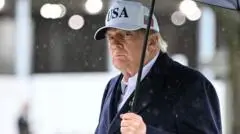
President Trump has framed the deal as a personal victory, stating that it was a "welcome birthday gift." However, officials have been careful to downplay expectations, noting that the blockade of Iran will remain until the agreement is formally signed. The lack of a signed text means that all parties can still walk away, and the coming days will test the commitment of both sides.
What the deal might actually contain
While the full text has not been released, analysts believe the core of the agreement likely focuses on Iran's enrichment capabilities and the lifting of sanctions. The central question is whether the deal is comprehensive enough to prevent Iran from developing a nuclear weapon, or whether it is a temporary pause that leaves the underlying tensions unresolved. The devil, as always, is in the details.
Confirmed facts vs what remains unclear
What is confirmed: President Trump has announced a deal with Iran, and a formal signing is expected in the coming days. What remains unclear: the exact terms of the agreement, the verification mechanisms, the timeline for implementation, and the response from key regional allies. All speculation about the deal's content should be treated with caution until the official text is released.
Risks and a balanced view of the announcement
The announcement carries significant risks. Critics argue that the deal may be too weak to prevent Iran from acquiring a nuclear weapon, while supporters see it as a necessary step to avoid a catastrophic war. There are also concerns about enforcement: without robust verification, Iran could cheat. The deal's opponents warn that it may repeat the mistakes of the 2015 JCPOA, which they argue was flawed from the start.
A pattern of high-stakes diplomacy
This announcement fits a broader pattern of high-stakes, last-minute diplomacy that has defined the Trump administration's approach to foreign policy. From North Korea to Afghanistan, the president has favored dramatic announcements over incremental progress. The success of this approach remains an open question, and the Iran deal will be a key test of its viability.
What should readers watch for now
For those following this story, the key dates to watch are the signing ceremony and the subsequent release of the deal's text. Readers should pay close attention to the verification mechanisms and the response from Israel and Saudi Arabia. Investors should monitor oil markets for signs of volatility, while ordinary citizens should be aware that the situation could change rapidly.
What happens next in the US-Iran standoff
The next few days will be critical. If the deal is signed, the focus will shift to implementation and enforcement. If it falls apart, the region could slide back toward confrontation. The future of US-Iran relations, and the stability of the Middle East, now rests on the fine print of an agreement that has been heralded but not yet delivered.
Our Take
The announcement of an Iran deal is a significant diplomatic event, but it is not a conclusion. It is the beginning of a new phase of uncertainty. The real test will be whether the agreement can survive the scrutiny of its details, the skepticism of allies, and the inherent fragility of any deal between two deeply distrustful powers. For now, the world watches and waits.
Frequently Asked Questions
Has the Iran deal been signed?
No. President Trump has announced the deal, but the formal signing is still days away. The agreement has not yet been finalized in writing.
What are the main risks of this deal?
The main risks include weak enforcement mechanisms, the potential for Iran to cheat, and the possibility that the deal does not adequately address Iran's nuclear program or its regional activities.
How will this deal affect oil prices?
A successful deal could lead to lower oil prices by easing sanctions and allowing more Iranian oil to enter the global market. However, uncertainty about the deal's future could cause volatility.
Why is Israel concerned about the deal?
Israel has expressed skepticism, fearing that any deal may not be strong enough to prevent Iran from developing a nuclear weapon or that it could legitimize Iran's regional influence.