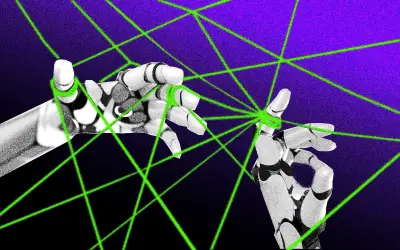
The numbers are stark. Tens of thousands of workers are being shown the door as companies replace them with AI systems. At the same time, a small cohort of AI insiders — executives, engineers, and early investors — is becoming wealthy on a scale that's hard to comprehend. This isn't just a labor market shift. It's a social powder keg.
The scale of the AI-driven layoff wave
In 2026 alone, over 150,000 job cuts across major tech firms have been directly attributed to AI automation, according to industry tracking. Companies like Google, Microsoft, Meta, and Amazon have all announced significant layoffs, citing AI efficiencies. But the trend extends beyond tech — banks, insurance firms, retailers, and media companies are also cutting staff as AI handles tasks from customer service to content generation.
Why this divide is so combustible
The anger isn't just about losing jobs. It's about who is winning. While workers are handed severance packages, AI insiders are seeing their stock options and salaries skyrocket. The CEO of one AI startup reportedly made over $200 million in stock sales this year alone. Meanwhile, a former customer service representative with 10 years of experience is now applying for retail jobs. The contrast is impossible to ignore.
How we got here: the automation timeline
The seeds were planted years ago. In 2023, generative AI tools like ChatGPT and Midjourney showed what was possible. By 2024, companies began experimenting with automation. By 2025, the shift became a wave. Now, in 2026, it's a flood. The speed has caught workers, unions, and even some policymakers off guard. There was no gradual transition — just a sudden, brutal reordering of the labor market.
Who is affected and why it matters
The layoffs are hitting middle-class knowledge workers hardest. Graphic designers, copywriters, translators, data entry operators, customer support agents, and even junior software developers are finding their roles automated. These are not low-skilled jobs — they are careers that required years of training. The human cost is immense: mortgage stress, career disruption, loss of identity, and growing anxiety about the future.
What companies and officials are saying
Company executives argue that AI adoption is necessary for competitiveness and that new jobs will eventually emerge. "We are creating new roles in AI training, oversight, and development," a Meta spokesperson said in a recent earnings call. Labor groups are skeptical. "They say new jobs will come, but they never say when or for whom," said a representative from the AFL-CIO. Some lawmakers have proposed a "robot tax" or universal basic income, but no major legislation has passed.
Why this is different from previous tech layoffs
Past tech layoffs were often cyclical — companies over-hired, then corrected. This wave is structural. The jobs are not coming back because the work no longer needs humans. AI systems are getting cheaper and more capable every quarter. This is not a temporary adjustment. It is a permanent shift in how work is organized.
Confirmed facts vs what remains unclear
Confirmed: Tens of thousands of AI-linked layoffs have occurred in 2026. Confirmed: AI insiders have seen massive wealth gains. Confirmed: No major federal policy has been enacted to address the displacement. Unclear: Whether new jobs will emerge at a scale that absorbs displaced workers. Unclear: How long the public tolerance for this inequality will last. Unclear: Whether companies will face significant backlash or regulation.
The AI industry's moat: why insiders are winning
The AI industry is built on a powerful moat: data, compute, and talent. Companies that control massive datasets and expensive GPU clusters have an almost insurmountable advantage. Early employees and investors in these firms hold equity that has multiplied in value. The network effect of AI platforms — where more users generate better models — further concentrates wealth. This is not a level playing field.
Risks and balanced view
Not everyone agrees the situation is a powder keg. Some economists argue that automation historically creates more jobs than it destroys, though the transition is painful. Others point out that AI also creates new opportunities in fields like prompt engineering, AI ethics, and model training. However, critics counter that these new roles are far fewer and require different skills, leaving many workers behind. The risk of social unrest, political backlash, and a populist backlash against tech is real.
A wider pattern: the hollowing of the middle class
This AI layoff wave is part of a longer trend. For decades, technology has been automating routine work, squeezing the middle class. AI is now automating cognitive work — the very jobs that were supposed to be safe. The result is a labor market that is increasingly bifurcated: a small group of high-skill, high-reward workers at the top, and a growing pool of precarious, low-wage service jobs at the bottom.
What workers and job seekers should do now
For those affected, the advice is grim but practical: upskill into roles that require human judgment, creativity, and emotional intelligence — areas where AI still struggles. Consider fields like healthcare, skilled trades, education, and roles that involve direct human interaction. Stay informed about which industries are most at risk. Network aggressively. And consider advocating for policy changes like portable benefits, retraining funds, and a stronger social safety net.
What could happen next
The next 12 to 18 months will be critical. If layoffs continue to accelerate without a safety net, public anger could translate into political action. We may see strikes, protests, or a surge in support for populist candidates who promise to "tame" AI. On the other hand, if companies invest in retraining and new job creation, the transition could be managed. The outcome depends on choices being made now — by executives, policymakers, and voters.
Our Take
The AI layoff wave is not just a business story. It is a story about fairness, power, and the social contract. When a small group gets extraordinarily rich while millions lose their livelihoods, the system breaks trust. The technology itself is not the enemy — but the way it is being deployed, with all the gains flowing upward and all the risks pushed downward, is a recipe for backlash. The question is not whether the powder keg will explode, but when — and whether we will have built any safeguards by then.
Frequently Asked Questions
What is the AI layoff wave?
The AI layoff wave refers to the ongoing trend of companies replacing human workers with AI systems, leading to mass job cuts across industries like tech, customer service, and content creation.
Why is it called a powder keg?
It's called a powder keg because the combination of widespread job losses and extreme wealth accumulation by AI insiders is creating a volatile social situation that could lead to public anger, protests, or political upheaval.
Which jobs are most at risk from AI?
Jobs involving routine cognitive tasks — like data entry, translation, copywriting, customer support, and junior coding — are most at risk. Jobs requiring human judgment, creativity, and emotional intelligence are relatively safer.
What can workers do to protect themselves?
Workers should focus on skills that AI cannot easily replicate: critical thinking, complex problem-solving, interpersonal communication, and hands-on technical skills in fields like healthcare and skilled trades. Continuous learning and networking are essential.