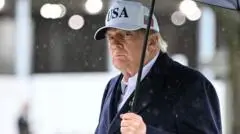

In a decisive blow to President Donald Trump’s immigration agenda, the US Supreme Court on Tuesday struck down his executive order seeking to end birthright citizenship, affirming that the 14th Amendment guarantees citizenship to nearly everyone born on American soil. The 6-3 ruling, with Chief Justice John Roberts writing for the majority, rejected the administration’s argument that the president had the authority to reinterpret the Citizenship Clause unilaterally.
What the Supreme Court actually decided
The court held that the 14th Amendment’s Citizenship Clause — which states “All persons born or naturalized in the United States, and subject to the jurisdiction thereof, are citizens of the United States” — has been settled law since the 1898 case United States v. Wong Kim Ark. The majority opinion found that Trump’s executive order, signed in January 2025, directly contradicted this precedent and exceeded presidential authority. “The Constitution does not permit the president to rewrite its text by executive decree,” Roberts wrote.
Why this ruling matters for millions of families
Birthright citizenship has been a cornerstone of American identity for over a century, affecting an estimated 4 million children born in the US to undocumented parents and another 200,000 born to legal temporary residents each year. For families like the Garcias in Houston, whose son was born while his mother held a student visa, the ruling means their child’s citizenship remains secure. “We were terrified,” said Maria Garcia, a nurse. “This is our home. Our son is American.” The decision removes a cloud of uncertainty that had hung over mixed-status households since the order was first announced.
How the legal battle unfolded
Trump’s executive order, issued on January 20, 2025, directed federal agencies to deny passports, Social Security numbers, and other benefits to children born to non-citizen parents. Within days, 22 states, led by California and New York, filed lawsuits arguing the order was unconstitutional. Federal district courts in Seattle, Boston, and San Francisco issued nationwide injunctions, blocking the order from taking effect. The administration appealed directly to the Supreme Court, which fast-tracked the case. Oral arguments in April 2026 revealed a deeply skeptical bench, with even conservative justices questioning the president’s legal theory.
Who is affected and what changes now
For the millions of families living in the shadows of this policy, the ruling is a reprieve. Children born in the US to undocumented parents, tourists, students, or temporary workers will continue to receive automatic citizenship. Hospitals, which had been bracing for a surge in stateless newborns, can now operate without fear of federal penalties. Immigration advocates hailed the decision as a victory for human rights. “This is not just a legal win — it’s a moral one,” said Omar Jadwat of the ACLU. “The court refused to let the president tear apart families.”
Trump’s response and what he might do next
President Trump reacted angrily, calling the ruling “a betrayal of the Constitution” and accusing the justices of “legislating from the bench.” In a statement from the White House, he vowed to “use every tool available” to end what he calls “birth tourism” and “anchor babies.” Legal experts say his options are limited. A constitutional amendment would require two-thirds majorities in both houses of Congress and ratification by 38 states — a near-impossible hurdle. Legislation to redefine citizenship could pass the Republican-controlled House but faces a filibuster-proof majority in the Senate. “This is a dead end for Trump,” said Professor Sarah Binder of George Washington University. “The court has spoken, and the Constitution is clear.”
What the ruling means for the 14th Amendment’s future
The decision reaffirms the 14th Amendment’s original intent: to overturn the Supreme Court’s 1857 Dred Scott decision, which denied citizenship to Black Americans. The Citizenship Clause was designed to ensure that all people born in the US, regardless of race or parentage, are citizens. Legal scholars say the ruling strengthens this principle against future challenges. “This is a landmark that will stand for generations,” said Professor Akhil Amar of Yale Law School. “The court has made clear that birthright citizenship is not a policy choice — it is a constitutional right.”
Confirmed facts vs what remains unclear
Confirmed: The Supreme Court struck down Trump’s executive order on birthright citizenship. The ruling is based on the 14th Amendment and the 1898 Wong Kim Ark precedent. The decision is final and cannot be appealed. Unclear: Whether Trump will pursue a constitutional amendment or legislative action. The political feasibility of such efforts remains uncertain. The long-term impact on immigration enforcement and family separation policies is also unclear, as the administration may shift focus to other areas.
Why the court’s composition mattered
The 6-3 ruling included two Trump-appointed justices — Neil Gorsuch and Brett Kavanaugh — in the majority, while Justice Samuel Alito wrote a dissent joined by Justices Clarence Thomas and Amy Coney Barrett. The split highlights the limits of presidential power even with a conservative supermajority. “This was not a partisan decision,” noted Chief Justice Roberts in the opinion. “It is a decision about the rule of law.” The ruling underscores that even a president with a friendly court cannot unilaterally rewrite the Constitution.
Risks and balanced view
Supporters of Trump’s order argue that birthright citizenship encourages illegal immigration and “birth tourism,” where pregnant women travel to the US specifically to give birth. They contend that the 14th Amendment was never intended to cover children of undocumented immigrants. Critics of the ruling warn that it may fuel political backlash and further polarize the immigration debate. “The court has closed the door on a legitimate policy debate,” said Mark Krikorian of the Center for Immigration Studies. “This will only intensify the fight.”
Wider trend: The battle over citizenship in the 21st century
The ruling comes amid a global debate over birthright citizenship. Countries like Canada and most of the Americas grant automatic citizenship, while many European nations have moved toward stricter rules. Trump’s effort was part of a broader push to restrict immigration, including travel bans, family separation policies, and limits on asylum. The Supreme Court’s decision may embolden other nations to defend jus soli (right of the soil) principles, but it also highlights the growing tension between nationalist movements and constitutional protections.
Practical guidance for affected families
For families with children born in the US, the ruling means no immediate action is needed. Birth certificates, passports, and Social Security numbers remain valid. However, immigration advocates recommend keeping copies of all documents and consulting an attorney if any federal agency attempts to deny benefits. For pregnant women on temporary visas, the ruling removes the threat of statelessness for their newborns. “Breathe a sigh of relief,” said immigration lawyer Jessica Vaughan. “But stay vigilant — the fight is not over.”
Future outlook
The immediate future is clear: birthright citizenship remains the law of the land. Trump may pivot to legislative efforts, but with a divided Congress and midterm elections approaching, the chances of a constitutional amendment are slim. The ruling may also influence the 2028 presidential campaign, with candidates on both sides using it to rally their bases. For now, the 14th Amendment stands as a bulwark against executive overreach — a reminder that some rights are not subject to political winds.
Our Take
This ruling is more than a legal defeat for Trump — it is a reaffirmation of a fundamental American principle: that citizenship is not a privilege granted by the president, but a right rooted in the Constitution. The decision protects millions of children from being rendered stateless and upholds a precedent that has defined the nation for over a century. While the political debate over immigration will continue, the court has drawn a clear line. In an era of executive power grabs, this is a victory for the rule of law.
Frequently Asked Questions
What did the Supreme Court decide about birthright citizenship?
The Supreme Court struck down President Trump’s executive order that sought to end birthright citizenship, ruling that the 14th Amendment guarantees citizenship to anyone born on US soil, regardless of their parents’ immigration status.
Can Trump still end birthright citizenship through Congress?
Legally, yes — Congress could pass a law redefining citizenship, but it would likely face a filibuster in the Senate and would almost certainly be challenged as unconstitutional. A constitutional amendment would require a two-thirds supermajority in both chambers and ratification by 38 states, which is politically unlikely.
Does this ruling affect children already born in the US?
No. The ruling confirms that all children born in the US remain citizens. The executive order was blocked before it could take effect, so no one lost citizenship as a result of it.
What is the 14th Amendment’s Citizenship Clause?
The Citizenship Clause, added after the Civil War, states: “All persons born or naturalized in the United States, and subject to the jurisdiction thereof, are citizens of the United States.” It was designed to overturn the Dred Scott decision and ensure citizenship for all people born in the US.