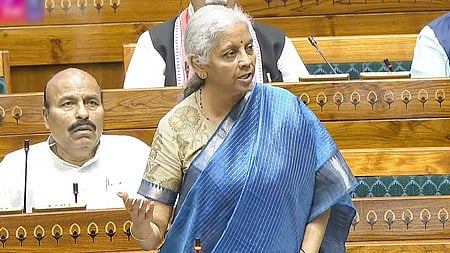
Finance Minister Nirmala Sitharaman moved to refer the Corporate Laws (Amendment) Bill, 2026 to a Joint Parliamentary Committee on Monday in New Delhi to allow for deeper scrutiny of proposed changes to business regulations. The Lok Sabha approved the referral of the Corporate Laws (Amendment) Bill, 2026 to a Joint Parliamentary Committee on Monday in New Delhi to examine changes to the Companies Act and Limited Liability Partnership Act.
Finance Minister Nirmala Sitharaman proposes wider review of business rules
Finance Minister Nirmala Sitharaman introduced the legislation in the lower house and recommended that a parliamentary panel examine the details. She stated that the government wants more input from stakeholders before the bill becomes law. This decision means the bill will not pass immediately, as a group of lawmakers must first study every clause.
The bill proposes changes to the Limited Liability Partnership Act, 2008 and the Companies Act, 2013. These two laws govern how businesses operate, report their finances, and handle legal disputes in India. By amending these acts, the government aims to make it easier for entrepreneurs to run their firms without fear of harsh legal action for minor errors.
Sitharaman explained that the reforms intend to improve corporate governance while making India more attractive to global investors. She noted that the bill is the result of two years of work involving industry bodies and legal experts. This long preparation suggests the government is trying to fix long-standing complaints from the business community about over-regulation.
Two years of consultation lead to proposed regulatory reforms
The government started working on these amendments two years ago by talking to professional institutions and industry groups. These discussions focused on how current laws might be slowing down economic growth. The Company Law Committee provided the first set of recommendations after reviewing how existing regulations affect daily business operations.
A high-level panel on regulatory reforms then checked these findings to ensure they aligned with broader economic goals. This panel looked for ways to reduce the time and money businesses spend on paperwork. In the past, similar committees have helped remove outdated rules that no longer serve a purpose in a modern economy.
The government maintains that these changes are part of a larger plan to simplify non-financial rules. By streamlining these processes, the Ministry of Corporate Affairs hopes to encourage more people to start formal businesses. This history of consultation shows that the bill is not a sudden move but a planned step in economic policy.
Startups and farmer producer companies set to gain from reduced paperwork
Small enterprises and startups often face the same heavy compliance rules as large corporations, which can drain their limited resources. The new bill aims to lower this burden by creating simpler paths for smaller firms to follow. If these changes take effect, a small business owner will spend less time on filings and more time on actual operations.
Farmer-led producer companies are also a specific target for these benefits. These organizations help farmers pool their resources to get better prices, but they often struggle with complex corporate laws. Reducing their legal workload could help these rural businesses grow faster and support more farming families.
The bill also seeks to improve the "ease of doing business" ranking for India. When laws are easy to understand and follow, more foreign companies are likely to set up offices in the country. This creates jobs and brings new technology to the local market, which helps the entire economy.
Shift from jail time to fines for minor corporate errors
One of the biggest changes in the bill is the decriminalization of minor offenses. Currently, some administrative mistakes can lead to criminal charges against company directors. The bill proposes replacing these criminal liabilities with civil penalties, which usually involve paying a fine instead of facing a court trial.
This change treats a paperwork error as a mistake rather than a crime. It removes the threat of prison for technical failures that do not involve fraud or harming the public. For a business leader, this reduces the personal risk of running a company and makes the role less stressful.
- Minor offenses will move from criminal courts to an internal adjudication system.
- Fines will replace potential prison sentences for non-serious compliance failures.
- Regulatory requirements for small firms will be simplified to save time.
- Farmer producer companies will receive specific exemptions to help them scale up.
Opposition lawmakers raise concerns over Corporate Social Responsibility rules
Lawmakers Manish Tewari, Sougata Ray, and T. Sumathy expressed worry that the bill might weaken Corporate Social Responsibility (CSR) rules. CSR is a mandatory practice where large companies must spend a portion of their profits on social projects like schools or clinics. The opposition members fear that the new amendments could give companies a way to avoid these obligations.
Manish Tewari argued that the language in the bill needs careful checking to ensure social spending does not drop. Sougata Ray and T. Sumathy joined him in asking for clear protections for these public-interest funds. They believe that while helping businesses is good, it should not come at the cost of social welfare programs.
Sitharaman responded by saying the reforms actually strengthen how companies are governed. She stated that the goal is to balance oversight with ease of compliance, not to let companies ignore their social duties. The referral to the Joint Parliamentary Committee will allow these opposing views to be debated in detail.
Joint Parliamentary Committee to review bill before final vote
The Joint Parliamentary Committee (JPC) will now begin a detailed examination of every section of the bill. This committee includes members from both the Lok Sabha and the Rajya Sabha. They have the power to call experts, business leaders, and government officials to testify about the potential impact of the law.
After the JPC finishes its review, it will write a report with suggested changes. The government will then decide whether to accept these suggestions before bringing the bill back to the Lok Sabha for a final vote. This process ensures that the law is not rushed and that different political parties have a say in the final version.
There is no fixed date yet for when the JPC must submit its report. However, such committees usually take several months to complete their work. Businesses and legal experts will be watching the committee's progress closely to see if the CSR rules or penalty structures change during the review.
Key Numbers and Facts
The confirmed figures behind this story at a glance.
Key Fact Detail Main person or organisation Nirmala Sitharaman, Finance Minister Main action or decision Referral of Corporate Laws Bill to JPC Date or period Monday, March 23, 2026 Location Lok Sabha, New Delhi Amount, figure, or scale Amends 2 major Acts (LLP 2008 and Companies 2013) Previous status Criminal penalties for minor corporate offenses Current status Bill under parliamentary committee scrutiny Primary effect Delay in implementation for deeper review Next confirmed step JPC detailed examination and report submission
Balancing business growth with strict corporate accountability
The decision to send the bill to a committee shows that the government is willing to slow down its reform agenda to ensure political agreement. While the goal is to help businesses grow by removing the threat of jail for minor errors, the concerns about CSR show that public interest remains a priority. This debate is like a tug-of-war between making things easier for owners and keeping them responsible to the community.
The final version of this law will determine how much freedom small businesses and startups have in the coming years. If the JPC can address the opposition's fears without adding back the heavy paperwork, it could create a more stable environment for investment. The strength of India's corporate sector depends on finding this middle ground where rules are simple to follow but impossible to ignore.
Frequently Asked Questions
What is the Corporate Laws Amendment Bill 2026?
The Corporate Laws (Amendment) Bill, 2026 is a proposed law that changes the Companies Act and the Limited Liability Partnership Act. It aims to make doing business easier by reducing paperwork and changing criminal penalties into fines for minor mistakes. The bill specifically focuses on helping startups and small companies grow with fewer legal hurdles.
Why was the bill sent to a Joint Parliamentary Committee?
The bill was sent to a Joint Parliamentary Committee (JPC) to allow for a more detailed study of its clauses and to hear from more experts. Opposition lawmakers raised concerns that the changes might weaken rules about how companies spend money on social causes. The JPC will review these concerns and suggest improvements before the bill is voted on again.
How does the bill help small businesses and startups?
The bill helps small businesses by simplifying the rules they must follow and removing the risk of prison for administrative errors. It replaces criminal charges with civil fines for minor compliance failures, which reduces the legal risk for entrepreneurs. It also aims to cut down the number of filings that small firms and farmer-led companies have to submit to the government.