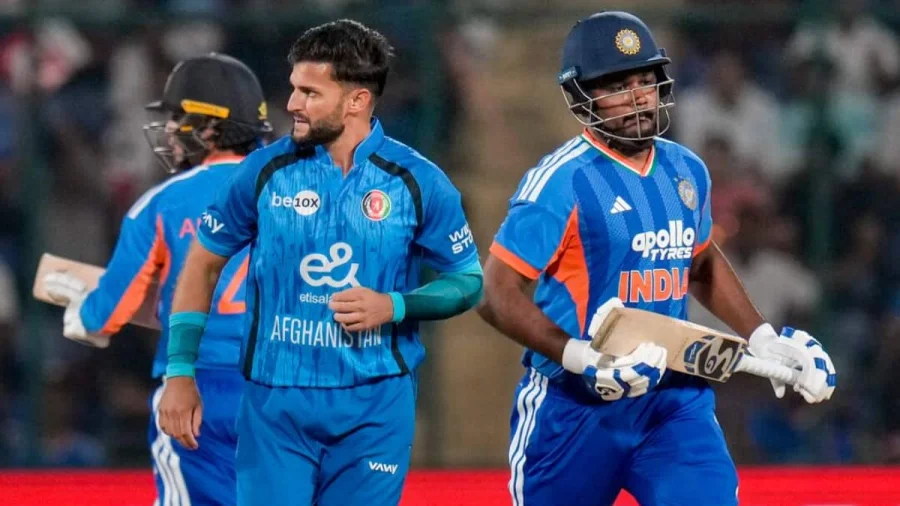
India are in the Asian Games 2026 cricket semi-final, and not one ball was bowled to get them there. The quarterfinal against Afghanistan in Nisshin was abandoned on Tuesday after persistent rain left the outfield unplayable — a result that sends India forward and ends Afghanistan's tournament without a single over of contest.
It is the kind of exit no team prepares for. Afghanistan travelled to Japan to play a knockout match. They leave having watched the covers stay on.
A Knockout Match That Never Started
The rain in Nisshin was relentless enough that the ground never became fit for play. According to the original report, the weather eased shortly before the scheduled toss, raising brief hopes of a start — but the wet outfield forced officials to hold firm.
No toss. No team sheets read out under floodlights. No first over. The match was called off with the square still under covers.
Why There Was No Second Chance
The quarterfinal stage of the Asian Games 2026 cricket competition had no reserve day. That single detail turned a weather delay into a tournament-ending event for one side.
In most bilateral series and ICC events, a washed-out knockout match is pushed to the next day. Here, the schedule left no room — and the regulations had already anticipated what to do when the sky refused to cooperate.
The Ranking Rule That Decided India's Fate
With no play possible, the outcome fell to the tournament's ranking provision. Under the Asian Games regulations, when a knockout match cannot be completed, the higher-ranked side — determined by ICC rankings — advances.
India, sitting well above Afghanistan in the ICC standings, were the beneficiaries. It is a rule designed to produce a result when cricket cannot, and on this occasion it produced the result most neutrals would have predicted anyway.
What This Means for Afghanistan
For Afghanistan, this is a hollow ending. There is no defeat to analyse, no innings to dissect, no moment where the game slipped away. Their exit is administrative, not athletic.
Players who had prepared for a marquee knockout fixture against one of the world's best sides were left with nothing to show for the trip. That is the quiet cruelty of a rain rule — it protects the tournament, but not the teams.
India's Progress — Deserved or Default?
India will take the semi-final spot. Whether they earned it on the field is a question no one can answer, because the field was never used.
What is clear is that India's ICC ranking — built over years of consistent performances across formats — is what carried them through. The rule rewards long-term standing, not one afternoon's form.
Confirmed Facts vs What Remains Unclear
Confirmed: The quarterfinal was abandoned without a ball bowled. The outfield was unfit. No reserve day was available. India advanced via the ranking rule.
Unclear: India's semi-final opponent, the venue and date of that fixture, and whether the Asian Games organising committee will review the reserve-day policy for future editions. None of this is confirmed in the source material.
The Bigger Question: Should Knockouts Have Reserve Days?
This is not the first time rain has decided a knockout match, and it will not be the last. Tournament schedulers balance broadcast windows, venue availability and player workload — and reserve days cost all three.
But when a team's entire campaign ends without a ball being bowled, the trade-off looks less like efficiency and more like a flaw. Expect this debate to follow the tournament.
What India Carry Into the Semi-Final
India enter the last four with fresh legs — an unintended advantage of the washout. No overs bowled, no batting collapse to recover from, no fatigue from a tense chase.
They also enter without match rhythm in these conditions, which cuts both ways. A semi-final is not the place to find your timing.
Risks and the Balanced View
India's passage is legitimate under the rules, but it is not a statement of form. A semi-final against a side that has actually played and won a knockout match could expose any rust.
For the tournament, the bigger risk is credibility. A marquee fixture decided by a rankings table rather than a cricket match invites fair criticism — especially from fans who paid for tickets to a game that never happened.
Practical Reader Guidance
If you are following the Asian Games 2026 cricket competition, treat India's semi-final as a fresh start rather than a continuation. Their quarterfinal form does not exist — there is nothing to read into.
For Afghanistan supporters, the exit is final. There is no appeal process in a rain-abandoned match decided by ranking.
Future Outlook
India now wait for their semi-final opponent and fixture details, which are yet to be confirmed. The team will likely use the gap for training sessions in Nisshin.
Beyond this tournament, the washout adds pressure on organisers of multi-sport events to reconsider reserve days for cricket knockouts — particularly as the sport's presence at the Asian Games grows.
Our Take
India are in the semi-final, and the rulebook says they belong there. But there is something unsatisfying about a knockout match that never happened — for Afghanistan, for the fans in Nisshin, and for a tournament trying to build cricket's profile in the region.
The ranking rule exists for exactly this scenario, and it worked as designed. That does not make it feel like cricket.
Frequently Asked Questions
Why was the India vs Afghanistan Asian Games 2026 quarterfinal abandoned?
Persistent rain left the outfield in Nisshin unfit for play. Although the weather eased shortly before the scheduled toss, officials decided the ground was not safe or playable, and the match was called off without a ball being bowled.
How did India qualify for the semi-final without playing?
The Asian Games 2026 cricket regulations state that when a knockout match cannot be completed and there is no reserve day, the higher-ranked team — based on ICC rankings — advances. India rank above Afghanistan, so India progressed.
Was there a reserve day for the quarterfinal?
No. The source material confirms there was no reserve day available at the quarterfinal stage, which is why the ranking rule had to decide the outcome.
What happens next for India in the Asian Games 2026 cricket competition?
India move into the semi-final. Their opponent, the venue and the match date have not been confirmed in the source material.