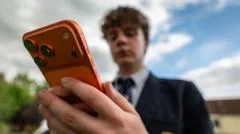
For years, parents have worried about the glow of a screen replacing the light in their child's eyes. Now, the UK's most senior doctors have delivered a verdict that leaves little room for doubt: there is an "overwhelming consensus" that time spent on screens and social media is actively harming children. This isn't just another warning from a single expert. It's the unified voice of the Academy of Medical Royal Colleges, representing the entire medical establishment, and they are demanding that doctors start asking about screen time at every single appointment.
Why This Matters Right Now
This isn't a distant academic debate. It's a direct challenge to the way millions of families live today. The doctors are responding to a government consultation about social media use for under-16s, meaning this warning could directly influence future laws and school policies. For parents, it validates a deep, often unspoken fear: that the device in their child's hand might be doing more than just entertaining them. It could be reshaping their mental health, sleep, and development in ways we are only beginning to understand. The emotional weight of this "overwhelming consensus" is that the burden of proof has now shifted. The question is no longer "does screen time harm?" but "what are we going to do about it?"
How the Warning Unfolded
The Academy of Medical Royal Colleges, which brings together the UK's leading medical bodies, submitted its response to a government consultation specifically focused on social media use for children under 16. In a significant and coordinated move, the doctors did not just offer cautious advice. They stated plainly that there is an "overwhelming consensus" within the medical community that screen time and social media are harmful to young people. Their key recommendation is a practical, frontline change: doctors should routinely check on screen time and social media use when seeing younger patients. This would turn a vague parental concern into a standard part of medical care, much like checking diet or exercise.
Who Is Affected and What Officials Are Saying
The primary group affected is every child and teenager in the UK, and by extension, their parents and guardians. The doctors' call for routine checks means that millions of young patients could soon be asked about their digital habits during GP visits, school health checks, or hospital appointments. The Academy's statement represents the collective view of the medical profession, giving it immense authority. While the government has not yet responded to the consultation, the doctors' clear language signals that they expect action. The message to parents is equally direct: this is a health issue, not just a lifestyle choice.
What We Know So Far — and What Remains Unclear
What we know: The Academy of Medical Royal Colleges has publicly stated there is an "overwhelming consensus" that screen time and social media harm children. They have recommended that doctors routinely ask about these habits during consultations. This is a formal response to a government consultation on social media use for under-16s.
What remains unclear: The exact nature of the "harm" is not fully detailed in this specific statement — it could encompass mental health issues like anxiety and depression, sleep disruption, reduced physical activity, or exposure to harmful content. It is also unclear what specific guidelines doctors would follow for these checks, or what the government's next steps will be. The consultation is ongoing, and no new laws have been proposed yet.
Risks, Concerns, and the Balanced View
While the medical consensus is strong, it is important to acknowledge the complexity. Critics of blanket warnings argue that screen time is not a single activity — it includes educational content, creative tools, and social connection, which can be beneficial. Some previous research has suggested the harmful effects of screen time on children may be overstated. However, the Academy's statement represents the current, unified view of the UK's top doctors, who are weighing the cumulative evidence. The risk of inaction, they argue, is far greater than the risk of being overly cautious. The balanced view is that while not all screen time is equal, the overall trend points to significant, widespread harm that demands a systemic response.
Why Similar Concerns Are Growing Globally
This UK warning is part of a much larger, global shift. Countries like France and Australia are already considering or implementing restrictions on social media for minors. The US Surgeon General has also warned about the mental health crisis linked to social media use among adolescents. The "overwhelming consensus" in the UK reflects a growing international recognition that the digital environment is not neutral — it actively shapes young minds. The doctors' call for routine checks is a practical step that other health systems may soon follow, making this a potentially landmark moment in public health.
- The Academy of Medical Royal Colleges represents the UK's leading medical bodies.
- The warning is a formal response to a government consultation on social media use for under-16s.
- Doctors are calling for routine checks on screen time and social media use during medical appointments.
"There is an 'overwhelming consensus' that time spent on screens and social media harms children." — Academy of Medical Royal Colleges, as reported by BBC News
What Parents and Guardians Should Know Now
For parents, this is a clear signal to start having open conversations with your children about their digital lives. It is also a reason to be proactive during medical visits: ask your doctor about screen time guidelines. The doctors' recommendation means that soon, this may be a standard part of care. In the meantime, practical steps include setting consistent screen-free times (like during meals and before bed), encouraging physical activity and face-to-face social interaction, and being aware of what platforms your child is using. The goal is not to eliminate screens, but to manage them as a health factor, just like nutrition and sleep.
What Could Happen Next
The immediate next step is for the government to review the consultation responses, including this powerful statement from the Academy. This could lead to new official guidelines for doctors, public health campaigns, or even legislative changes regarding social media access for under-16s. The doctors' call for routine checks could become a standard part of pediatric care within the NHS. Longer term, this could influence how schools, tech companies, and families approach digital health, potentially leading to a cultural shift in how we view screen time for children.
Our Take: Why This Story Matters Beyond One Warning
This is not just another health warning. It is a rare moment of unified, authoritative consensus from the medical establishment. When the UK's top doctors speak with one voice about an "overwhelming consensus," it carries the weight of thousands of clinicians who see the effects of screen time in their patients every day. This story matters because it moves the conversation from individual parental guilt to a collective public health responsibility. It signals that the era of asking "is it bad?" is over. The new question is "how do we fix it?" For every parent who has ever felt a pang of worry watching their child scroll, this is validation. And for policymakers, it is a clear, urgent call to action.
FAQs
What does the "overwhelming consensus" mean for my child?
It means the UK's top doctors are now unified in their view that screen time and social media are causing significant harm to children's health. This is a strong signal for parents to take digital habits seriously and for doctors to start asking about them during check-ups.
Will doctors really start asking about screen time at appointments?
That is exactly what the Academy of Medical Royal Colleges is recommending. If adopted, it would become a routine part of medical consultations for younger patients, similar to questions about diet, exercise, and smoking.
Is all screen time harmful, or just social media?
The doctors' warning specifically mentions both "screen time" and "social media." While not all screen time is equal (educational content differs from passive scrolling), the consensus is that the overall volume and nature of digital engagement is causing harm. Social media is highlighted as a particular concern.
What should I do as a parent right now?
Start by having open, non-judgmental conversations with your child about their screen use. Set clear boundaries like screen-free meal times and a digital curfew before bed. Encourage offline activities and be a role model with your own device use. Most importantly, don't feel alone — this is now recognized as a major public health issue.