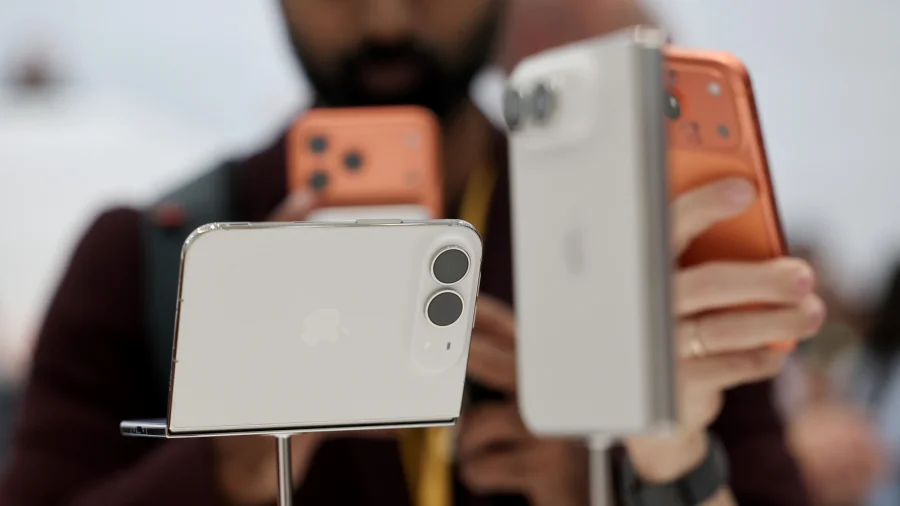
Two iPhones, one number. For anyone who has ever juggled a work phone and a personal phone, that sentence alone is enough to pay attention. iPhone Handoff is Apple's answer to a very ordinary problem: you own two devices, but you only have one mobile number — and you don't want to miss a call because the wrong phone is in your bag.
What iPhone Handoff Actually Does
Handoff, in this context, is about letting a single mobile number reach you across two iPhones rather than being locked to one device. The idea is continuity — you move between phones during the day, and your number moves with you.
It's a practical feature, not a flashy one. There's no new camera trick here. The value is in not having to explain to callers why you didn't pick up.
Why This Matters More Than It Sounds
India has one of the world's largest populations of dual-phone users — freelancers, sales staff, small business owners, and anyone whose employer issues a separate handset. Carrying two numbers usually means two SIMs, two bills, and two chances to miss something important.
If Handoff works as intended, it quietly removes one layer of that friction. That's the appeal.
How the Feature Fits Into Apple's Setup
Apple has steadily pushed iPhone users toward eSIM, the digital SIM that replaces a physical card. Handoff-style multi-device use leans on that infrastructure — which is exactly why carrier support becomes the deciding factor.
An iPhone can be technically ready and still not deliver the experience, if the network on the other end hasn't enabled it.
Who Actually Gets to Use It
This is where expectations need to be managed. Handoff is not a universal switch you flip on. Availability depends on the carrier, the plan, and whether eSIM provisioning is supported for that account.
Two users with identical iPhones on different networks can have completely different outcomes. That's not a bug — it's how carrier-dependent features have always worked.
What Carriers Have Said
There is no fresh, unified carrier statement specific to this feature that can be treated as definitive. Support is best confirmed directly — through the carrier's own documentation or customer care — rather than assumed from a general Apple feature list.
Where official confirmation is unavailable, the honest position is simple: verify before you rely on it.
Reading Between the Lines
Features like this tend to arrive quietly and spread unevenly. Apple builds the capability; carriers decide the pace. That gap is where most user frustration lives.
For Apple, the pitch is ecosystem stickiness — the more your number follows you across devices, the harder it is to leave the iPhone. For carriers, it's a support cost they weigh against customer retention.
Confirmed Facts vs What Remains Unclear
Confirmed: iPhone Handoff is designed to let one mobile number work across two iPhones, and it depends on carrier and eSIM support.
Unclear: The exact list of supported carriers, plan requirements, and regional availability. Any specific carrier claim should be treated as unverified until the network confirms it directly.
Where the Real Value Sits
Apple's advantage here isn't a single feature — it's the ecosystem. Handoff only makes sense because iCloud, eSIM, and Continuity already exist as a connected system. A competitor can copy the idea; replicating the plumbing is harder.
That's the moat: not the switch, but everything the switch quietly depends on.
The Catch Nobody Mentions First
Carrier dependence cuts both ways. If your network doesn't support it, the feature simply doesn't exist for you — no matter how new your iPhone is.
There's also the question of battery, data, and how calls are routed when both devices are active. Those details matter in daily use, and they're rarely part of the marketing line.
A Pattern Worth Noticing
This is part of a broader shift: the phone number is slowly detaching from the physical SIM. eSIM, multi-device numbers, and cross-device continuity are all moving in the same direction.
Handoff is one step in that journey — not the destination.
What You Should Do Before Setting It Up
Start with your carrier, not your phone. Ask directly whether your number and plan support multi-device use and eSIM provisioning. Confirm any charges. Then attempt setup.
If you're on a work-issued device, check with your IT team too — company policies often restrict this kind of configuration.
What Could Happen Next
If adoption grows, more carriers are likely to enable support over time, following the same slow curve eSIM itself followed. Until then, availability will remain uneven.
Readers should expect a gradual rollout rather than a single switch-on moment.
Our Take
iPhone Handoff is a genuinely useful idea wrapped in a genuinely frustrating dependency. The concept solves a real problem for millions of dual-phone users — but only for those whose carrier has done its part.
It's a reminder that in mobile, the hardware is rarely the bottleneck. The network is.
Frequently Asked Questions
What is iPhone Handoff?
It's a feature that lets a single mobile number be used across two iPhones, so calls and continuity follow you between devices instead of being tied to one handset.
Does iPhone Handoff work on all carriers?
No. Support depends on the carrier, the plan, and eSIM provisioning. Two users with the same iPhone on different networks can have different results.
Do I need an eSIM to use it?
In practice, yes — the feature leans on eSIM infrastructure, which is why carrier readiness is the deciding factor rather than the iPhone model alone.
How do I check if my carrier supports it?
Contact your carrier's customer care or check their official documentation for multi-device and eSIM support. Avoid relying on social media claims or forwarded messages.