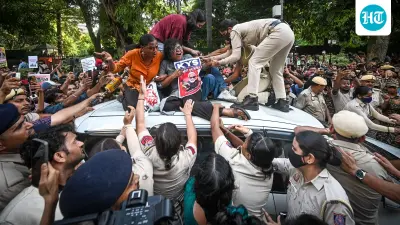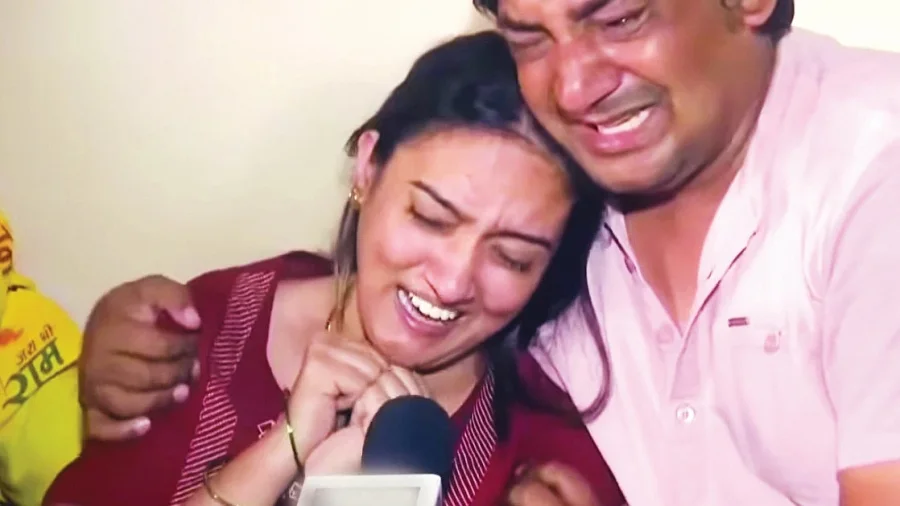
The numbers are supposed to tell us how safe a country is for its women. But when 24-year-old Deepika Nagar was allegedly thrown from the roof of her marital home in Greater Noida, and when model Twisha Sharma was found hanging in her in-laws' house in Bhopal just days earlier, the statistics suddenly felt hollow. These two deaths, separated by less than a week, have forced India to confront a painful question: what if the official data on crimes against women is not just incomplete, but dangerously misleading?
Two Deaths That Shook the Nation
Deepika Nagar died in the early hours of 18 May. Her parents say she was thrown from the roof of her marital home because her husband and in-laws wanted more dowry. They had already paid ₹20 lakh. The accused were allegedly demanding another ₹50 lakh and a Toyota Fortuner. Just six days earlier, on 12 May, Twisha Sharma, a model and actress, was found hanging in her in-laws' house in Bhopal. Her mother-in-law is a retired principal district and sessions judge. During the post-mortem, investigators reportedly failed to produce the belt used in the alleged suicide, raising serious questions about the investigation.
Why This Matters Right Now
These are not isolated incidents. They are part of a pattern that official crime data often fails to capture. Every year, the National Crime Records Bureau (NCRB) releases statistics on crimes against women. But activists, lawyers, and survivors have long argued that these numbers represent only a fraction of the reality. Fear of social stigma, pressure from families, distrust of the police, and the sheer trauma of reliving the crime mean that countless cases never make it to any police station, let alone into a government report. When the data is incomplete, the policy response is also incomplete. And that has real consequences for women's safety.
How the Incidents Unfolded
In Greater Noida, Deepika Nagar's family alleges that the dowry demands began soon after her marriage. Despite paying ₹20 lakh, the harassment continued. On the night of 17 May, an argument escalated. By the next morning, Deepika was dead. Her family is now demanding a thorough investigation and strict action against the accused. In Bhopal, the case of Twisha Sharma has taken a different turn. The failure to produce the belt used in the alleged suicide has led to allegations of evidence tampering. Women's rights activist Dr. Ranjana Kumari has called for a CBI inquiry, saying that the involvement of a retired judge's family makes a fair investigation difficult.
Who Is Affected and What Officials Are Saying
Every woman in India is affected by this crisis. The fear of violence shapes where women go, when they travel, and how they live. Police officials in both Greater Noida and Bhopal have said that investigations are ongoing. In the Deepika Nagar case, the accused have been arrested. In the Twisha Sharma case, the family has denied any wrongdoing. But for activists, the official response is not enough. They argue that until the systemic failures are addressed—from underreporting to biased investigations—the cycle of violence will continue.
What We Know So Far — and What Remains Unclear
What we know: Deepika Nagar died after allegedly being thrown from a roof. Twisha Sharma was found hanging. Both cases involve allegations of dowry harassment and family pressure. What remains unclear: the exact circumstances of both deaths, the role of the accused, and whether the investigations will be fair and transparent. In the Twisha Sharma case, the missing belt is a major red flag. In the Deepika Nagar case, the full extent of the dowry demands is still being investigated.
Risks, Concerns, and the Balanced View
The biggest risk is that these cases become just another statistic. Every year, hundreds of women die in dowry-related incidents. But the public outrage often fades, and the systemic problems remain. Critics argue that the police and judiciary are not equipped to handle the scale of the crisis. Supporters of the current system point to declining crime rates in some categories as evidence of progress. But activists say that declining numbers often reflect declining reporting, not declining violence. The truth is likely somewhere in between: some progress has been made, but the gap between official data and ground reality remains dangerously wide.
Why Similar Trends Are Growing
The problem is not new, but it is getting worse in some ways. Economic pressures, rising inflation, and changing social dynamics have all contributed to an increase in dowry-related violence. At the same time, social media and greater awareness have led more women to speak out. This creates a paradox: more cases are being reported, but the actual number of incidents may be even higher. The data, in other words, is telling us a story—but not the whole story.
- Deepika Nagar's family had already paid ₹20 lakh in dowry before the fatal demand for ₹50 lakh and a Toyota Fortuner.
- Twisha Sharma's mother-in-law is a retired judge, raising questions about the impartiality of the investigation.
- Women's rights activists have called for a CBI inquiry into the Twisha Sharma case.
"These deaths are not just tragedies. They are indictments of a system that continues to fail women every single day." — Dr. Ranjana Kumari, women's rights activist
What Readers, Users, or Investors Should Know Now
For the average reader, the most important takeaway is this: do not rely solely on official statistics to understand the scale of violence against women. Look at the stories behind the numbers. Support organizations that work on the ground. And most importantly, speak up. Whether it's reporting a crime or supporting a survivor, every action matters. For policymakers, the message is clear: the data system needs to be reformed. Better reporting mechanisms, more support for survivors, and stricter accountability for investigators are all urgently needed.
What Could Happen Next
Both cases are likely to see legal battles in the coming months. If the investigations are fair, the accused could face serious charges. But if the evidence is mishandled, as activists fear in the Twisha Sharma case, the families may never get justice. On a broader level, these deaths could reignite the national conversation on dowry, domestic violence, and the reliability of crime data. Whether that conversation leads to real change remains to be seen.
Our Take: Why This Story Matters Beyond One Incident
Deepika Nagar and Twisha Sharma are not just names in a police report. They are daughters, sisters, and dreams that were cut short. Their deaths are a reminder that behind every crime statistic is a human being. And until we start treating each of those lives as more than a number, the crisis will continue. The numbers are important. But they are not the whole story. The whole story is about a society that still tolerates violence against women, a system that still fails to protect them, and a future that must be different.
FAQs
What happened to Deepika Nagar in Greater Noida?
Deepika Nagar, 24, died on 18 May after allegedly being thrown from the roof of her marital home. Her family claims she was killed because her husband and in-laws wanted additional dowry of ₹50 lakh and a Toyota Fortuner, on top of the ₹20 lakh already paid.
Why is the Twisha Sharma case controversial?
Twisha Sharma, a model and actress, was found hanging in her in-laws' house in Bhopal on 12 May. The controversy stems from the fact that her mother-in-law is a retired judge, and investigators reportedly failed to produce the belt used in the alleged suicide during the post-mortem, raising concerns about evidence tampering.
Are official crime statistics on violence against women reliable?
Experts say official statistics significantly underreport the true scale of violence against women. Many cases go unreported due to fear of stigma, family pressure, distrust of police, and trauma. The gap between reported data and ground reality is a major concern for activists and policymakers.
What can be done to improve women's safety in India?
Improving women's safety requires a multi-pronged approach: better reporting mechanisms, stricter police accountability, faster legal processes, more support for survivors, and a cultural shift that rejects violence and dowry. Reforming the crime data system to capture unreported cases is also critical.