

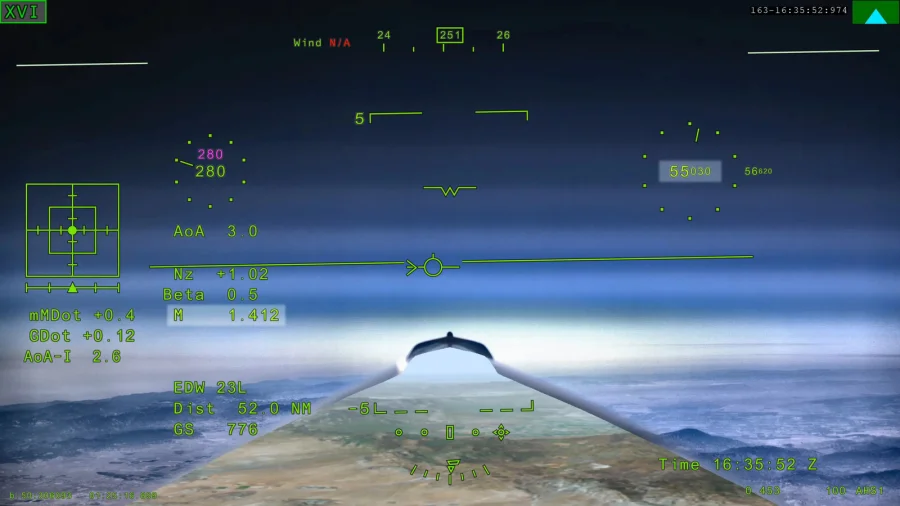
For decades, the sound of a sonic boom has kept supersonic flight grounded over land. That barrier may finally be breaking. On June 12, 2026, NASA’s X-59 experimental aircraft reached Mach 1.4 — about 924 mph — and climbed to 55,000 feet, hitting the exact speed and altitude needed for its most critical mission yet: proving that supersonic flight can be quiet enough to fly over cities.
What the X-59 milestone actually means
This wasn’t just another test flight. Mach 1.4 and 55,000 feet are the specific conditions under which NASA plans to conduct community overflight tests. The X-59 is designed to produce a sonic “thump” instead of a disruptive boom — and these milestones confirm the aircraft can operate at the performance envelope required to test that claim over populated areas.
Why quiet supersonic flight matters for millions of travelers
If the X-59 proves its technology works, the implications are enormous. Current regulations ban commercial supersonic flight over land because of the noise. A quiet supersonic aircraft could cut flight times in half on routes like New York to Los Angeles or London to Dubai. For passengers, that means less time in the air. For airlines, it means new route economics. For communities near airports, it means less noise pollution.
How the X-59 reached this point — a timeline
The X-59 first flew on October 28, 2025, from Lockheed Martin’s Skunk Works in Palmdale, California. Since then, NASA’s Quesst mission team has been systematically expanding the aircraft’s flight envelope. On June 5, 2026, the X-59 reached Mach 1.1 and 43,400 feet. Just a week later, on June 12, it hit the target conditions of Mach 1.4 and 55,000 feet — a rapid progression that signals confidence in the aircraft’s performance.
Who will be affected by the community overflight tests
NASA plans to fly the X-59 over select US communities — likely in the Southwest or Midwest — and ask residents to report what they hear. The goal is to gather real-world data on how people perceive the quiet sonic thump compared to a traditional boom. If the response is positive, it could provide the evidence needed for regulators like the FAA to reconsider supersonic flight rules.
What NASA officials are saying about the milestone
NASA’s Quesst mission team described the June 12 flight as “a major milestone” and “the conditions required for the aircraft to make future flights critical to its mission.” The agency has not yet announced specific dates for community overflights, but the achievement clears the technical path for that phase to begin.
The science behind the quiet supersonic design
The X-59’s long, needle-like nose and carefully shaped fuselage are designed to distribute shockwaves in a way that reduces the intensity of the sonic boom. Instead of a sharp double bang, the aircraft produces a softer sound — more like a distant car door closing. This design is the result of decades of NASA research into supersonic aerodynamics and noise reduction.
Confirmed facts vs what remains unclear
Confirmed: The X-59 reached Mach 1.4 and 55,000 feet on June 12, 2026. NASA confirmed this milestone. The aircraft is designed for quiet supersonic flight. Community overflight tests are planned.
Unclear: Exact dates and locations for community overflights have not been announced. How residents will actually perceive the sound in real-world conditions remains to be tested. Whether regulators will change rules based on the data is uncertain.
Why NASA’s approach is different from previous supersonic efforts
The X-59 is not a commercial prototype. It is a research aircraft built to gather data. NASA’s strategy is to provide objective, publicly available evidence to regulators and the public. This contrasts with earlier attempts by companies like Concorde, which operated under special exemptions. NASA’s approach is designed to build a regulatory case for change, not just a technological one.
Risks and challenges ahead
The technology is promising, but hurdles remain. The X-59’s quiet thump may still be too loud for some communities. Public perception could vary widely depending on location, time of day, and individual sensitivity. There are also questions about cost — quiet supersonic aircraft will likely be expensive to build and operate, potentially limiting them to premium routes. Environmental concerns about fuel efficiency and emissions at supersonic speeds also need to be addressed.
The bigger picture — supersonic’s second chance
The X-59 is part of a broader resurgence in supersonic aviation. Companies like Boom Supersonic and Spike Aerospace are developing commercial supersonic jets. NASA’s work provides the regulatory and technical foundation that could make their aircraft viable. If the X-59 succeeds, it could unlock a new era of faster air travel — one that doesn’t come at the cost of peace and quiet on the ground.
What travelers and aviation enthusiasts should watch for
For now, the key dates to watch are NASA’s announcements of community overflight tests. Those tests will be the first real-world validation of quiet supersonic technology. Aviation enthusiasts can follow the Quesst mission blog for updates. For travelers, the timeline is longer — commercial quiet supersonic flights are likely still a decade away, but the X-59 is the first concrete step toward making them a reality.
What happens next
NASA will now prepare for the community overflight phase. This involves selecting test sites, coordinating with local authorities, and designing the public survey process. The data collected will be analyzed and shared with the FAA and international regulators. If the results are positive, the path to regulatory change could begin within a few years.
Our Take
The X-59 reaching Mach 1.4 and 55,000 feet is more than a technical achievement — it is a signal that the decades-long dream of quiet supersonic flight is moving from theory to practice. NASA’s methodical, evidence-based approach gives this effort credibility that previous attempts lacked. The real test, however, will not be in the sky but on the ground — in the ears and opinions of people living under the flight path. That is where the future of supersonic travel will be decided.
Frequently Asked Questions
What is the NASA X-59?
The X-59 is an experimental aircraft built by NASA and Lockheed Martin as part of the Quesst mission. It is designed to fly supersonic while producing a quiet sonic “thump” instead of a loud boom, with the goal of proving that supersonic flight over land can be acceptable to communities.
Why is Mach 1.4 and 55,000 feet a milestone?
These are the specific speed and altitude conditions under which NASA plans to conduct community overflight tests. Reaching them confirms the X-59 can operate at the performance level needed to gather real-world data on how people perceive quiet supersonic flight.
When will the X-59 fly over communities?
NASA has not announced exact dates or locations yet. The June 12 milestone clears the technical path, and the agency is expected to announce community overflight plans in the coming months.
Could the X-59 lead to commercial supersonic flights?
Yes, but indirectly. The X-59 is a research aircraft. Its data will help regulators decide whether to change rules on supersonic flight over land. If successful, it could pave the way for commercial supersonic jets from companies like Boom Supersonic and others.