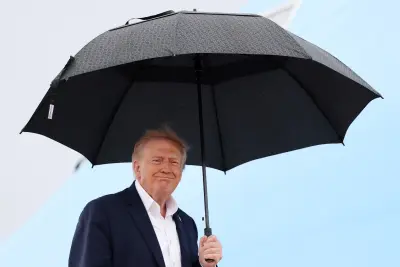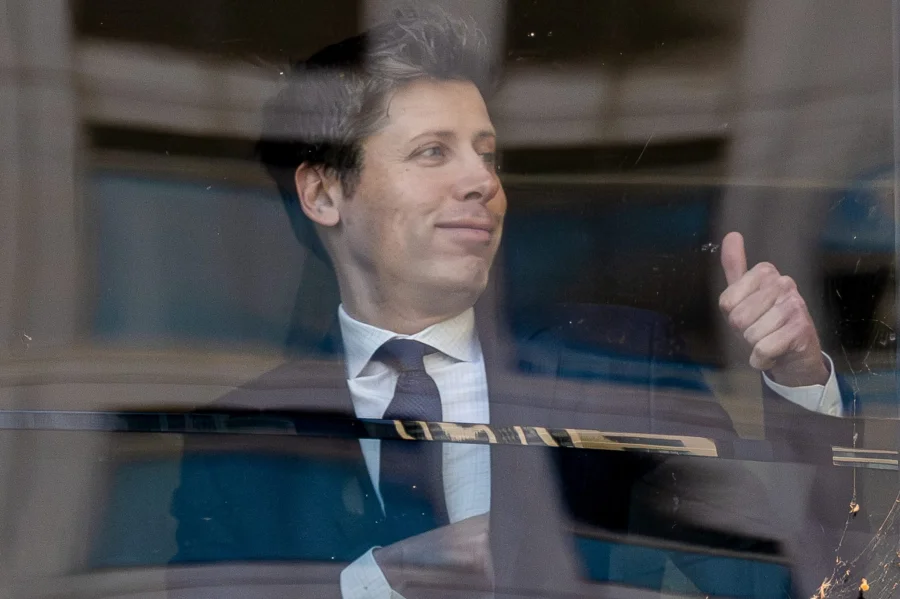
What began as a courtroom battle between two of the most powerful men in technology ended with a quiet ruling that barely scratched the surface of what really matters. A federal jury in San Francisco decided this morning that Elon Musk waited too long to sue Sam Altman over OpenAI’s broken nonprofit promise. The case was thrown out on statute of limitations grounds. The judge said she would have dismissed it herself. But whatever happens on appeal, the trial we just watched asked the wrong question entirely.
Strip away the feud, the damages claim, the dueling charisma. What these two men were offering, each in his own way, was a promise that their personal stewardship would keep artificial intelligence safe for the rest of us. Musk said Altman had stolen a charity. Altman said Musk was a wounded co-founder who could not stand losing control. Both arguments rested on the same hidden assumption: the future of AI depends on having the right billionaire in the room.
That assumption is dangerous. And it is precisely what this trial failed to challenge.
The Core Dispute: A Nonprofit Promise That Changed Everything
OpenAI was founded in 2015 as a nonprofit organization with a clear mission: to develop artificial general intelligence (AGI) that would benefit all of humanity, not just a single corporation. Elon Musk was one of the earliest and most prominent backers, contributing millions of dollars and lending his credibility to the project. Sam Altman, then a young entrepreneur and former president of Y Combinator, was brought in as CEO.
The promise was simple and powerful: OpenAI would remain nonprofit, transparent, and focused on safety above profit. But by 2019, that promise had shifted. OpenAI created a for-profit subsidiary, raised billions from Microsoft, and began developing commercial products like ChatGPT. Musk, who had left the board in 2018, watched from the sidelines as the organization he helped build transformed into something he no longer recognized.
In 2024, Musk filed a lawsuit alleging that Altman and OpenAI had breached their original nonprofit contract. He claimed the shift to for-profit was a betrayal of the founding mission and that Altman had personally enriched himself at the expense of public trust. Altman countered that Musk was simply bitter about losing control and that OpenAI’s evolution was necessary to compete in the rapidly advancing AI landscape.
Why This Matters Right Now
This trial was never just about two billionaires fighting over a company. It was about who gets to decide the future of artificial intelligence — a technology that could reshape every aspect of human life, from healthcare and education to warfare and democracy.
The core question that went unanswered is this: if AI safety cannot be guaranteed by a single person, no matter how brilliant or well-intentioned, then what system of governance should replace it? The trial treated the dispute as a personal grievance between two powerful men. But the stakes are far larger than any individual ego or bank account.
As AI systems become more capable and more integrated into critical infrastructure, the need for robust, transparent, and democratic oversight becomes urgent. Relying on the goodwill of billionaires is not a strategy — it is a gamble.
How the Legal Battle Unfolded
The lawsuit was filed in late 2024 in a California federal court. Musk’s legal team argued that OpenAI’s shift to a for-profit model violated the original nonprofit agreement and that Altman had misled investors and the public about the organization’s true intentions. They sought damages and an injunction to force OpenAI back to its nonprofit roots.
Altman’s defense was twofold. First, they argued that Musk had waited too long to bring the case — the statute of limitations had expired. Second, they claimed that OpenAI’s evolution was a natural and necessary response to the competitive pressures of the AI industry. Altman himself testified that Musk had once suggested that control of OpenAI should go to his children, a claim that painted Musk as more interested in personal legacy than public benefit.
The jury agreed with Altman on the statute of limitations issue. The judge, in her ruling, noted that she would have dismissed the case on the merits as well, suggesting that even if Musk had filed on time, the outcome might have been the same.
Who Is Affected and What Officials Are Saying
The ruling has implications far beyond the courtroom. For the broader AI community, it sends a signal that legal challenges to the governance of AI companies face high hurdles. For investors, it reinforces the uncertainty around OpenAI’s future structure and regulatory exposure. For the public, it raises uncomfortable questions about who is watching the watchers.
“This case was never going to solve the fundamental problem of AI governance,” said Dr. Anjali Mehta, a professor of technology ethics at Stanford University, in a statement. “We need a system of checks and balances that doesn’t depend on the personal integrity of any single individual, no matter how wealthy or influential.”
OpenAI declined to comment on the ruling beyond a brief statement expressing satisfaction with the jury’s decision. Musk’s legal team said they are considering an appeal.
What We Know So Far — and What Remains Unclear
What we know:
- The federal jury ruled that Musk’s lawsuit was filed too late under the statute of limitations.
- The judge indicated she would have dismissed the case even if the timing had been different.
- Altman testified that Musk wanted control of OpenAI to go to his children.
- OpenAI has operated as a for-profit entity since 2019, with Microsoft as a major investor.
What remains unclear:
- Whether Musk will appeal the ruling.
- How this legal outcome will affect OpenAI’s future governance structure.
- Whether any regulatory body will step in to address the broader question of AI safety oversight.
- What the long-term implications are for other AI companies that started as nonprofits and later shifted to for-profit models.
Risks, Concerns, and the Balanced View
The trial exposed a fundamental tension in the AI industry: the conflict between the ideal of public benefit and the reality of commercial competition. OpenAI’s defenders argue that the for-profit shift was necessary to attract the talent and capital required to build safe AGI. Critics counter that the shift undermined the very transparency and accountability that made OpenAI unique.
Bull case for OpenAI’s evolution: The for-profit structure allowed OpenAI to raise billions, hire top researchers, and develop powerful AI systems like GPT-4 and ChatGPT. Without this funding, the organization might have stagnated, leaving AI development to less scrupulous players.
Bear case for OpenAI’s evolution: The shift to for-profit created inherent conflicts of interest. The pressure to generate revenue could compromise safety protocols, and the concentration of power in a single company — backed by Microsoft — raises concerns about monopolistic control over a transformative technology.
The balanced view is that both sides have valid points. The real failure is that the legal system was asked to resolve a governance question that should have been addressed through public policy and democratic deliberation.
Why Similar Trends and Concerns Are Growing
The Musk-Altman dispute is not an isolated incident. Across the tech industry, companies founded with idealistic missions are increasingly pivoting to profit-driven models. The pattern is familiar: start with a vision of changing the world, attract idealistic talent and early investors, then gradually shift toward commercialization as the pressure to scale intensifies.
In the AI space specifically, the stakes are uniquely high. Unlike social media or e-commerce, AI has the potential to automate decision-making in critical areas like healthcare, criminal justice, and national security. The question of who controls these systems — and under what rules — is not just a business question. It is a question of power, accountability, and democracy.
“The idea that we can trust a single billionaire to keep AI safe is not just naive — it’s dangerous. We need institutional safeguards, not personal promises.” — Dr. Anjali Mehta, Stanford University
What Readers, Users, and Investors Should Know Now
For the average person, this trial may seem like a distant drama between two wealthy men. But the outcome has real consequences. The way AI companies are governed will determine how safe, fair, and accessible these technologies become.
For investors, the ruling removes one legal cloud over OpenAI but does not resolve the underlying governance risks. The company’s structure remains a subject of debate, and future regulatory action could still reshape the landscape.
For users of AI tools like ChatGPT, the message is mixed. The technology continues to improve, but the governance framework that ensures its safety remains fragile. Until robust, independent oversight is established, users should remain aware that the systems they rely on are ultimately controlled by a small number of powerful actors.
What Could Happen Next
Musk’s legal team has indicated they may appeal the ruling. An appeal would focus on whether the statute of limitations should have been calculated differently, given the ongoing nature of OpenAI’s alleged breach. If the appeal succeeds, the case could return to court for a full trial on the merits.
Separately, regulatory bodies in the United States and Europe are increasingly scrutinizing AI governance. The European Union’s AI Act, which is expected to take effect in stages over the next few years, could impose new transparency and accountability requirements on companies like OpenAI. In the U.S., the Biden administration has issued executive orders on AI safety, but comprehensive legislation remains stalled in Congress.
The broader trend is clear: the era of self-regulation by tech billionaires is coming to an end. The question is what will replace it.
Our Take: Why This Story Matters Beyond One Incident
The Musk-Altman trial was a missed opportunity. It could have been a landmark case that forced a public reckoning with the governance of AI. Instead, it became a personal feud that obscured the real issue.
The real issue is not whether Elon Musk or Sam Altman is more trustworthy. The real issue is that we, as a society, have outsourced the safety of a potentially world-changing technology to a handful of individuals with no democratic accountability. That is not a sustainable model.
AI safety cannot be one man’s job — or one company’s mission. It requires a system of checks and balances that includes independent oversight, public input, and transparent decision-making. Until we build that system, every AI breakthrough will carry the same hidden risk: the risk that the people in charge are not the people we should trust.
FAQs
Why was Elon Musk’s lawsuit against Sam Altman dismissed?
A federal jury ruled that Musk waited too long to file the lawsuit, meaning the statute of limitations had expired. The judge also indicated she would have dismissed the case on its merits.
What was the core argument in the Musk vs Altman OpenAI lawsuit?
Musk argued that Altman and OpenAI broke their original nonprofit promise by shifting to a for-profit model. Altman countered that Musk was simply upset about losing control and that the shift was necessary for OpenAI to compete.
Does this ruling affect OpenAI’s current structure or operations?
No. The ruling does not change OpenAI’s current for-profit structure or its relationship with Microsoft. However, it leaves the broader question of AI governance unresolved.
What does this trial mean for the future of AI safety regulation?
The trial highlighted the lack of robust, independent oversight for AI companies. It suggests that legal challenges alone cannot solve governance problems, and that comprehensive regulation may be needed to ensure AI safety.