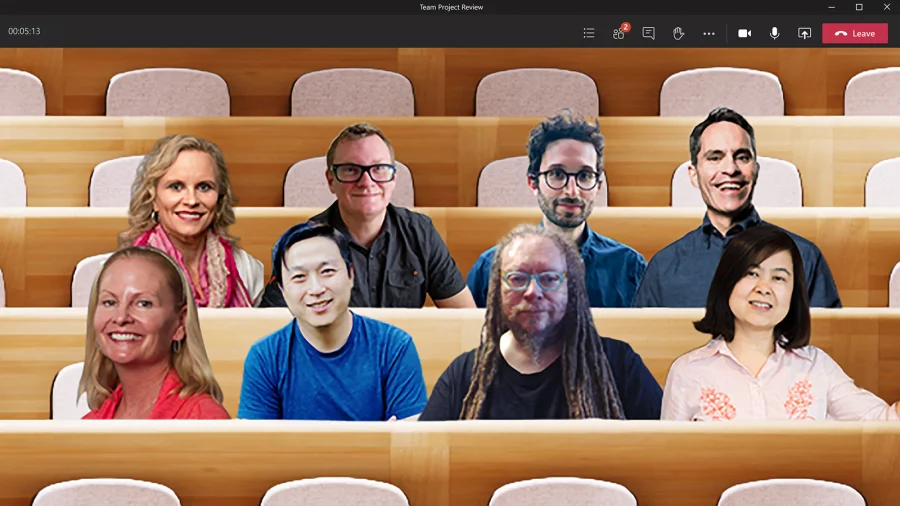
For millions of remote workers, it was the closest thing to sitting in the same conference room — a virtual auditorium where your colleagues' faces appeared on stage, as if you were all attending the same meeting together. But now, Microsoft is pulling the plug on that experience.
The company has confirmed it is removing the "Together" mode feature from Microsoft Teams, the feature that digitally placed meeting attendees into a shared virtual space like a lecture hall or a coffee shop. The decision, announced quietly, marks the end of an era for a tool that became a symbol of pandemic-era work.
Why Microsoft Is Removing the Teams Virtual Room Feature
According to Microsoft, the decision to ditch Together mode comes down to one thing: complexity. The company stated that the feature added too much "implementation complexity" to the Teams platform. Instead of continuing to maintain and update the virtual room experience, Microsoft is steering users toward the standard gallery view — the grid of individual video feeds that most people are already familiar with.
"We're always working to make meetings easier to join, simpler to manage, and better for everyone, regardless of device or network conditions," a Microsoft product manager wrote in a blog post. "As part of that ongoing effort, we're retiring Together mode in Microsoft Teams."
The change is set to take effect on June 30, 2026. After that date, the Together mode experience will no longer be available in any Microsoft Teams meeting.
Why This Matters Right Now
This isn't just a minor feature removal. For many remote and hybrid workers, Together mode was more than a gimmick — it was a psychological tool. By placing attendees in a shared virtual environment, it helped reduce the feeling of isolation that comes with staring at a grid of faces. It created a sense of shared presence, even when everyone was miles apart.
Its removal signals a broader shift in how Microsoft views the future of remote work. The company is betting that users no longer need — or want — the immersive virtual room experience. Instead, it's prioritizing simplicity and performance. But for some users, this feels like a step backward, a loss of the creativity that made virtual meetings feel a little less cold.
How the Together Mode Feature Unfolded
Microsoft introduced Together mode in July 2020, at the height of the COVID-19 pandemic. The feature was designed to combat "Zoom fatigue" by using AI segmentation to place each participant into a shared background — a virtual auditorium, a coffee shop, or even a boardroom. The idea was to mimic the experience of being in the same physical space, making meetings feel more natural and less like a grid of talking heads.
The feature was widely praised for its innovation. It became a hallmark of Microsoft Teams, often highlighted in marketing materials and user guides. For many organizations, it was a way to make all-hands meetings and town halls feel more engaging.
But as the pandemic receded and hybrid work became the norm, the novelty wore off. Microsoft began to focus on other priorities: AI-powered features, improved performance, and simplified user interfaces. Together mode, once a star, became a maintenance burden.
Who Is Affected and What Officials Are Saying
The removal of Together mode affects all Microsoft Teams users — from enterprise organizations to small businesses and educational institutions. Anyone who has used the feature for team meetings, company-wide events, or virtual classrooms will need to adjust to the standard gallery view.
Microsoft has not announced any replacement for the feature. Instead, the company is doubling down on gallery view, which it says is simpler and more reliable. "This change helps simplify the meeting experience, reduce complexity behind the scenes, and improve overall performance," the company stated.
Some users have expressed disappointment on social media and community forums, calling the removal a loss of a unique feature that set Teams apart from competitors like Zoom and Google Meet. Others, however, have noted that they rarely used Together mode and prefer the simplicity of the grid layout.
What We Know So Far — and What Remains Unclear
What we know:
- Together mode will be removed from Microsoft Teams on June 30, 2026.
- Microsoft cites "implementation complexity" as the primary reason.
- Users will be directed to use gallery view instead.
- The decision was announced by a Microsoft product manager in a blog post.
What remains unclear:
- Whether Microsoft plans to introduce any new immersive meeting features in the future.
- How the removal will affect organizations that heavily relied on Together mode for large virtual events.
- Whether there will be any alternative for users who want a shared virtual background experience.
Risks, Concerns, and the Balanced View
From Microsoft's perspective, the decision makes sense. Maintaining a feature like Together mode requires significant engineering resources — from AI segmentation algorithms to rendering virtual environments across different devices and network conditions. By removing it, Microsoft can streamline development and focus on more widely used features.
But there are risks. For some users, Together mode was a key differentiator. Its removal could push some organizations to consider alternatives like Zoom's "Immersive View" or other platforms that offer similar virtual room experiences. Microsoft is betting that the simplicity of gallery view will be enough to retain users, but that's not guaranteed.
Critics argue that the move reflects a broader trend of Microsoft simplifying its products at the expense of innovation. "They're removing one of the few features that made Teams feel different," one user commented on a tech forum. "Now it's just another grid of faces."
Why Similar Trends or Concerns Are Growing
The removal of Together mode is part of a larger pattern in the tech industry: the sunsetting of pandemic-era features. As remote work stabilizes into a hybrid model, companies are reevaluating which tools are worth maintaining. Features that were once essential for all-remote teams are being scaled back or removed entirely.
Zoom, for example, has also simplified its virtual backgrounds and immersive features. Google Meet has focused on core reliability rather than flashy add-ons. The message is clear: the era of the "virtual office" is giving way to a more pragmatic approach to remote collaboration.
For Microsoft, this means prioritizing performance, AI integration, and cross-platform consistency over novelty. The company's recent investments in Microsoft Copilot and AI-powered meeting summaries suggest that the future of Teams lies in intelligence, not immersion.
"Goodbye Together mode, hello simplified meeting layouts." — Katarina Tranker, Product Manager, Microsoft Teams
What Readers, Users, or Investors Should Know Now
If you're a Microsoft Teams user, here's what you need to do:
- Before June 30, 2026: If you have any meetings scheduled that rely on Together mode, consider switching to gallery view or another layout.
- After June 30, 2026: Together mode will no longer be available. You will only see gallery view and other standard layouts.
- For IT administrators: No action is required on your end. The change will be applied automatically by Microsoft.
If you're an organization that used Together mode for large virtual events, now is the time to explore alternatives. Microsoft has not announced any replacement, so you may need to adjust your meeting formats or consider third-party tools.
What Could Happen Next
Microsoft is unlikely to reverse its decision. The company has clearly signaled that Together mode is a relic of the pandemic era, and its removal is part of a broader simplification strategy. In the future, we can expect Microsoft to focus on AI-powered features, such as intelligent meeting summaries, real-time translation, and automated note-taking.
It's also possible that Microsoft will introduce a new, more advanced version of Together mode in the future — perhaps one that leverages AI more effectively or integrates with the company's mixed reality ambitions. But for now, the virtual room is closing.
Our Take: Why This Story Matters Beyond One Feature
The removal of Together mode is a small but telling sign of how the tech industry is evolving post-pandemic. The features that once felt essential — virtual rooms, immersive backgrounds, digital avatars — are being re-evaluated. Companies are realizing that what users really want is simplicity, reliability, and performance.
But there's also a loss here. Together mode was a creative attempt to solve a very human problem: the loneliness of remote work. Its removal reminds us that technology can only do so much to bridge the gap between physical and virtual presence. As we move forward, the challenge for companies like Microsoft will be to find new ways to make remote collaboration feel human — without adding unnecessary complexity.
FAQs
Why is Microsoft removing the Together mode feature from Teams?
Microsoft says the feature added too much "implementation complexity" to the platform. The company is simplifying the meeting experience and steering users toward gallery view instead.
When will the Teams virtual room feature be removed?
The Together mode experience will be removed on June 30, 2026. After that date, it will no longer be available in any Microsoft Teams meeting.
What will replace the Together mode in Microsoft Teams?
Microsoft is not replacing Together mode with a similar feature. Instead, the company is directing users to use gallery view, which displays meeting attendees in a grid of individual video feeds.
Will the removal of Together mode affect my existing Teams meetings?
If you have meetings scheduled that use Together mode, you will need to switch to another layout before June 30, 2026. After that date, the feature will be completely unavailable. No action is required from IT administrators — the change will be applied automatically.