

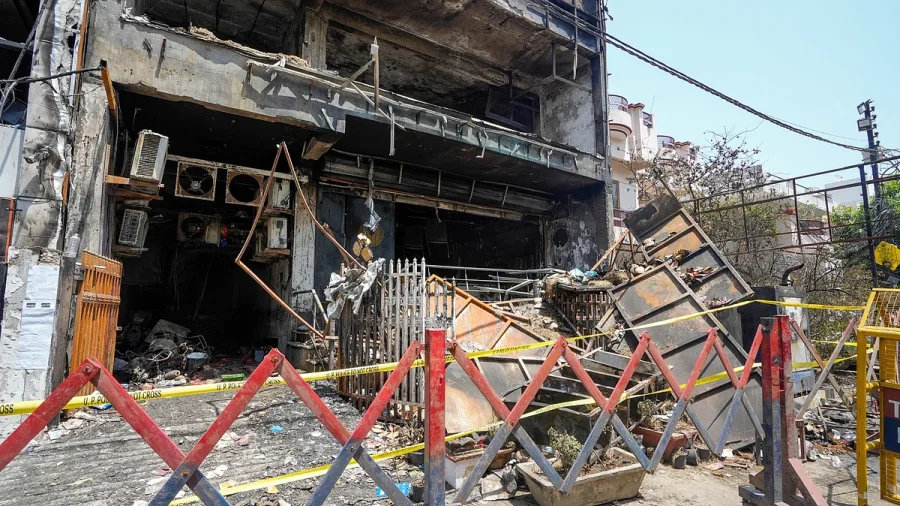
The 15 people who died in last week's devastating fire at a commercial building in Lucknow's Aliganj area did not burn to death. They suffocated. Post-mortem examinations conducted at King George's Medical University (KGMU) have revealed that every single victim died from smoke inhalation — toxic fumes that filled the building faster than anyone could escape.
Autopsy findings: Soot in airways, no burn injuries
Doctors who conducted the post-mortems told reporters that the examinations showed no evidence of major burn injuries or deep external wounds that could directly explain the deaths. Instead, the autopsies revealed signs consistent with severe smoke inhalation. "The post-mortem examination has revealed that all 15 victims died due to suffocation caused by smoke inhalation," a doctor associated with the process said. "No major burn injuries or grievous external wounds were found."
Specifically, pathologists found soot deposits inside the nasal passages of several victims, along with swelling around the faces and eyes. These are classic indicators of someone breathing in superheated, toxic air — the smoke and fumes from burning synthetic materials, electrical wiring, and furniture that filled the building's interior within minutes.
Why smoke kills faster than fire in building tragedies
Fire safety experts explain that in enclosed commercial spaces, smoke and toxic gases — including carbon monoxide and hydrogen cyanide — can incapacitate a person within seconds to minutes. Victims lose consciousness before flames ever reach them. In the Lucknow case, the building's layout and the use of toughened glass windows may have worsened the situation. Reports suggest that the toughened glass, designed to be shatter-resistant, became an unintended trap — preventing victims from breaking windows to escape or get fresh air. Poor ventilation compounded the crisis, allowing smoke to accumulate rapidly.
How the Aliganj fire unfolded: A timeline of tragedy
The fire broke out on [date of incident] in a multi-storey commercial building in Lucknow's Aliganj area, a busy commercial and residential neighbourhood. The building housed several offices, coaching centres, and small businesses. Witnesses reported seeing thick black smoke billowing from upper floors as people inside screamed for help. Fire tenders arrived but faced challenges accessing the building due to narrow lanes and parked vehicles. Rescue operations continued for hours. By the time firefighters brought the blaze under control, 15 people — including students and young professionals — had been declared dead on arrival at hospitals.
Who were the victims? Students and young professionals among the dead
Most of the deceased were students attending coaching classes in the building, along with some young employees working in offices. Families have been devastated. Many victims were in their late teens and early twenties — pursuing dreams of competitive exams or starting their careers. The tragedy has sent shockwaves through Lucknow's student community, with many questioning the safety of buildings where coaching centres operate. "My daughter called me saying there was smoke. I told her to put a wet handkerchief on her face and lie on the floor. That was the last I heard from her," one grieving father told reporters.
SIT formed: Building safety and legal accountability under scrutiny
The Uttar Pradesh government has constituted a Special Investigation Team (SIT) to probe the incident. The SIT's mandate includes examining whether the building had valid fire safety clearances, whether fire extinguishers and sprinklers were functional, and whether the building's design — including the use of toughened glass — violated safety norms. Officials have indicated that the building owner and tenants running coaching centres and offices will be questioned. "We are investigating all angles, including criminal negligence," a senior police officer said. The SIT is expected to submit its report within a week.
Why toughened glass became a death trap in Lucknow fire
One of the most chilling details emerging from the investigation is the role of toughened glass windows. Designed to be strong and shatter-resistant, these windows are common in modern commercial buildings. But in a fire, they become a deadly barrier. Victims could not break the glass to escape or signal for help. Firefighters also struggled to break through from outside. Safety experts point out that while toughened glass meets building codes for strength, it can be lethal in emergencies unless accompanied by breakable emergency exits or automatic ventilation systems. The Lucknow tragedy has reignited a debate about building material regulations in India.
Confirmed facts vs what remains unclear in the Lucknow fire investigation
Confirmed: All 15 deaths were caused by smoke inhalation, not burns. Autopsy reports from KGMU are conclusive. The building had toughened glass windows. An SIT has been formed.
Unclear: The exact origin of the fire remains under investigation. Whether the building had valid fire safety certificates is yet to be determined. The role of coaching centre operators in ensuring student safety is being examined. Whether any criminal charges will be filed — and against whom — is pending the SIT report. Speculation about electrical short circuits or gas cylinder explosions has not been officially confirmed.
Wider pattern: Recurring fire tragedies in Indian commercial buildings
The Lucknow fire is not an isolated incident. India has seen repeated tragedies in commercial buildings, coaching centres, and hospitals where fire safety norms are ignored. The 2022 fire at a coaching centre in Surat killed 22 students. The 2019 fire at a Delhi hotel killed 17. In most cases, investigations revealed lack of fire exits, non-functional extinguishers, and buildings operating without clearances. Experts say the pattern reflects a systemic failure: weak enforcement of fire safety laws, corruption in building approvals, and a culture of cutting corners on safety to save costs.
What students, parents, and building occupants should do now
For students attending coaching centres in multi-storey buildings, safety experts recommend: check if the building has at least two emergency exits; ask if fire extinguishers and smoke alarms are installed and maintained; identify the nearest staircase and ensure it is not locked; avoid buildings with sealed windows or toughened glass that cannot be broken in an emergency. Parents should visit coaching centres and inspect safety measures before enrolling their children. Building occupants should report safety violations to local fire departments. "Don't assume safety. Verify it," a fire safety consultant advised.
What happens next: SIT report, legal action, and policy changes
The SIT is expected to complete its investigation within days. Based on its findings, the Uttar Pradesh government may file criminal cases for culpable homicide not amounting to murder. The building owner and tenants could face charges of negligence. Separately, the state government has ordered a fire safety audit of all commercial buildings in Lucknow, especially those housing coaching centres and offices. Policy changes — including stricter enforcement of fire safety norms and possible bans on certain building materials — are being discussed. But for the families of the 15 victims, no policy change can bring back their loved ones.
Our Take
The Lucknow fire tragedy is a brutal reminder that in India, building safety is often an afterthought — until people die. The post-mortem findings confirm what fire experts have long warned: in enclosed spaces, smoke kills faster than flames. The use of toughened glass, the lack of ventilation, and the absence of functional fire safety systems turned a manageable fire into a mass casualty event. The SIT investigation must be thorough and transparent. But beyond this one case, what India needs is a fundamental shift in how building safety is enforced — not just on paper, but in practice. Every coaching centre, every office, every commercial building should be inspected, not just after a tragedy, but before it. The 15 lives lost in Aliganj demand nothing less.
Frequently Asked Questions
What caused the deaths in the Lucknow Aliganj fire?
Post-mortem examinations confirmed that all 15 victims died from suffocation caused by smoke inhalation. No major burn injuries were found. Victims inhaled toxic fumes from burning materials, leading to loss of consciousness and death.
Why did victims die from smoke instead of burns?
In enclosed building fires, smoke and toxic gases like carbon monoxide spread faster than flames. Victims can lose consciousness within seconds to minutes of inhaling these fumes, before flames reach them. The Lucknow building had poor ventilation and toughened glass windows that trapped smoke inside.
Is there an investigation into the Lucknow fire?
Yes, the Uttar Pradesh government has formed a Special Investigation Team (SIT) to probe the fire. The SIT is examining building safety compliance, the role of toughened glass, and whether criminal negligence was involved. The building owner and tenants are being questioned.
What safety measures should coaching centres have to prevent such tragedies?
Coaching centres should have at least two emergency exits, functional fire extinguishers, smoke alarms, clear evacuation plans, and windows that can be opened or broken in an emergency. Buildings should not have sealed toughened glass without breakable emergency exits. Regular fire drills are also essential.