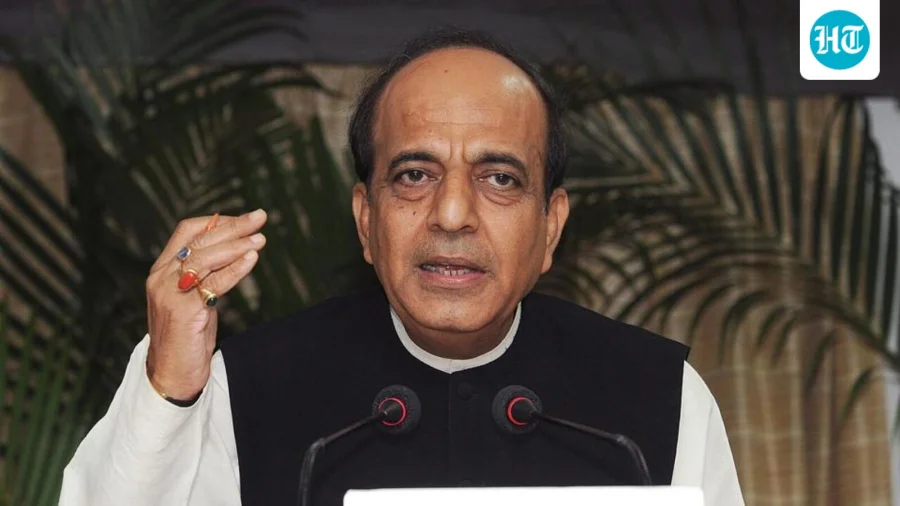
In an unusual and deliberate move, India has granted cabinet minister status to Dinesh Trivedi, its newly appointed High Commissioner to Bangladesh. The elevation, rare for a diplomatic posting, underscores New Delhi’s determination to repair and rebuild a relationship that has faced significant strain in recent months.
Why a cabinet rank for an envoy matters
Granting cabinet minister status to a high commissioner is not routine diplomatic protocol. It signals that the envoy carries the full weight of the government’s authority and has direct access to the highest levels of decision-making. For Dhaka, this is a clear message: New Delhi is prioritising the relationship and is ready to engage seriously.
The man chosen for the task
Dinesh Trivedi is not a career diplomat but a veteran politician. A former Union Minister of State for Railways and a senior BJP leader, he also served as a Member of Parliament from Barrackpore, West Bengal. His fluency in Bengali and deep understanding of the region’s cultural and political landscape make him a strategic choice for a posting that requires both diplomatic skill and regional sensitivity.
What led to the diplomatic strain
India-Bangladesh relations, long considered a model of neighbourly cooperation, have faced turbulence over the past year. Issues ranging from border security concerns, alleged interference in internal affairs, and differences over trade and water-sharing agreements have created friction. The fall of the Sheikh Hasina government in Bangladesh in 2024 added further complexity, with Dhaka’s new leadership taking a more cautious stance towards New Delhi.
How this affects ordinary people on both sides
For millions of people in India’s northeastern states and Bangladesh, the health of bilateral ties directly impacts daily life. Trade routes, cross-border movement for medical treatment and education, and cultural exchanges all depend on a stable relationship. A reset could mean smoother border crossings, renewed trade agreements, and better cooperation on shared challenges like flooding and human trafficking.
Official response from New Delhi and Dhaka
The Indian government has confirmed Trivedi’s appointment and the cabinet rank, though it has not publicly detailed the rationale. Bangladesh’s foreign ministry has acknowledged the appointment and expressed willingness to work with the new envoy. “We look forward to constructive engagement,” a senior Bangladeshi official said, speaking on condition of anonymity.
What the cabinet rank really means for diplomacy
Diplomatic experts say the elevation is a powerful signal. “When a government gives an envoy cabinet rank, it tells the host country that this person speaks for the prime minister and the cabinet,” said a former Indian diplomat who spoke on condition of anonymity. “It removes ambiguity and speeds up decision-making.” This is especially important when trust needs to be rebuilt quickly.
Confirmed facts vs what remains unclear
What is confirmed: Dinesh Trivedi has been appointed High Commissioner to Bangladesh and granted cabinet minister status. He has arrived in Bangladesh and is expected to present his credentials soon. What remains unclear: the specific timeline for his first official meetings with Bangladeshi leadership, and whether any preconditions for dialogue have been set by either side. Speculation that the move is linked to a broader reset of India’s neighbourhood policy has not been officially confirmed.
Why Trivedi’s background fits the moment
Trivedi’s political career and regional roots give him a unique advantage. As a former MP from West Bengal, he understands the complex dynamics of the India-Bangladesh border, including issues of migration, trade, and cultural ties. His fluency in Bengali allows him to communicate directly with Bangladeshi officials and the public, bypassing the usual diplomatic filters. This personal connection could be crucial in rebuilding trust.
Risks and challenges ahead
Despite the positive signal, challenges remain. Bangladesh’s current leadership is wary of perceived Indian interference and has prioritised a more independent foreign policy. Issues like the Teesta water-sharing treaty, border killings, and trade imbalances remain unresolved. Trivedi will need to navigate a delicate balance between asserting India’s interests and respecting Bangladesh’s sovereignty. Critics also point out that a political appointee may lack the deep institutional knowledge of a career diplomat.
A wider pattern in India’s neighbourhood diplomacy
This appointment fits a broader trend in Indian foreign policy: using senior political figures as envoys to signal strategic intent. Similar appointments have been made for key posts in the US, Russia, and other priority nations. The move reflects a recognition that traditional diplomacy alone may not be enough to repair strained ties, and that political heft and personal relationships are sometimes more effective.
What Indians and Bangladeshis should watch for
For citizens and businesses on both sides, the key indicators to watch are: the resumption of high-level bilateral visits, progress on stalled infrastructure projects, and any announcements on easing visa restrictions. Students and patients who rely on cross-border travel should monitor updates from the respective high commissions. Investors in sectors like energy, textiles, and logistics should look for signals of renewed economic cooperation.
What could happen next
If Trivedi’s appointment succeeds in resetting ties, the next steps could include a summit-level meeting between the two prime ministers, new trade agreements, and joint initiatives on water management and connectivity. If progress stalls, the relationship may remain in a state of cautious engagement. Much will depend on Trivedi’s ability to build personal rapport with Bangladesh’s leadership and address underlying grievances without appearing to dictate terms.
Our Take
The decision to grant cabinet minister status to Dinesh Trivedi is more than a diplomatic formality. It is a calculated signal from New Delhi that it is willing to invest political capital in the Bangladesh relationship. Whether this gesture translates into tangible progress will depend on both sides’ willingness to compromise. For now, it offers a rare moment of optimism in a relationship that badly needs one.
Frequently Asked Questions
What does it mean when an envoy is given cabinet minister status?
It means the envoy is treated as a member of the cabinet for protocol and access purposes. This gives them direct access to the prime minister and other senior ministers, signalling that they carry the full authority of the government.
Why did India choose Dinesh Trivedi for this role?
Trivedi is a senior BJP leader, former Union Minister, and fluent Bengali speaker. His political experience and regional knowledge make him well-suited to handle the sensitive and complex India-Bangladesh relationship.
Is it common for India to give cabinet rank to envoys?
No, it is rare. It is usually reserved for postings where the government wants to signal exceptional priority or rebuild trust after a period of strained relations.
What are the main issues between India and Bangladesh right now?
Key issues include unresolved water-sharing agreements (especially the Teesta treaty), border security concerns, trade imbalances, and political differences following the change of government in Bangladesh in 2024.