The AI industry has been riding a wave of hype, investment, and breathless predictions for years. But what if the bubble isn’t just overinflated — what if it’s fundamentally fragile? That’s the provocative argument from Cory Doctorow, the tech journalist and science fiction author, in his new book, The Reverse Centaur’s Guide to Life After AI. Doctorow doesn’t want to debate whether AI is good or bad. He wants to show how to burst the AI bubble by striking at its very roots.
The man who hates talking about AI — and why he wrote a book about it
Doctorow is a reluctant expert on the topic. “I made the tactical error of being sick of talking about AI,” he told Ars Technica. “So I wrote a book about why I think it’s a dumb thing to keep asking people to talk about, and now I have to talk about it.” His frustration is central to the book’s mission: to shift the conversation from abstract debates about AI’s potential to the material reality of its costs, failures, and vulnerabilities.
What is a ‘Reverse Centaur’? The core idea explained
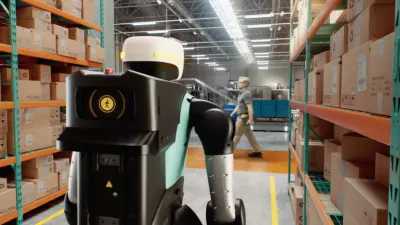
The title refers to a reversal of the traditional human-machine relationship. In mythology, a centaur is part human, part horse — a partnership where the human guides. In Doctorow’s framing, a “Reverse Centaur” is where humans become mere appendages to AI systems, feeding them data, training them, and cleaning up their mistakes. “We’re not the riders anymore,” Doctorow argues. “We’re the horses — and the AI is riding us.” This shift, he says, is unsustainable and exploitative.
How to burst the AI bubble: Strike at the economic roots
Doctorow’s central thesis is that the AI bubble can be burst not by arguing about intelligence or ethics, but by targeting its economic and infrastructure foundations. He points to the enormous costs of training and running large language models — energy, water, specialized hardware, and massive data centers. “The AI industry is a Ponzi scheme of attention and capital,” he writes. “It requires constant, escalating investment just to maintain the illusion of progress.” By exposing these costs and the lack of sustainable revenue, Doctorow believes the bubble will deflate naturally.
The infrastructure trap: Why AI is built on sand
Doctorow highlights the precariousness of the AI supply chain. The industry depends on a handful of chip manufacturers (like Nvidia), cloud providers, and energy grids. Any disruption — a chip shortage, a regulatory crackdown on energy use, or a public backlash against data exploitation — could trigger a cascade of failures. “Strike at the roots,” he advises. “Target the infrastructure. Question the costs. Demand transparency. The bubble will pop when people stop believing the hype and start looking at the balance sheets.”
Who is affected by the AI bubble — and why it matters to everyone
The bubble isn’t just a problem for investors. It affects workers whose jobs are being automated or devalued, consumers whose data is being harvested, and communities facing environmental damage from data centers. Doctorow argues that the AI industry’s growth model is extractive: it takes from everyone while concentrating benefits among a few. “When the bubble bursts,” he warns, “the wreckage will be widespread — unless we prepare for it now.”
Doctorow’s response to critics: ‘This isn’t Luddism’
Doctorow is careful to distinguish his critique from outright rejection of technology. “I’m not saying AI has no uses,” he clarifies. “I’m saying the current hype cycle is dangerous. It’s distorting investment, policy, and public understanding.” He advocates for a more measured, evidence-based approach — one that acknowledges AI’s limitations and risks alongside its potential.
What the ‘Reverse Centaur’ means for the future of work
The book explores how the AI industry is reshaping labor. Instead of machines augmenting human capabilities, Doctorow sees humans being reduced to data-feeders and error-correctors for AI systems. “We’re training our own replacements,” he writes. This dynamic, he argues, is not only exploitative but also economically inefficient — a point that could resonate with investors looking for real returns.
Confirmed facts vs what remains unclear
Confirmed: Doctorow’s book argues that the AI bubble is economically fragile and can be burst by targeting its infrastructure and cost structure. Unclear: Whether his proposed strategy — public awareness, regulatory action, and investor skepticism — will actually trigger a collapse. The timeline and specific triggers remain speculative. Doctorow himself acknowledges that the bubble could persist for years if hype continues to outweigh reality.
The enshittification connection: How AI fits into a larger pattern
Doctorow’s previous book, Enshittification, described how platforms degrade over time as they prioritize profit over user experience. He sees AI as the next frontier of this process. “AI is enshittification on steroids,” he says. “It’s a system designed to extract value from everyone while delivering diminishing returns.” The connection is crucial: understanding the AI bubble requires seeing it as part of a broader pattern of tech industry dysfunction.
Risks and balanced view: Is Doctorow’s plan realistic?
Critics might argue that Doctorow underestimates the resilience of the AI industry. Major tech companies have deep pockets and strong incentives to keep the bubble inflated. Regulatory action is slow, and public attention spans are short. Moreover, some AI applications — in healthcare, logistics, or scientific research — do offer genuine value. Doctorow’s plan requires sustained, coordinated effort from multiple stakeholders, which is difficult to achieve. However, his supporters counter that the industry’s vulnerabilities are real and growing, and that a correction is inevitable.
The wider trend: A growing backlash against AI hype
Doctorow’s book is part of a broader wave of skepticism toward AI. From lawsuits over copyright infringement to concerns about energy consumption and job displacement, the backlash is building. Regulators in the EU and elsewhere are tightening rules. Investors are starting to ask harder questions about ROI. Doctorow’s analysis taps into this growing unease, offering a coherent framework for understanding why the bubble might burst — and what to do about it.
Practical guidance: What readers can do now
Doctorow offers several actionable steps for those concerned about the AI bubble:
- Question the hype: Demand evidence for AI claims. Ask about costs, failure rates, and real-world impact.
- Support transparency: Advocate for regulations that require AI companies to disclose their energy use, data sources, and error rates.
- Diversify investments: If you’re an investor, don’t bet everything on AI. Look for sustainable tech with proven business models.
- Protect your data: Be aware of how your data is being used to train AI systems. Use privacy tools and support data rights legislation.
- Engage critically: Read books like Doctorow’s to understand the full picture. Don’t rely on corporate press releases or hype-driven media coverage.
Future outlook: What happens after the bubble bursts?
Doctorow is cautiously optimistic. He believes that after the bubble bursts, there will be room for more thoughtful, sustainable AI development. “We can salvage something from the wreckage,” he told The Guardian. “But only if we start preparing now.” The post-bubble world, in his view, would feature smaller, more focused AI applications, stronger regulations, and a healthier relationship between humans and machines. The key is to avoid a crash that destroys everything useful along with the hype.
Our Take
Doctorow’s argument is refreshingly concrete in a debate often dominated by abstract philosophy or corporate cheerleading. By focusing on economics and infrastructure, he provides a practical framework for understanding the AI bubble — and a plausible path to bursting it. Whether his plan will work depends on whether enough people — investors, regulators, workers, and consumers — are willing to act. But at the very least, The Reverse Centaur’s Guide to Life After AI offers a much-needed reality check. The bubble won’t burst on its own. Someone has to strike at the roots.
Frequently Asked Questions
What does Cory Doctorow mean by ‘burst the AI bubble’?
Doctorow argues that the AI industry is economically unsustainable and that its bubble can be deflated by targeting its high costs, fragile infrastructure, and lack of real returns — not by debating its capabilities.
What is a ‘Reverse Centaur’ in Doctorow’s book?
A Reverse Centaur describes a situation where humans become mere data-feeders and error-correctors for AI systems, reversing the traditional human-machine partnership. The AI “rides” the human, rather than the other way around.
Is Doctorow against all AI technology?
No. He distinguishes between useful AI applications and the current hype cycle. He advocates for a more measured, evidence-based approach that acknowledges AI’s limitations and risks.
How can ordinary people help burst the AI bubble?
Doctorow suggests questioning AI claims, supporting transparency regulations, protecting personal data, diversifying investments, and engaging critically with media coverage. Public awareness and skepticism are key.