Remember Google Glass? The futuristic headset that made wearers look like cyborgs, sparked privacy debates, and eventually became a punchline? Google hasn’t forgotten either. And now, after nearly a decade of silence, the tech giant is quietly preparing its comeback — not with a novelty gadget, but with something far more serious: a pair of AI-powered smart glasses that could finally make the concept work.
The new glasses, expected to go on sale sometime this autumn, will be Google’s first major push into wearable AI since the original Google Glass flop. But this time, the technology inside is what makes all the difference.
What Google’s new smart glasses actually do
Unlike the original Google Glass, which felt like a smartphone strapped to your face, the new glasses are designed to be an extension of Google’s artificial intelligence — specifically, the Gemini AI model. Instead of trying to replace your phone, the glasses aim to make AI interactions seamless and hands-free.
According to reports, the glasses will allow users to interact with Google’s AI product naturally. Think asking for directions without pulling out your phone, getting real-time translations while traveling, or having your calendar read out while you’re walking. The glasses are being positioned as “that next modality” — the device that follows the smartphone’s dominance, much like how the smartphone followed the PC.
Developer Anil Shah, who is building an events management app called tixfix.ai, told the BBC that smart glasses hold the promise of integrating many services that Google already provides, like Google Maps and Google Voice. “It’s about making those services feel invisible,” he said.
Why This Matters Right Now
This isn’t just another gadget launch. Google’s return to smart glasses signals a major shift in how the company — and the industry — views wearable AI. The original Google Glass failed because it was ahead of its time, socially awkward, and technologically limited. But in 2025, the landscape is completely different.
AI assistants are now genuinely useful. Voice recognition works. Battery life has improved. And perhaps most importantly, the public has become far more comfortable with AI-powered devices. From smart speakers to AI earbuds, the idea of a computer that lives on your face no longer feels like science fiction — it feels like the next logical step.
For Google, this is a chance to reclaim the narrative. If the glasses succeed, they could redefine how billions of people interact with AI every day. If they fail again, it could set wearable AI back years.
How the story unfolded — from Google Glass to Gemini
The original Google Glass launched in 2013 to massive hype and immediate backlash. Privacy concerns — “Glassholes” recording people without consent — combined with a high price tag ($1,500) and limited functionality to make it one of tech’s most famous failures. Google quietly pulled the consumer version in 2015, shifting focus to enterprise applications.
For years, it seemed like Google had abandoned the idea entirely. But behind the scenes, the company was investing heavily in augmented reality and AI. The acquisition of North (a smart glasses startup) in 2020, followed by years of AR software development, laid the groundwork for this comeback.
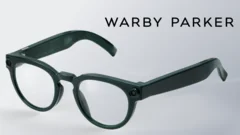
Now, with Gemini AI as the brain, Google believes the timing is finally right. The glasses are expected to be lighter, more stylish, and far more capable than their predecessor. And crucially, they won’t try to do everything — they’ll focus on what AI does best: assisting, not distracting.
Who is affected and what experts are saying
If the glasses succeed, the impact will be felt across multiple industries. For everyday users, it means a new way to access information — no more pulling out your phone for every little thing. For developers, it opens up a new platform for AI-powered apps. For competitors like Meta (which has its own Ray-Ban smart glasses) and Apple (rumored to be working on AR glasses), it raises the stakes significantly.
Industry experts are cautiously optimistic. “Smart glasses are gaining traction as that next modality to follow the success of the smartphone,” one analyst noted. But they also warned that Google needs to get the design and privacy features right this time. “The original Glass failed because it made people uncomfortable. If Google can make these glasses look normal and feel unobtrusive, they have a real chance.”
What We Know So Far — and What Remains Unclear
What we know:
- The glasses will go on sale in autumn 2025.
- They will be powered by Google’s Gemini AI.
- They will allow hands-free interaction with Google’s AI services.
- Google is positioning them as a natural evolution of the smartphone.
What remains unclear:
- The exact price point (will it be affordable or premium?).
- The design — will they look like normal glasses or still feel techy?
- Battery life and real-world performance.
- Privacy features — how will Google handle the camera and microphone concerns that doomed the original?
- Availability — will they launch globally or only in select markets?
Risks, concerns, and the balanced view
Let’s be honest: Google has a lot to prove. The original Google Glass left a bad taste in everyone’s mouth, and the “Glasshole” stigma hasn’t entirely faded. Even with better technology, Google faces significant hurdles.
Privacy remains the biggest concern. A camera on your face, even if it’s only used for AI functions, will make people nervous. Google will need to be extremely transparent about how data is collected, stored, and used. One misstep could reignite the backlash.
Social acceptance is another challenge. Even if the glasses look normal, wearing a computer on your face in public still feels unusual. Google needs to convince people that this is a useful tool, not a weird accessory.
Competition is fierce. Meta’s Ray-Ban smart glasses have already gained some traction, and Apple is rumored to be working on its own AR glasses. Google is entering a market that didn’t exist a decade ago — but it’s no longer alone.
Execution risk is real. Google has a history of launching ambitious products and then abandoning them (remember Google+, Daydream VR, or Stadia?). Users will be wary of investing in a platform that might not be around in five years.
Why similar trends are growing now
The timing of Google’s smart glasses comeback isn’t accidental. The wearable AI market is heating up fast. Meta’s Ray-Ban smart glasses, launched in 2023, have been surprisingly popular, especially for hands-free video recording and AI queries. Apple’s Vision Pro, while not a direct competitor, has normalized the idea of wearing a computer on your face.
More importantly, AI has become genuinely useful. Voice assistants like Siri and Google Assistant were once frustratingly limited. But generative AI — especially models like Gemini and ChatGPT — can now answer complex questions, translate languages in real time, and even hold conversations. Smart glasses are the perfect form factor for this kind of AI: always available, always listening, always ready to help.
As one developer put it, “Smart glasses hold the promise of integrating many services that Google already provides, like Google Maps and Google Voice. The difference now is that AI makes those integrations feel magical, not clunky.”
What readers, users, and investors should know now
If you’re excited about the idea of AI-powered smart glasses, here’s what to keep in mind:
- Don’t pre-order anything yet. Wait for official reviews and hands-on impressions. Google has a lot to prove.
- Pay attention to privacy. Look for clear information about how the camera and microphone work. If Google isn’t transparent, that’s a red flag.
- Consider the ecosystem. The glasses will work best if you’re already invested in Google’s services (Maps, Calendar, Assistant, etc.). If you use Apple or Microsoft, the experience may be limited.
- Think about use cases. Do you actually need AI on your face? For navigation, translation, and quick queries, it could be a game-changer. For watching videos or browsing social media, your phone is probably better.
What could happen next
If the glasses are well-received, expect Google to double down. A second-generation model with better battery life, more features, and a lower price could follow within a year or two. Google might also open up the platform to third-party developers, creating an app ecosystem for smart glasses.
If they flop again, it could be a long time before Google tries another consumer wearable. But given the investment in Gemini AI and the growing demand for hands-free AI, the stakes are higher than ever.
One thing is certain: this autumn, Google will try to convince the world that smart glasses aren’t a joke anymore. And this time, they might actually have a point.
Our Take: Why This Story Matters Beyond One Product
Google’s smart glasses comeback isn’t just about a single gadget — it’s about the future of how we interact with technology. For years, the smartphone has been the center of our digital lives. But as AI becomes more powerful, the idea of a screen in your pocket starts to feel limiting.
Smart glasses represent a vision of computing that’s ambient, intuitive, and always available. If Google gets it right, it could change everything — from how we navigate cities to how we learn new languages to how we stay connected.
But the road is littered with failures. Google itself has tried and failed before. The question isn’t whether the technology is ready — it’s whether the world is ready to accept it. This autumn, we’ll start to find out.
FAQs
When will Google’s new smart glasses be released?
Google’s new AI-powered smart glasses are expected to go on sale in autumn 2025. An exact date has not been announced yet.
How are these smart glasses different from the original Google Glass?
The new glasses are powered by Google’s Gemini AI, making them far more capable than the original Google Glass. They are designed for hands-free AI interaction — navigation, translation, voice commands — rather than trying to replace your smartphone. The design is also expected to be more discreet and stylish.
Will the new Google smart glasses have a camera?
While not officially confirmed, it’s highly likely the glasses will include a camera for AI features like visual search and real-time translation. Google will need to address privacy concerns carefully to avoid the backlash that plagued the original Google Glass.
How much will Google’s smart glasses cost?
Google has not announced a price yet. The original Google Glass cost $1,500, but the new glasses are expected to be more affordable, possibly in the range of $300–$600, to compete with Meta’s Ray-Ban smart glasses.