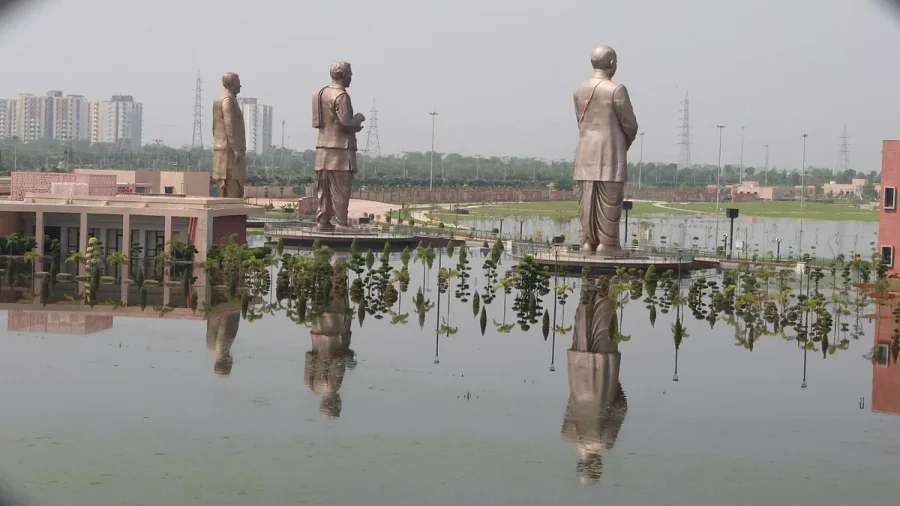
The Gomti has claimed Lucknow's newest landmark. The Rashtra Prerna Sthal, a Rs 230-crore riverfront complex inaugurated by Prime Minister Narendra Modi on 25 December 2025, now lies submerged under the swollen river. The floodwaters have inundated the park, the lotus-shaped museum, and the riverfront's garden track, seating areas, and parks. The Lucknow Development Authority has suspended ticket bookings and entry.
A Monument to Legacy, Now a Test of Planning
The complex houses 65-foot bronze statues of former prime minister Atal Bihari Vajpayee, Shyama Prasad Mukherjee, and Pandit Deendayal Upadhyaya. It was envisioned as a tribute to their legacies and a new cultural hub for the city. But its location on the Gomti's banks—a choice that offered scenic views—has now become its most visible vulnerability.
Why This Flooding Matters Beyond the Monument
This is not just about one project. The Rashtra Prerna Sthal's inundation raises hard questions about how Indian cities plan and build along rivers. The Gomti, like many urban rivers, is prone to seasonal swelling. Yet construction on its floodplains has continued. For residents, the flooding is a reminder that urban development often ignores ecological realities—and the consequences are costly.
From Waterlogging to Submersion: A Timeline
The complex first faced waterlogging after heavy rain on 27 September, raising questions about its drainage. That was months before the current flooding. The incident suggested that water management at the site was already inadequate. Now, with the river in spate, the entire complex is under water, confirming the worst fears of urban planners and citizens alike.
Who Is Affected and How
The immediate impact is on the Lucknow Development Authority, which has suspended operations. Visitors who had planned trips are turned away. But the broader impact is on public trust. Taxpayers funded a Rs 230-crore project that is now unusable during flood season. For a city already grappling with infrastructure challenges, this is a setback that raises uncomfortable questions about accountability.
Official Silence and Public Questions
As of now, there has been no detailed official statement on the extent of damage or what corrective measures will be taken. The Lucknow Development Authority has only confirmed the suspension of entry and bookings. This silence has left room for speculation—and criticism. Experts have long warned that riverside development must account for floodplain dynamics. The Rashtra Prerna Sthal case is now a case study in what happens when those warnings are ignored.
What the Floodwaters Reveal About Urban Planning
The Gomti's flooding of the Rashtra Prerna Sthal is not an isolated event. It reflects a pattern seen across India: cities expanding into floodplains, only to face repeated inundation. The project's design, which included a museum and open spaces, did not incorporate sufficient flood mitigation. The result is a landmark that cannot function during the very season it should be most resilient.
Confirmed Facts vs What Remains Unclear
Confirmed: The complex is submerged; entry and bookings are suspended; the project cost Rs 230 crore and was inaugurated on 25 December 2025; it houses 65-foot statues and a lotus-shaped museum; waterlogging occurred on 27 September.
Unclear: The exact extent of structural damage; whether the statues or museum interiors are harmed; what remedial steps the authorities will take; whether the project's location was reviewed for flood risk before construction.
Risks and Balanced View
The flooding underscores a fundamental tension: development versus ecological sensitivity. While the Rashtra Prerna Sthal was meant to honor leaders and boost tourism, its location on the Gomti's banks has proven problematic. Critics argue that the project should have been designed with flood resilience in mind. Supporters might say that unexpected weather events are hard to predict. But the September waterlogging suggests this was not entirely unforeseen. The balance tilts toward the need for better planning.
A Wider Pattern of Riverside Development Under Scrutiny
Lucknow is not alone. From the Yamuna in Delhi to the Mithi in Mumbai, Indian cities have repeatedly built on floodplains, only to face devastating floods. The Rashtra Prerna Sthal is the latest example of why such development must be re-evaluated. It is a wake-up call for urban planners to prioritize flood risk assessments before approving riverside projects.
What Readers and Residents Should Know
If you had plans to visit the Rashtra Prerna Sthal, entry is currently suspended. Monitor official announcements from the Lucknow Development Authority for updates. For residents, this is a moment to demand transparency about the project's flood preparedness and future maintenance. Citizens can also advocate for stricter environmental reviews for all riverfront developments.
What Could Happen Next
Once the waters recede, authorities will need to assess damage and decide on repairs. There may be calls for a review of the project's design and location. Depending on the findings, future riverside projects in Lucknow could face greater scrutiny. The incident may also prompt a broader debate on urban flood management in Uttar Pradesh.
Our Take
The Rashtra Prerna Sthal was built to inspire. Instead, it now serves as a cautionary tale. The flooding is not just a natural disaster; it is a man-made vulnerability exposed. As Indian cities continue to grow, the lesson is clear: respect the river, or pay the price. The Rs 230-crore question is whether Lucknow—and other cities—will learn from this.
Frequently Asked Questions
Why did the Rashtra Prerna Sthal flood?
The complex is located on the banks of the Gomti river, which swelled due to heavy rains. The site had already experienced waterlogging in September, indicating drainage issues.
Is the Rashtra Prerna Sthal damaged?
The full extent of damage is not yet known. The statues and museum are submerged, but structural assessments will only be possible after the water recedes.
Can I visit the Rashtra Prerna Sthal now?
No. The Lucknow Development Authority has suspended ticket bookings and entry until further notice.
What does this mean for other riverside projects in Lucknow?
It raises questions about flood preparedness and may lead to stricter reviews for future developments along the Gomti.