

By Rajendra Singh Tanwar | News Headline Alert | 23 April 2026
Bengal Polls Open with Violence, EVM Failures as Tamil Nadu Sees High Turnout
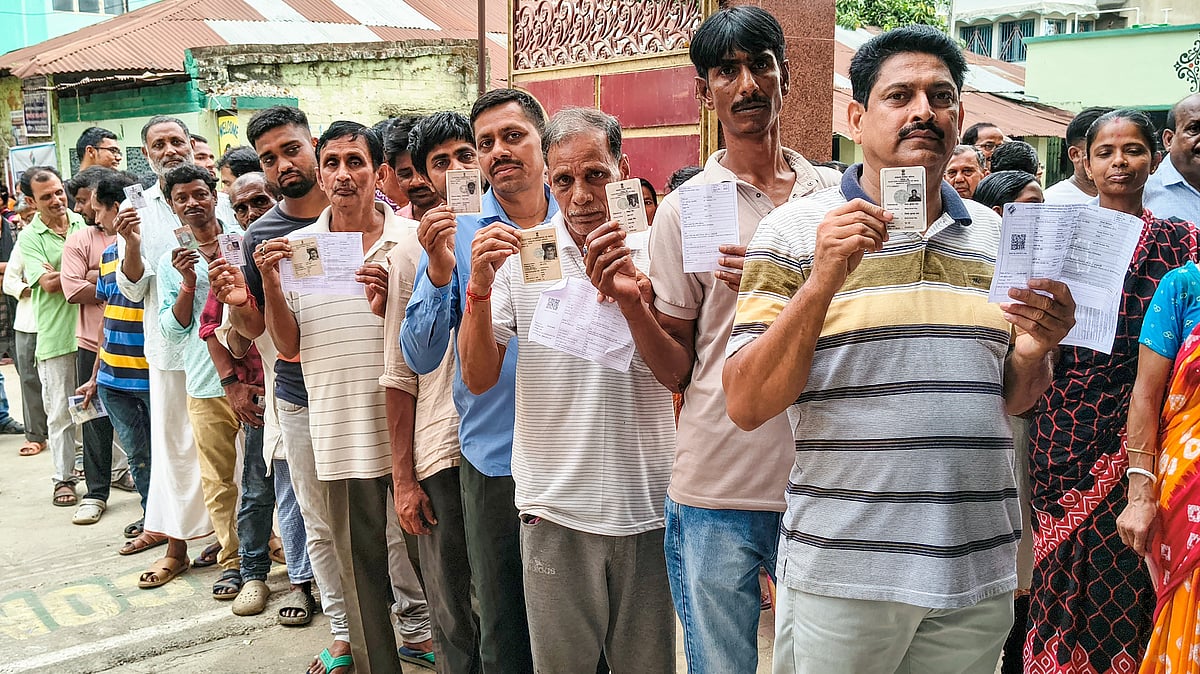
The Election Commission of India is scrambling to contain violence and widespread technical failures on Thursday, as West Bengal’s first-phase voting was marred by crude bomb attacks and EVM glitches across multiple districts, while Tamil Nadu reported a peaceful 17.69% early turnout in a high-stakes single-phase election. The contrasting scenes in two of India’s largest political battlegrounds—involving over 9 crore voters—immediately test the Commission’s ability to ensure a free and fair process, with direct consequences for voter safety in Bengal and for the credibility of the electoral machinery nationwide.
Voters in Murshidabad’s Nowda were injured and fled polling stations after a crude bomb attack, undermining the promise of a secure vote.
Full Event
Polling began at 7 AM today across 386 constituencies in Tamil Nadu (all 234 seats) and West Bengal (152 of 294 seats). In Tamil Nadu, the process was largely smooth, with a 17.69% voter turnout reported by late morning. The state witnessed a bipolar contest between the ruling DMK-led alliance and the AIADMK-led NDA, with actor Vijay’s Tamilaga Vettri Kazhagam (TVK) aiming to disrupt traditional politics.
In stark contrast, West Bengal’s first phase was immediately disrupted. Electronic Voting Machines (EVMs) malfunctioned in booths across Murshidabad, Purba Medinipur, Cooch Behar, Malda, and Darjeeling, forcing delays and replacements. Concurrently, pre-dawn violence escalated. In Nowda, Murshidabad, a crude bomb hurled near a polling station injured several people, including a woman. Overnight clashes between Trinamool Congress and CPI(M) workers were reported in Raipur village, Domkol, creating panic that required police and central forces to escort voters to booths.
Why It Matters and What Changed
This election day matters because it exposes a dangerous divergence in electoral integrity between two major states on a single day. Before today, the Election Commission’s preparedness was framed around managing large electorates and COVID protocols. The reality now is a severe stress test on law enforcement and technical reliability. The change is immediate and visceral: the narrative has shifted from voter enthusiasm to voter safety and systemic failure.
For West Bengal, the “festival of democracy” is overshadowed by fear, potentially suppressing turnout in key marginal seats. For the Election Commission, the simultaneous EVM failures in multiple districts raise urgent questions about pre-poll checks and contingency planning that go beyond isolated glitches. The Commission’s response today will set the tone for Bengal’s six remaining phases and influence public trust in electronic voting.
Who Is Affected
Voters in Sensitive Bengal Constituencies: Residents in districts like Murshidabad, Cooch Behar, and Malda are directly affected by violence and machine failures. Their right to a fear-free vote is compromised, potentially altering electoral outcomes in tightly contested seats.
Polling Officials and Security Personnel: On the ground, they bear the brunt of managing volatile situations, replacing faulty machines under pressure, and ensuring voter safety amidst clashes, increasing their operational and physical risk.
The Political Parties: For the ruling TMC, incidents in its strongholds like Murshidabad become a law-and-order liability. For the BJP and Left Front, it provides ammunition to allege bias and intimidation but also risks their agents' safety.
The Election Commission of India: Its reputation for conducting flawless polls is under direct fire. The Commission’s handling of these incidents will be scrutinized for partiality or incompetence, affecting its authority in future elections.
What Most Articles Miss
Most reports will catalog incidents but miss the critical chain of accountability failure. The crude bomb attack in Nowda didn’t occur in a vacuum. It points to a likely intelligence breakdown or inadequate preventive deployment by law enforcement agencies, which fall under the ECI’s directive during polls. Similarly, EVM glitches across geographically dispersed districts suggest a potential flaw in the last-mile storage, transportation, or setup process—a systemic logistics failure rather than random technical faults. This combination of security and technical lapse on Day One indicates a possible failure in integrated planning between the ECI, state police, and central forces, creating a perfect storm that endangers the entire multi-phase schedule in Bengal.
What To Do Now
If you are a voter in the affected areas of West Bengal or a concerned citizen, here are concrete steps:
- Report Disruption: Immediately inform the Election Commission’s Central Control Room. Call 1950 (the ECI’s voter helpline) or use the cVIGIL app to report violence, intimidation, or faulty EVMs with photo/video evidence.
- Check Your Polling Station: Visit the Electoral Search Website or SMS your EPIC number to 1950 to confirm your booth’s location and status if voting was delayed.
- Demand Extended Time: If your booth experienced a significant delay due to EVM replacement, voters can collectively request the Presiding Officer to extend polling hours under ECI guidelines to compensate for lost time.
- Monitor Official Updates: Follow the official Twitter handle of the Chief Electoral Officer, West Bengal (@CEO_WestBengal) for real-time advisories on re-polling or security updates in your constituency.
Expected Outcome: Your direct reporting creates an official record, triggers EC intervention, and can lead to the redeployment of security or ordering of a re-poll if necessary.
Interpretation
The day’s events are not merely isolated incidents but a clear signal of the challenges inherent in Bengal’s hyper-competitive and often violent political culture. The EVM failures, while technically separate, exacerbate public distrust and feed opposition narratives about electoral manipulation. The relatively peaceful polling in Tamil Nadu highlights that the issue is not national electoral machinery but state-specific governance and law-and-order challenges. The Election Commission now faces a dual crisis: restoring immediate order in Bengal and defending the integrity of the electronic voting process itself from a wave of skepticism. How it addresses the latter will have longer-term ramifications than the results of any single phase.
What Happens Next
The immediate next step is for the Election Commission to announce re-polling in booths where voting was severely compromised or violence prevented a free process. This decision is expected by late tonight or early Friday. Security protocols will be drastically intensified for the second phase on April 29, likely involving a reshuffle of central force deployments. Politically, the violence will trigger a wave of complaints and counter-complaints between the TMC and BJP/Left, with both sides approaching the EC and courts. In Tamil Nadu, the high early turnout suggests robust participation; analysts will watch if this trend holds, indicating a potential referendum on the incumbent DMK government.
Key Facts
DetailInformation States VotingTamil Nadu (All 234 seats), West Bengal (Phase 1: 152 of 294 seats) Total Electorate (Approx.)Over 9 Crore voters Key Incident - ViolenceCrude bomb hurled in Nowda, Murshidabad (WB); several injured including a woman. Key Incident - TechnicalEVM glitches halted/delayed voting in multiple districts across West Bengal. Tamil Nadu Early Turnout17.69% reported by late morning. Counting DateMay 4, 2026 West Bengal Next PhasePhase 2 on April 29 for 142 seats.
FAQ
Can voting hours be extended due to EVM failure?
Yes. The Presiding Officer at a polling station can recommend an extension of polling hours to the District Election Officer to compensate for time lost due to technical failure or disruption. The final decision is taken by the Election Commission.
What happens if I couldn't vote due to violence near my booth?
If a significant number of voters were prevented from voting due to violence or intimidation, the Election Commission can order a re-poll for that entire polling station or a specific group of booths. Affected voters should report the incident via cVIGIL or the helpline (1950) to create an official record.
How are EVMs replaced when they fail?
Each polling station has a reserved set of EVMs (Ballot Units, Control Units, and VVPATs). If a machine fails, the Presiding Officer seals the faulty unit, informs the Sector Officer, and uses the reserve machine. Votes already cast in the faulty machine remain securely stored and are counted.
Will the violence in Bengal's first phase impact later phases?
Almost certainly. The Election Commission is likely to increase security deployments, revise force postings, and potentially club more sensitive constituencies together in subsequent phases. Political parties will also intensify accusations, raising the political temperature for the remaining six phases.


