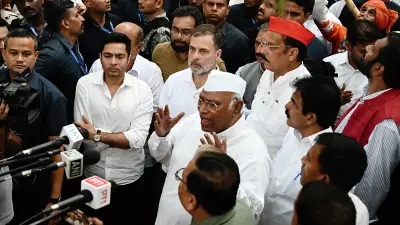
In a rare display of inter-state unity, Karnataka Chief Minister D K Shivakumar on Thursday inaugurated 33 newly installed spillway gates at the Tungabhadra Dam, with his counterparts from Andhra Pradesh and Telangana standing beside him. The ceremony, held at the dam site, was not just about infrastructure — it was a political and agricultural signal to millions of farmers who depend on the river's waters.
Three states, one pledge: Protecting the Tungabhadra farmer
Andhra Pradesh Chief Minister N Chandrababu Naidu and Telangana Chief Minister A Revanth Reddy joined Shivakumar for the inauguration. The three leaders jointly declared their commitment to safeguard the interests of farmers in the Tungabhadra basin, a region that has often seen disputes over water sharing. The message was clear: cooperation, not conflict.
Why the new gates matter for dam safety and irrigation
The Tungabhadra Dam, a key multi-state project, had been operating with aging spillway gates that raised safety concerns. The installation of 33 new gates is expected to improve the dam's ability to manage flood waters and regulate releases for irrigation. For farmers in the command areas of Karnataka, Andhra, and Telangana, this means more reliable water supply during critical cropping seasons.
A timeline of the dam's upgrade
The replacement of the spillway gates was a long-pending project, delayed by technical and bureaucratic hurdles. The new gates were fabricated and installed over recent months, with the work completed ahead of the current water year. Thursday's inauguration marks the formal commissioning of the upgraded infrastructure.
Who benefits: The human impact on millions of farmers
The Tungabhadra basin supports agriculture across three states, with crops like paddy, sugarcane, and cotton depending on its waters. Farmers in the region have faced uncertainty due to aging dam infrastructure and inter-state water disputes. The new gates, combined with the political pledge, offer a measure of reassurance — but the real test will be in the actual water sharing during dry years.
What the Chief Ministers said
Speaking at the event, CM Shivakumar emphasized the importance of maintaining the dam for future generations. CM Naidu called for a cooperative federal approach to water management. CM Revanth Reddy stressed that farmer interests must remain the top priority. The three leaders did not announce a new water-sharing formula, but their joint presence signaled a willingness to work together.
What this means for inter-state water politics
The Tungabhadra has been a source of tension between Karnataka and Andhra Pradesh, and more recently with Telangana. The joint inauguration is a significant political gesture, suggesting that the three states may be moving towards a more collaborative framework. However, experts caution that long-standing disputes over water allocation are unlikely to be resolved by a single ceremony.
Confirmed facts vs what remains unclear
Confirmed: 33 new spillway gates have been installed and inaugurated. The three Chief Ministers attended and pledged to protect farmer interests. Unclear: Whether a new water-sharing agreement has been reached. The specific timeline for further upgrades or maintenance schedules has not been disclosed. The long-term impact on water availability during drought years remains to be seen.
Risks and balanced view
While the inauguration is a positive step, challenges remain. The dam's safety also depends on regular maintenance and monitoring. Inter-state water disputes could resurface during periods of scarcity. Critics may argue that the ceremony was more symbolic than substantive, with no concrete agreement on water sharing. The true measure of success will be in the consistent and equitable distribution of water to farmers.
A wider trend: Cooperative federalism on water
The Tungabhadra event is part of a broader pattern where states are increasingly seeking dialogue over water disputes, rather than relying solely on tribunals or courts. Similar efforts have been seen in the Krishna and Godavari basins. While cooperation is welcome, the underlying tensions over finite water resources remain a challenge for Indian federalism.
What farmers and residents should know
For farmers in the Tungabhadra command area, the new gates should improve the reliability of water releases. However, they should continue to engage with local irrigation departments for updates on water schedules. Residents near the dam can expect improved flood management during heavy rains. The key takeaway is that the infrastructure upgrade is a positive development, but it does not resolve all water-sharing issues.
What happens next
The three states are expected to hold further meetings to discuss water sharing and dam maintenance. The new gates will be monitored for performance during the upcoming monsoon season. If successful, the model of joint inauguration and cooperation could be replicated for other inter-state projects. For now, the focus remains on ensuring that the Tungabhadra waters reach every farmer who needs them.
Our Take
The inauguration of the 33 spillway gates at Tungabhadra Dam is a welcome step towards infrastructure modernization and inter-state cooperation. The joint presence of three Chief Ministers sends a strong political message that farmer interests can transcend state boundaries. However, the real work lies ahead — in ensuring equitable water sharing, regular maintenance, and transparent communication. This is a moment of hope, but not of complacency.
Frequently Asked Questions
Who inaugurated the new spillway gates at Tungabhadra Dam?
Karnataka Chief Minister D K Shivakumar inaugurated the 33 new spillway gates on Thursday, with Andhra Pradesh CM N Chandrababu Naidu and Telangana CM A Revanth Reddy in attendance.
Why were new spillway gates needed at Tungabhadra Dam?
The old gates were aging and posed safety risks. The new gates improve the dam's ability to manage flood waters and regulate irrigation releases, benefiting farmers in the Tungabhadra basin.
What did the three Chief Ministers agree on?
The three leaders jointly pledged to protect the interests of farmers in the Tungabhadra basin, signaling a commitment to inter-state cooperation on water management.
How will this affect farmers in Karnataka, Andhra, and Telangana?
Farmers can expect more reliable water supply for irrigation due to improved dam operations. However, long-term water sharing arrangements remain subject to further discussions between the states.