In a city that never stops reinventing itself, some stories refuse to fade. They linger in the quiet corners of old Delhi, in the scent of aging paper, in the murmur of a language most have forgotten. Dr. Yunus Jaffery was one such story — a man whose life unfolded like a Persian poem, rich with metaphor, devotion, and a quiet defiance against time.
While political tensions between Iran and India make headlines, the cultural threads that bind the two nations remain unbroken. And in the heart of Delhi, a single scholar spent decades weaving them back together, one verse at a time.
The Scholar Who Lived Between Two Worlds
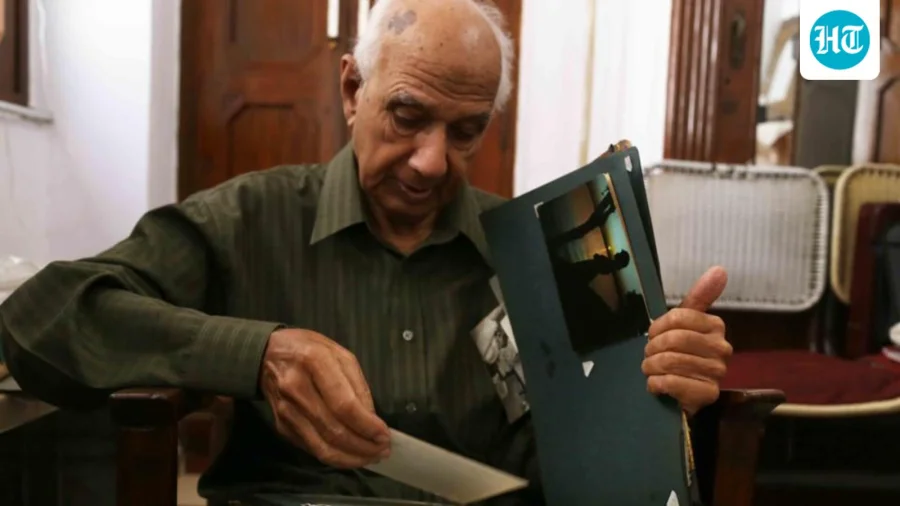
Dr. Yunus Jaffery wasn't just a professor or a linguist. He was a bridge — between Iran and India, between the past and the present, between a language that once ruled the courts of Delhi and a city that has largely moved on. For over four decades, he taught Persian at Delhi University, quietly nurturing a love for the language in generations of students who might otherwise never have encountered it.
His home, tucked away in a narrow lane of old Delhi, was less a house and more a sanctuary. Walls lined with manuscripts, shelves buckling under the weight of centuries-old poetry collections, the air thick with the scent of old books and brewing tea. Visitors often described it as stepping into another era — a living museum of Persian literary heritage.
Why This Matters Right Now
In an age of instant communication and shrinking attention spans, the work of a scholar like Dr. Jaffery might seem irrelevant. But his story carries a deeper resonance. As geopolitical tensions strain diplomatic relations between India and Iran, the cultural ties that have bound these two civilizations for centuries are more important than ever. Dr. Jaffery's life was a testament to the fact that poetry, language, and shared history can outlast any political stalemate.
For Delhi, a city that has absorbed waves of Persian influence — from Mughal architecture to Urdu poetry to the very fabric of its cuisine — his work was a reminder of a shared heritage that cannot be erased by borders or sanctions.
How a Lifetime of Devotion Unfolded
Born in a small town in Uttar Pradesh, Dr. Jaffery's fascination with Persian began early. He would later recall how the rhythm of Persian poetry felt like music to him — a language that could express both the deepest sorrow and the most transcendent joy. He pursued his studies with singular focus, eventually earning a doctorate and joining Delhi University's Persian department.
But his real work happened outside the classroom. He became a custodian of Persian manuscripts, many of them centuries old, carefully preserving them in his personal collection. He translated works that might otherwise have been lost, and he mentored students who would go on to become scholars themselves. His home became a meeting place for poets, academics, and anyone curious about the Persian literary tradition.
Who Was Affected and What Colleagues Remember
For his students, Dr. Jaffery was more than a teacher. He was a guide into a world they didn't know existed. "He didn't just teach us the language," one former student recalled. "He taught us to feel it. To understand that Persian poetry isn't just words — it's a way of seeing the world."
Colleagues remember him as a man of immense humility, someone who never sought recognition but was always willing to share his knowledge. "He was the last of a generation," said a fellow academic. "When he passed, a part of Delhi's soul went with him."
What We Know So Far — and What Remains Unclear
What is clear is that Dr. Jaffery's contributions to Persian scholarship in India were immense. He published numerous translations and critical editions of Persian poetry, and his personal library contained rare manuscripts that scholars from around the world came to consult.
What remains less documented is the full extent of his influence. Many of his students have gone on to teach Persian at universities across India and abroad, but the quiet, unassuming nature of his work means that much of his legacy exists in the lives he touched rather than in official records. The full catalog of his personal collection has not been systematically preserved, raising concerns about whether future generations will have access to the treasures he safeguarded.
Risks, Concerns, and the Balanced View
While Dr. Jaffery's story is one of devotion and cultural preservation, it also highlights a broader concern. Persian studies in India have been in decline for decades. Fewer students enroll in Persian courses each year, and university departments have been downsized or merged. The language that once shaped India's literary and administrative landscape is slowly fading from public consciousness.
Critics argue that the focus on English and other modern languages has left little room for classical languages like Persian. Supporters of Persian studies counter that the language is essential for understanding India's own history — from Mughal-era documents to the poetry of Mirza Ghalib, who wrote in both Urdu and Persian.
Dr. Jaffery's life was a living counterargument to this decline. But without institutional support, the question remains: who will carry the torch after the last of his generation is gone?
Why Similar Stories of Cultural Persistence Are Growing
Across India, there are quiet scholars like Dr. Jaffery — people who dedicate their lives to preserving languages, traditions, and art forms that are at risk of being forgotten. From Sanskrit scholars in Varanasi to folk musicians in Rajasthan, these individuals represent a form of cultural resistance that is both deeply personal and profoundly important.
In an increasingly globalized world, the value of such work is often overlooked. But as communities seek to reconnect with their roots, these stories are gaining new relevance. They remind us that culture is not something that can be legislated or imposed — it is lived, breathed, and passed down by people who believe in its worth.
"Persian poetry taught me that life is like a ball of wool — tangled, beautiful, and full of hidden connections." — Dr. Yunus Jaffery (as recalled by a student)
What Readers Should Know Now
For those inspired by Dr. Jaffery's story, there are practical ways to engage with Persian literary heritage. Several universities in India, including Delhi University and Jawaharlal Nehru University, offer Persian language courses. Online platforms like the National Mission for Manuscripts provide access to digitized Persian texts. And local cultural organizations in Delhi occasionally host readings and workshops on Persian poetry.
But perhaps the most meaningful way to honor his legacy is simply to read a Persian poem — even in translation. The works of Hafez, Rumi, and Bedil offer insights into a worldview that transcends borders and centuries.
What Could Happen Next
The future of Persian studies in India remains uncertain. Without sustained investment and institutional support, the number of scholars like Dr. Jaffery will continue to dwindle. However, there are signs of renewed interest. Digital archives and online courses are making Persian literature more accessible than ever before. And as India and Iran navigate their complex relationship, cultural diplomacy may once again become a priority.
For now, the legacy of Dr. Yunus Jaffery lives on in the students he taught, the manuscripts he preserved, and the quiet, persistent belief that a language can be a home — even in a city that is always changing.
Our Take: Why This Story Matters Beyond One Scholar
Dr. Jaffery's story is not just about one man's devotion to Persian poetry. It is about the fragility of cultural memory and the people who fight to keep it alive. In a world that often values the new over the old, the fast over the slow, his life was a reminder that some things are worth preserving — not because they are profitable, but because they are beautiful.
Delhi has always been a city of layers. Beneath the chaos of its streets, the noise of its markets, and the rush of its metro, there are quieter stories waiting to be told. Dr. Yunus Jaffery was one of them. And like a Persian poem, his life will continue to resonate — if only we take the time to listen.
FAQs
Who was Dr. Yunus Jaffery and why is he important?
Dr. Yunus Jaffery was a noted Persian scholar based in Delhi who spent decades teaching Persian at Delhi University and preserving rare Persian manuscripts. He is important because his work helped maintain the cultural and literary ties between India and Iran, and he mentored generations of students who continue to study and teach Persian.
What is the connection between Persian poetry and Delhi?
Persian was the court language of the Mughal Empire, which ruled from Delhi for centuries. Many of Delhi's most iconic monuments, literary works, and cultural traditions are deeply influenced by Persian language and poetry. Even today, Urdu — a language born from Persian and Hindi — is widely spoken in the city.
Why is Persian scholarship declining in India?
Several factors contribute to the decline: reduced funding for humanities and classical language departments, a shift in educational focus toward STEM and modern languages, and a lack of awareness about the historical importance of Persian in Indian culture. Fewer students enroll in Persian courses, leading to downsized programs and fewer job opportunities for scholars.
How can I learn more about Persian poetry and culture?
You can start by reading translations of Persian poets like Hafez, Rumi, and Bedil. Universities like Delhi University and JNU offer Persian language courses. Online platforms such as the National Mission for Manuscripts provide access to digitized texts. Cultural organizations in Delhi occasionally host Persian poetry readings and workshops.