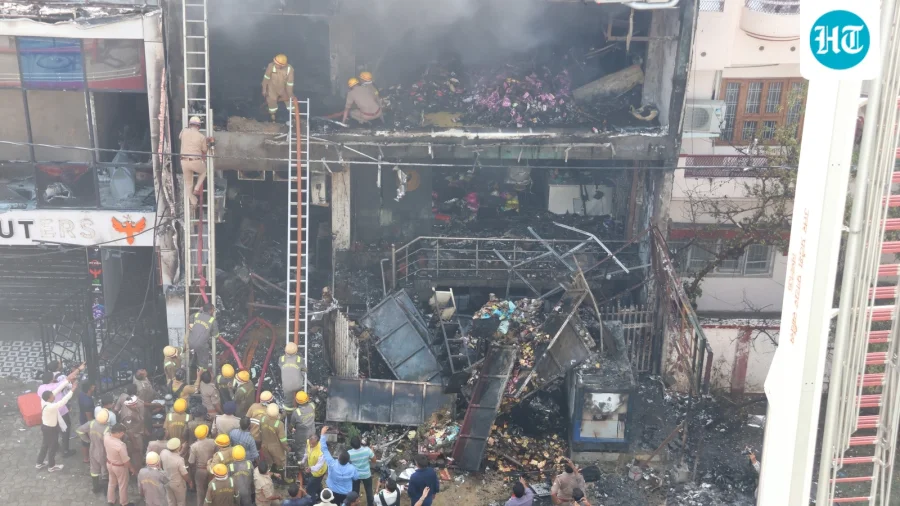
The screams that pierced the night in Delhi’s Hauz Rani were not just of pain, but of a city’s failing infrastructure. Twenty-three people lost their lives in a fire that officials suspect began with a spark from an electrical fault. Weeks later, the same haunting story unfolded in Lucknow’s Aliganj, where 15 more perished. These are not isolated tragedies. They are the deadly consequence of a predictable, and preventable, phenomenon: the science of electrical fires in summer.
The deadly chemistry of heat and electricity
Summer in North India is brutal. Temperatures routinely cross 40 degrees Celsius. This extreme heat does more than just make people uncomfortable; it fundamentally alters the behaviour of electrical systems. As the mercury rises, the resistance in electrical wires increases. This resistance generates more heat within the wires themselves, a process known as Joule heating. In a well-maintained system, this is manageable. But in ageing, overloaded circuits common in older urban neighbourhoods, this heat becomes a catalyst for disaster.
Why old wiring is a ticking time bomb in summer
The buildings in Hauz Rani and Aliganj, like many in India’s older localities, are not new. Their electrical systems were often designed for a fraction of the load they now carry. Air conditioners, coolers, and other cooling appliances strain circuits that were never meant for them. This overloading, combined with the ambient summer heat, causes insulation around wires to become brittle and crack. Exposed wires can then touch, creating a short circuit. The resulting spark, in an environment already heated and dry, can ignite flammable materials like dust, wood, or plastic with terrifying speed.
The human cost of a predictable pattern
For the families in Hauz Rani and Aliganj, the science is abstract. The reality is the loss of a parent, a child, a breadwinner. These fires often occur at night, when people are asleep, and in buildings with narrow staircases and few exits. The combination of a fast-spreading electrical fire and a trapped population is lethal. The victims are often the most vulnerable: residents of crowded, lower-income housing where safety is a luxury they cannot afford.
What investigators are looking for
Official investigations into both fires are ongoing. Preliminary reports, as cited by news agencies, point to electrical short circuits as the primary suspected cause. Investigators will be examining the main electrical panel, looking for signs of a "flashover" — a catastrophic electrical event where a short circuit creates a massive, instantaneous release of energy. They will also check for the age of wiring, the load on the circuit at the time of the fire, and whether any safety devices like circuit breakers functioned correctly.
Confirmed facts vs what remains unclear
Confirmed: Both fires occurred in summer. Both are suspected to have been caused by electrical faults. Both resulted in significant loss of life. The buildings were in densely populated urban areas.
Unclear: The exact sequence of events that led to the short circuit. Whether the buildings had valid fire safety certificates. The specific role of overloaded circuits from air conditioners or coolers. The final official cause of the fires has not been released.
Risks and the challenge of prevention
Preventing these fires is not simple. It requires a multi-pronged approach: individual responsibility (not overloading sockets, replacing old wires), building management (regular electrical audits), and government enforcement (strict building codes, mandatory safety inspections). The cost of rewiring an entire building is high, and many landlords are unwilling to pay. There is also a lack of public awareness. Many people do not know that a buzzing switchboard or a frequently tripping circuit breaker is a warning sign of a potential fire.
A wider pattern of summer fire tragedies
Hauz Rani and Aliganj are not anomalies. Every summer, Indian cities report a spike in fire incidents, many of which are electrical in origin. From hospitals to factories to residential buildings, the pattern is the same: heat + old wiring + overload = fire. This is a systemic infrastructure failure that repeats itself year after year, with predictable and tragic results.
What you can do to protect your home
For readers living in older buildings or using high-power cooling appliances, experts recommend a few practical steps: Get an annual electrical safety audit from a licensed electrician. Do not use extension cords for high-power appliances like ACs. Replace any wiring that is more than 20 years old. Install a residual current circuit breaker (RCCB) which can cut power in a fraction of a second during a fault. Most importantly, if you smell burning plastic or hear a buzzing sound from a switchboard, do not ignore it.
What happens next
The immediate future will see investigations conclude, possibly leading to arrests for negligence. The larger question is whether these tragedies will lead to systemic change. Past fires have led to temporary crackdowns, but long-term enforcement has been weak. Without a sustained effort to upgrade electrical infrastructure and enforce safety codes, the science of electrical fires in summer will continue to claim lives.
Our Take
These fires are not accidents in the true sense of the word. They are the predictable outcome of neglect — neglect of infrastructure, neglect of safety codes, and neglect of the lives of the urban poor. The science is clear. The solution is known. What is missing is the political and social will to act. Until that changes, every summer will bring with it the risk of another Hauz Rani, another Aliganj.
Frequently Asked Questions
Why are electrical fires more common in summer?
High ambient heat increases electrical resistance in wires, generating more internal heat. This, combined with the increased load from cooling appliances like ACs and coolers, can cause insulation to fail and lead to short circuits.
What is the most common cause of an electrical fire?
The most common cause is a short circuit, often resulting from old or damaged wiring, overloaded circuits, or faulty electrical appliances. Loose connections can also generate heat and cause fires.
How can I tell if my home’s wiring is a fire risk?
Warning signs include frequently tripping circuit breakers, flickering lights, a burning smell near outlets or switchboards, buzzing sounds from switches, and discoloured or warm wall plates.
What should I do if I suspect an electrical fire?
Do not use water to put it out, as water conducts electricity. If safe, turn off the main power supply. Use a fire extinguisher rated for electrical fires (Class C). Evacuate the building immediately and call the fire department.