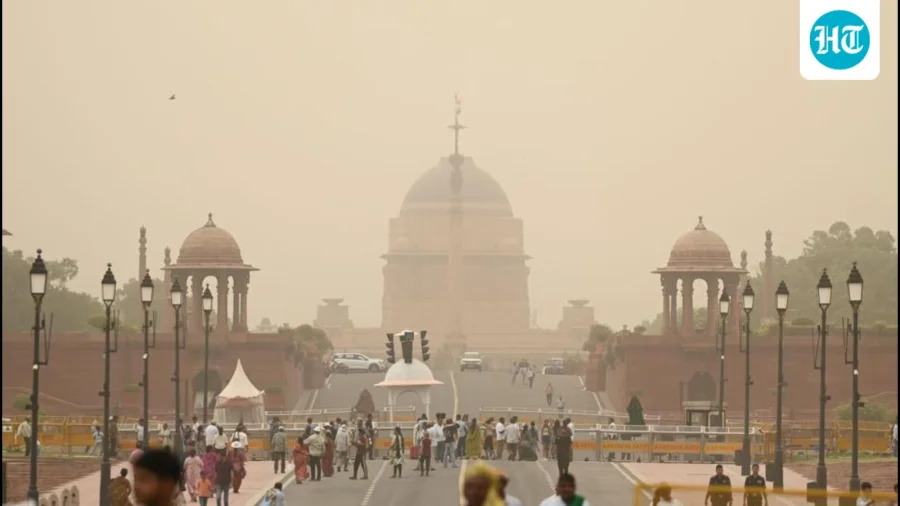
Delhi woke up to a battered city on Thursday morning after an overnight dust storm with winds reaching 120kmph swept through the National Capital Region, uprooting trees, disrupting flights, and leaving residents scrambling for cover. The India Meteorological Department (IMD) has now issued an orange alert for Thursday night, warning of more thunderstorms, lightning, and possible dust storms.
How the dust storm unfolded across Delhi-NCR
The storm hit Delhi around Wednesday evening, with wind speeds peaking at 120kmph in some areas. What began as a dust storm quickly intensified into violent overnight rain across NCR, including Noida, Gurugram, Ghaziabad, and Faridabad. Residents reported near-zero visibility for several hours, with many caught outdoors during the peak of the storm.
Why the orange alert matters for Thursday
The IMD's orange alert for Thursday night is not a routine warning. It signals that severe weather is likely, and residents should prepare for potential disruptions. The alert covers Delhi-NCR and warns of thunderstorms accompanied by lightning, gusty winds, and possible hailstorms in some areas. For commuters, students, and office-goers, Thursday evening travel could be risky.
How the storm disrupted air travel
Indira Gandhi International Airport, one of India's busiest, saw over 400 flights delayed as visibility dropped sharply during the storm. Several flights were diverted to nearby airports, and operations were temporarily suspended for safety. Passengers reported long waits and confusion at terminals. Airlines advised travelers to check flight status before heading to the airport.
Who is most affected by the weather warning
The orange alert is particularly concerning for daily commuters, outdoor workers, students appearing for exams, and residents in low-lying areas prone to waterlogging. The storm also poses risks for those living near construction sites or under old trees, which are vulnerable to uprooting. Elderly residents and those with respiratory conditions should avoid going out during the storm.
What the IMD has officially said
The India Meteorological Department has confirmed that the dust storm was caused by a western disturbance interacting with moisture-laden winds from the Bay of Bengal. In its bulletin, the IMD stated: "An orange alert has been issued for Delhi-NCR for Thursday night. Thunderstorms with lightning and gusty winds are very likely. Residents are advised to stay indoors and avoid unnecessary travel."
Why temperatures are set to drop sharply
Following the storm, a significant drop in temperatures is expected. The IMD has forecast maximum temperatures between 34°C and 36°C by Friday, a noticeable relief from the recent heat. This cooling is due to the passage of the western disturbance and the influx of cooler air from the northwest. However, the relief may be short-lived as temperatures are expected to rise again next week.
Confirmed facts vs what remains unclear
Confirmed: Wind speeds reached 120kmph in parts of Delhi-NCR. Over 400 flights were delayed at Delhi airport. The IMD has issued an orange alert for Thursday night. Temperatures will drop to 34-36°C by Friday.
Unclear: The exact number of trees uprooted or property damaged is still being assessed. Whether the orange alert will be extended to Friday is not yet confirmed. The full impact on power lines and waterlogging in low-lying areas is still emerging.
How Delhi's infrastructure coped with the storm
The storm exposed vulnerabilities in Delhi's urban infrastructure. Several areas reported power outages as strong winds snapped electricity lines. Traffic signals malfunctioned in parts of the city, leading to chaos during the evening rush hour. Municipal authorities have been deployed to clear fallen trees and restore power, but residents in some areas may face disruptions through Thursday.
Risks and concerns for residents
While the orange alert is a precaution, the real risks include flying debris, falling tree branches, and slippery roads. Waterlogging in low-lying areas could disrupt Thursday evening traffic. There is also concern about the impact on students appearing for exams scheduled during this period. The IMD has advised schools and colleges to consider postponing outdoor activities.
Wider weather pattern behind the storm
This dust storm is part of a larger weather pattern affecting northern India. A western disturbance, combined with moisture from the Bay of Bengal, has triggered similar storms in Punjab, Haryana, and Uttar Pradesh. Meteorologists note that such pre-monsoon storms are becoming more intense due to rising temperatures and changing climate patterns.
Practical guidance for Delhi-NCR residents
If you are in Delhi-NCR on Thursday evening, here is what you should do: Avoid stepping out during the storm. If driving, pull over to a safe spot and wait for visibility to improve. Keep windows and doors closed. Charge your phone and power banks in case of outages. Check flight and train status before heading to the station or airport. Stay updated through official IMD alerts and local news.
What could happen next
The orange alert is likely to remain in place through Thursday night. If the storm intensifies, the IMD may upgrade it to a red alert for specific areas. By Friday, conditions are expected to improve, with clearer skies and cooler temperatures. However, residents should remain cautious as another western disturbance is expected early next week.
Our Take
This dust storm is a reminder that Delhi's weather is becoming more unpredictable and extreme. While the orange alert is a necessary precaution, the real test lies in how quickly authorities restore normalcy after the storm. For residents, the key takeaway is to stay informed and prioritize safety over convenience. The drop in temperatures may offer temporary relief, but the underlying pattern of severe weather events demands long-term urban planning and climate resilience.
Frequently Asked Questions
What does an orange alert mean for Delhi?
An orange alert from the IMD means that severe weather is expected, and residents should be prepared for potential disruptions. It is a step below a red alert, which indicates extreme weather with significant danger.
Will Delhi schools and colleges remain open on Thursday?
The IMD has advised educational institutions to consider postponing outdoor activities. However, no official closure has been announced yet. Parents and students should check with their respective schools and colleges for updates.
How long will the temperature drop last?
The temperature drop is expected to last through Friday, with maximum temperatures between 34°C and 36°C. By the weekend, temperatures may begin to rise again as the western disturbance moves away.
Is it safe to travel by air during the orange alert?
Air travel may face disruptions due to poor visibility and strong winds. Passengers are advised to check with their airlines for real-time flight status and allow extra time for travel to the airport.