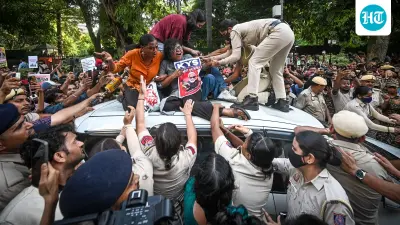
The Central Bureau of Investigation (CBI) has officially taken over the Twisha Sharma death case, re-registering the First Information Report (FIR) after receiving police files from the Madhya Pradesh authorities. This development marks a significant escalation in a case that has gripped the nation, raising questions about justice, dowry-related violence, and the handling of high-profile investigations.
CBI Takes Over Twisha Sharma Death Case: What This Means for the Investigation
The CBI's takeover of the Twisha Sharma death case signals a shift from local police handling to a central agency known for its expertise in complex investigations. The re-registration of the FIR is a procedural step that allows the CBI to legally pursue the case under its own jurisdiction. According to sources, the agency has already begun reviewing the evidence collected by the Bhopal police, including statements, forensic reports, and digital records.
Why This Matters Right Now
This case has become a flashpoint for public concern over dowry deaths in India, where thousands of women lose their lives each year due to insufficient dowry demands. Twisha Sharma, a model and actor, died under circumstances that her family alleges were murder, while the accused's family claims it was suicide. The CBI's involvement brings hope for a transparent and impartial investigation, but it also raises expectations for accountability and justice.
How the CBI Takeover Unfolded
The CBI took over the case after receiving a formal request from the Madhya Pradesh government, following a Supreme Court directive. The court had expressed concern over the handling of the case by local police, noting that the investigation appeared to lack urgency and thoroughness. The CBI team dispatched to Bhopal has now re-registered the FIR under its own crime number, effectively starting the investigation afresh.
Who Is Affected and What Officials Are Saying
The development directly impacts Twisha Sharma's family, who have been demanding a CBI probe since the beginning. Her father has expressed cautious optimism, stating, "We hope the CBI will uncover the truth." On the other hand, the accused, Samarth Singh, and his family have maintained their innocence, claiming that Twisha died by suicide. Officials from the CBI have not commented publicly, but sources indicate that the agency is treating the case as a potential dowry death.
What We Know So Far — and What Remains Unclear
What we know: The CBI has re-registered the FIR and has begun collecting evidence. The case involves allegations of dowry harassment and murder. What remains unclear: The exact cause of death, the role of the accused, and whether the initial police investigation was compromised. The CBI is expected to conduct a fresh autopsy and forensic analysis to determine the truth.
Risks, Concerns, and the Balanced View
While the CBI takeover is seen as a positive step, there are risks. The agency faces a heavy workload, and high-profile cases can sometimes face delays. Additionally, the accused's family has alleged media bias, claiming that the case is being sensationalized. A balanced view suggests that the CBI's involvement could lead to a fair trial, but only if the investigation is conducted without external pressure.
Why Similar Trends or Concerns Are Growing
This case is part of a larger pattern of dowry deaths in India, where many cases go unreported or are mishandled. The public outcry over Twisha Sharma's death reflects a growing demand for stricter laws and better enforcement. The CBI's intervention could set a precedent for how such cases are handled in the future.
- The CBI has re-registered the FIR under its own jurisdiction.
- The agency is reviewing evidence from the Bhopal police.
- A fresh investigation is expected to include new forensic analysis.
"We hope the CBI will uncover the truth and deliver justice for Twisha." — Twisha Sharma's father
What Readers, Users, or Investors Should Know Now
For those following the case, the key takeaway is that the investigation is now in the hands of a central agency with more resources and expertise. However, patience is required, as CBI investigations can take months or even years. The public should avoid jumping to conclusions based on media reports and wait for the official findings.
What Could Happen Next
The CBI is likely to question the accused, Samarth Singh, and his family members. A fresh autopsy may be ordered, and digital evidence, including phone records and social media activity, will be scrutinized. The agency may also look into allegations of police negligence or corruption in the initial investigation.
Our Take: Why This Story Matters Beyond One Incident
The Twisha Sharma death case is not just about one family's tragedy. It highlights systemic failures in how dowry death cases are investigated in India. The CBI's involvement is a step toward accountability, but it also underscores the need for broader reforms in the justice system. This case could become a turning point in the fight against dowry-related violence.
FAQs
Why did the CBI take over the Twisha Sharma death case?
The CBI took over the case after the Supreme Court expressed concern over the local police's handling of the investigation. The court directed the Madhya Pradesh government to transfer the case to the CBI for a more impartial probe.
What does re-registering the FIR mean in the Twisha Sharma case?
Re-registering the FIR means the CBI has officially taken over the case and will now investigate under its own jurisdiction. This allows the agency to start fresh, review all evidence, and pursue leads independently.
What are the allegations in the Twisha Sharma death case?
Twisha Sharma's family alleges that she was murdered due to dowry demands by her husband, Samarth Singh, and his family. The accused's family claims she died by suicide. The CBI is investigating both possibilities.
How long will the CBI investigation take in the Twisha Sharma case?
CBI investigations can vary in duration, but high-profile cases like this one may take several months to a year. The agency will conduct a thorough probe, including forensic analysis and witness interviews, before filing a charge sheet.