

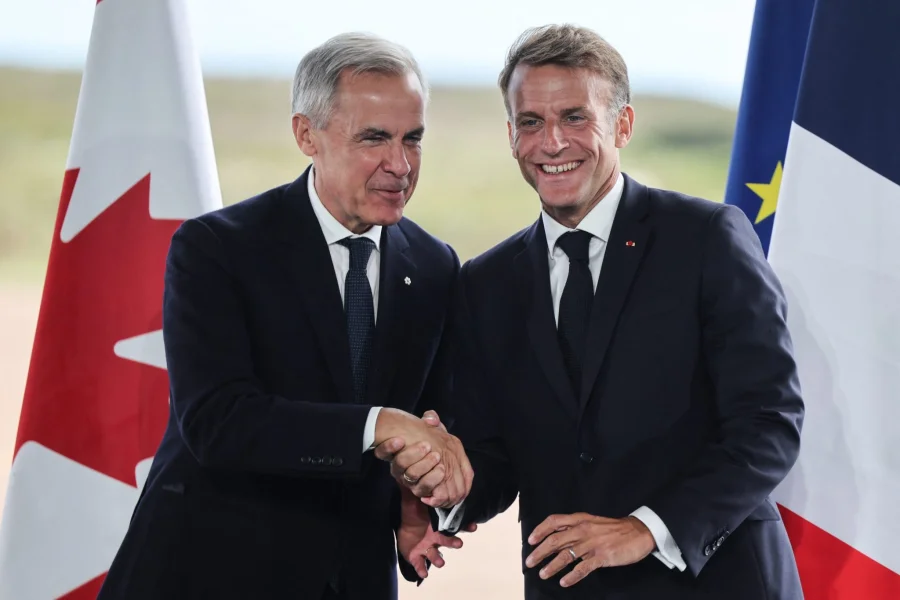
Canada and France are moving closer together at a moment when the ground beneath Western alliances is shifting. On Sunday, Canadian Prime Minister Mark Carney and French President Emmanuel Macron agreed to deepen cooperation across space, defence, energy and business — a pact that signals both nations are actively hedging against an unpredictable global order.
The timing is not accidental. Days earlier, Carney embraced the prospect of Canada becoming the European Union's first associate member. Now, with Macron also seeking oil and gas alternatives as the Iran war disrupts global supplies, the two leaders are building something that looks less like a traditional bilateral relationship and more like a strategic lifeline.
What Carney and Macron Actually Agreed to Build Together
According to statements from the meeting, the two countries will task their space agencies and defence ministries to develop and share infrastructure. This includes launch systems and ground-based reception facilities — the physical backbone of any serious space and defence partnership.
Beyond space, the agreement extends to energy, telecommunications, climate resilience and economic development. Carney framed the cooperation as essential to ensuring citizens of both nations can "live our lives as we choose" — a phrase that carries weight when energy security and defence autonomy are no longer abstract concerns.
Why This Deal Matters Beyond Diplomatic Handshakes
For Canada, this is about reducing a dependence that has defined its economy and security posture for decades. The United States remains Canada's largest trading partner and closest military ally, but Carney has been explicit: deeper ties with Europe would make Canada less vulnerable to shifts in American policy.
For France, the calculus is different but equally urgent. Macron is seeking oil and gas alternatives as the Iran war disrupts supplies — a conflict that has exposed how quickly energy markets can destabilise. France's push for energy cooperation with Canada is not just about diversification; it is about survival in a world where supply chains are weaponised.
How Canada's EU Ambitions Fit Into the Bigger Picture
The Canada-France agreement did not emerge in isolation. It follows Carney's recent embrace of Canada potentially becoming the European Union's first associate member — a status that would deepen economic and political integration without full membership.
That move alone would have been significant. Combined with Sunday's bilateral agreement, it suggests a coordinated strategy: Canada is not just looking for new partners; it is restructuring its place in the Western world.
Who Stands to Gain — and Who Is Watching Closely
Canadian businesses in defence, space technology, telecommunications and energy stand to benefit from expanded access to French and European markets. French companies, meanwhile, gain a stable, resource-rich partner outside the EU bloc.
But the implications extend to ordinary citizens. Energy cooperation could affect prices and supply stability. Defence collaboration could shape security policy for years. Space infrastructure sharing could influence everything from communications to surveillance capabilities.
Washington will be watching. Any deepening of Canada-Europe ties inevitably raises questions about the future of North American integration — though neither Carney nor Macron framed the agreement as a rejection of the US.
Official Statements and What They Reveal
Carney was direct about the intent: the countries will task their space agencies and defence ministries to develop and share infrastructure. This is not a vague memorandum of understanding — it is a directive to build tangible systems together.
Macron's focus on oil and gas alternatives reflects France's immediate energy concerns. The Iran war has disrupted supplies, and France — like much of Europe — is scrambling to secure alternatives. Canada, with its energy resources, is a logical partner.
Neither leader provided specific timelines or funding commitments. That detail will matter in the months ahead.
Confirmed Facts vs What Remains Unclear
Confirmed: Carney and Macron met Sunday and agreed to deepen cooperation in space, defence, energy, telecommunications, climate resilience and economic development. Space agencies and defence ministries will be tasked with developing shared infrastructure. Canada is pursuing EU associate membership.
Unclear: Specific project timelines, funding mechanisms, and how this agreement interacts with existing NATO and NORAD commitments. Whether this signals a broader shift in Canadian foreign policy or a targeted diversification strategy. How the US administration views these developments.
Speculation: Some analysts may interpret this as a move away from US alignment, but neither leader has framed it that way. The agreement is best understood as diversification, not divorce.
The Strategic Logic Behind Canada-France Cooperation
Canada brings resources — energy, minerals, space technology — and a stable regulatory environment. France brings access to European markets, advanced defence technology, and diplomatic weight within the EU.
Together, they create a partnership that reduces reliance on any single ally or supplier. In a world where the Iran war can disrupt energy supplies overnight and trade tensions can flare without warning, that kind of resilience is not optional.
Risks and the Balanced View
Not everyone will see this as a clear win. Critics may argue that Canada risks overextending itself diplomatically, or that deepening ties with Europe could complicate its relationship with the United States.
There are also practical questions: Can Canada and France actually deliver on ambitious space and defence infrastructure projects? Will funding materialise? And does France's energy needs align with Canada's own climate commitments?
The agreement is promising, but promises in diplomacy are easier than implementation.
A Wider Pattern of Alliance Shifts
Canada and France are not alone in rethinking old alliances. Across the West, countries are diversifying partnerships, securing supply chains, and building resilience against a backdrop of war, trade disruption and political uncertainty.
The Iran war has accelerated this. Energy security is no longer a background concern — it is a front-line issue. The Canada-France agreement is one response to that reality.
What This Means for Canadians and French Citizens
For Canadians, this could mean new job opportunities in defence and space sectors, potentially more stable energy prices, and a foreign policy that is less dependent on decisions made in Washington.
For French citizens, the focus is more immediate: energy supply stability as the Iran war disrupts markets. Cooperation with Canada could help secure alternatives.
For businesses in both countries, the agreement opens doors to new markets and partnerships. But those benefits will take time to materialise.
What Happens Next
Working groups will likely be established to translate Sunday's agreement into concrete projects. Space and defence ministries will begin identifying infrastructure priorities. Energy cooperation will depend on market conditions and political will.
Canada's EU associate membership bid will also proceed — a longer, more complex process that could reshape its international standing.
What is clear is that both Carney and Macron see this moment as an opportunity to build something new. Whether that translates into lasting change will depend on execution.
Our Take
This is not just a diplomatic photo opportunity. The Canada-France agreement reflects a genuine shift in how middle powers are responding to a fragmented world. Carney's push for EU ties and Macron's energy scramble are two sides of the same coin: the recognition that old certainties no longer hold.
The agreement's success will be measured not in handshakes but in launch systems built, energy secured, and resilience delivered. For now, it is a signal — and a significant one — that Canada and France are choosing to face an uncertain future together.
Frequently Asked Questions
What did Canada and France agree to cooperate on?
They agreed to deepen cooperation in space, defence, energy, telecommunications, climate resilience and economic development. Space agencies and defence ministries will develop shared infrastructure including launch systems and ground-based reception facilities.
Why is Canada seeking closer ties with France and the EU?
Canada is looking beyond the United States for new economic and security partners. Prime Minister Carney has argued that deeper ties with Europe would make Canada less vulnerable to shifts in American policy.
How does the Iran war affect this agreement?
The Iran war has disrupted global oil and gas supplies. France, under President Macron, is seeking energy alternatives, and Canada — with its energy resources — is a logical partner for diversification.
What happens next with the Canada-France agreement?
Working groups will be established to identify specific projects and timelines. Space and defence ministries will begin planning shared infrastructure. Canada's EU associate membership bid will also proceed separately.