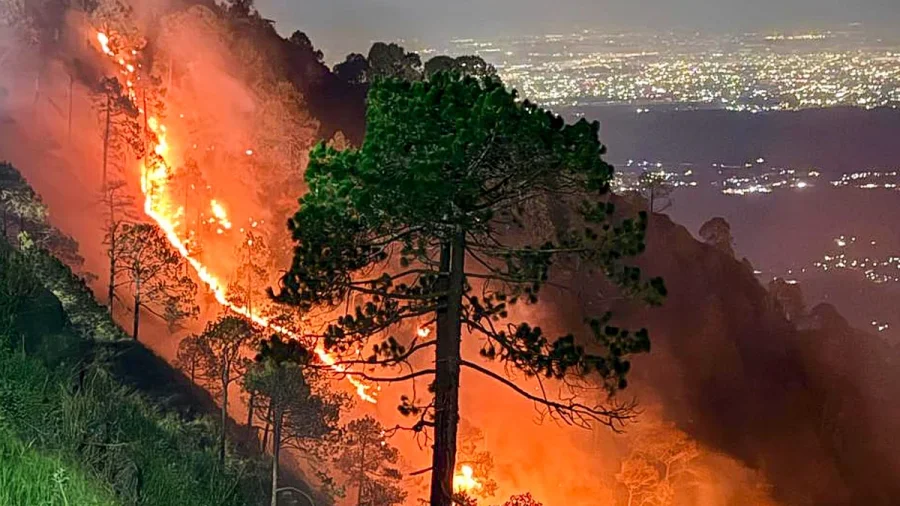
For 15 hours, the hills of Kasauli were a warzone—not against an enemy, but against a wall of fire that threatened to consume everything in its path. As flames leaped from tree to tree on the steep, inaccessible slopes of the Gilbert Trail, a coordinated response from the Indian Army, the Indian Air Force, and local authorities turned the tide. By Wednesday morning, the fire was contained. But the battle left behind a stark reminder of how fragile these mountain ecosystems are.
How a Routine Tuesday Afternoon Turned Into a Crisis
The fire first erupted around 3:00 PM on Tuesday in the Gilbert Trail and Upper Mall area on the western slopes of Kasauli. Within minutes, the blaze had spread rapidly through the dense, dry forest, driven by wind and the difficult terrain. Initial attempts by teams from the Forest Department, Fire Department, and local residents to bring the flames under control failed. The fire was simply too fast, and the ground too treacherous for ground-based firefighting alone.
Why This Matters Right Now
This is not just a story about a fire in one hill station. Kasauli is a popular tourist destination and home to a fragile ecosystem. A fire of this scale could have destroyed hundreds of acres of forest, displaced wildlife, and threatened residential areas. The successful containment, while a relief, also highlights the growing risk of forest fires in Himachal Pradesh, especially during dry, pre-monsoon months. For residents, it was a night of fear. For authorities, it was a test of emergency response. For the rest of us, it’s a wake-up call about climate vulnerability.
The Army and IAF Join the Fight
As the fire grew beyond local control, the Indian Army’s Kasauli Brigade launched an immediate emergency response. Soldiers were deployed to create fire lines and assist with ground-level containment. But the real game-changer came from the sky. The Indian Air Force scrambled an Mi-17 V5 helicopter, which began a series of precision water drops using a Bambi Bucket system. According to officials, the helicopter dropped an estimated 66,000 litres of water over multiple sorties, targeting the most intense pockets of the fire.
Who Is Affected and What Officials Are Saying
The immediate impact was felt by residents of the Upper Mall and Gilbert Trail areas, many of whom were asked to stay indoors or evacuate as a precaution. Tourists in the area were also affected, with some routes temporarily closed. A statement issued by the defence PRO confirmed the success of the operation, stating, "In a sustained overnight operation lasting over 15 hours and continuing into the day, the Indian Army, in close coordination with the Indian Air Force, civil officials of both Kasauli and Chandigarh administration, and other local agencies, has successfully contained a major forest fire." Officials also confirmed that no casualties were reported, a significant relief given the scale of the blaze.
What We Know So Far — and What Remains Unclear
What is confirmed is the timeline, the response, and the successful containment. The IAF’s role, with 66,000 litres of water dropped, is a verified fact. What remains unclear is the exact cause of the fire. While forest fires in the region are often attributed to dry conditions and human activity, no official cause has been announced yet. An investigation is likely underway. The total area of forest destroyed is also yet to be assessed.
Risks, Concerns, and the Balanced View
The successful operation is a testament to the preparedness of the Army and IAF. However, the incident also raises concerns. The fact that local firefighting teams were initially overwhelmed points to a gap in ground-level resources for tackling wildfires in hilly terrain. Furthermore, the increasing frequency of such fires in Himachal Pradesh suggests a pattern linked to drier winters and hotter summers. While the response was heroic, the underlying risk remains.
Why Forest Fires in Himachal Are a Growing Concern
Himachal Pradesh has seen a rise in forest fire incidents in recent years. Dry weather, accumulation of dry pine needles, and human negligence are common triggers. The Kasauli fire is part of a larger, worrying trend. According to data from the state forest department, hundreds of forest fires are reported each year, damaging thousands of hectares of forest cover. The Kasauli operation shows that while the response can be effective, prevention and early detection remain the biggest challenges.
- The IAF Mi-17 V5 helicopter is a versatile workhorse, often used for disaster relief and firefighting in addition to transport roles.
- The Bambi Bucket system allows helicopters to scoop water from nearby sources (like lakes or rivers) and drop it precisely on fires.
- Kasauli’s steep slopes and dense pine forests make it particularly vulnerable to fast-spreading fires.
"In a sustained overnight operation lasting over 15 hours and continuing into the day, the Indian Army, in close coordination with the Indian Air Force, civil officials of both Kasauli and Chandigarh administration, and other local agencies, has successfully contained a major forest fire." — Defence PRO Statement
What Residents and Visitors Should Know Now
For those living in or planning to visit Kasauli, the immediate danger has passed. All major routes are expected to be open. However, visitors should be aware of the heightened fire risk during dry months. It is crucial to avoid any activity that could spark a fire, such as discarding cigarette butts or lighting campfires in restricted areas. Residents are advised to report any signs of smoke or fire immediately to local authorities.
What Could Happen Next
The immediate focus will be on assessing the damage and ensuring no residual hotspots reignite. The Forest Department will likely conduct a survey to estimate the loss of flora and fauna. In the longer term, this incident may prompt a review of fire preparedness in the region, including the possibility of pre-positioning more firefighting resources in vulnerable hill stations. The cause of the fire, once determined, could also lead to stricter regulations or awareness campaigns.
Our Take: Why This Story Matters Beyond One Incident
The Kasauli forest fire is a powerful example of inter-agency coordination saving the day. But it is also a story about the changing climate and the increasing pressure on our natural resources. The fact that it took a 15-hour operation involving the Army and IAF to contain a fire in a popular tourist town should make us pause. It’s a reminder that our hills are not invincible, and that the cost of prevention is always lower than the cost of a crisis. The heroes of this story are the soldiers, pilots, and firefighters who worked through the night. The lesson is for all of us.
FAQs
What caused the forest fire in Kasauli?
The exact cause of the fire has not been officially determined yet. Investigations are underway. Forest fires in the region are often caused by a combination of dry weather, dry vegetation like pine needles, and human activities.
How did the Indian Air Force help contain the Kasauli fire?
The IAF deployed an Mi-17 V5 helicopter equipped with a Bambi Bucket system. The helicopter conducted multiple sorties, dropping approximately 66,000 litres of water directly onto the fire from the air, which was crucial in controlling the blaze in inaccessible terrain.
Was anyone hurt in the Kasauli forest fire?
Officials have confirmed that no casualties were reported as a result of the fire. The quick response and evacuation measures helped ensure the safety of residents and tourists in the area.
Is it safe to travel to Kasauli after the fire?
Yes, the fire has been successfully contained, and all major routes are expected to be open. However, visitors should remain cautious and follow any local advisories. It is also important to be mindful of fire safety rules to prevent future incidents.