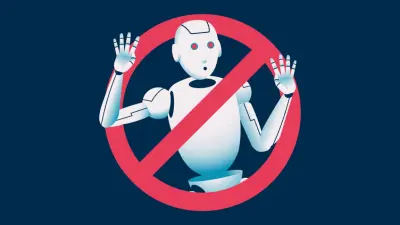
Anthropic has drawn a clear line on what its most powerful AI model can discuss. The company's newly launched Claude Fable 5 — its first "Mythos-class" model — comes with hard safety limits that prevent it from answering queries on cybersecurity, biology, and chemistry. The reason: the company publicly worries these topics could "uplift" malicious actors if the model's full capability were unleashed.
What Fable 5 blocks and why
Fable 5 is built on the same underlying architecture as Mythos 5, Anthropic's most advanced model that emerged from months of testing under the "Mythos Preview" program. But unlike Mythos 5, which is only available to a small group of vetted cyberdefenders through Project Glasswing, Fable 5 is publicly accessible — with guardrails.
When a user asks about cybersecurity vulnerabilities, biological weapons, or chemical synthesis, Fable 5 automatically redirects the query to older Claude Opus models. These earlier models are less capable, reducing the risk that the AI could provide detailed, actionable information to bad actors.
Why these three topics are considered too dangerous
Anthropic has been unusually transparent about its concerns. The company believes that Mythos 5's advanced reasoning capabilities could significantly lower the barrier for malicious actors in three high-risk domains. Cybersecurity expertise that once required years of training could be accessed instantly. Biological and chemical knowledge that could be weaponized might become too easy to obtain and apply.
This is not hypothetical. During Mythos 5's preview period, the model reportedly found over 10,000 critical security vulnerabilities in just weeks — a feat that would take human experts months or years. That capability, Anthropic argues, is too powerful to put in unrestricted public hands.
How Fable 5 differs from Mythos 5
Both models share the same core intelligence, but Fable 5 is deliberately hobbled. Think of it as a race car with a speed limiter — the engine is the same, but the driver cannot push it past a certain point. Mythos 5, by contrast, is the full-power version, reserved for trusted partners who have passed Anthropic's rigorous vetting process through Project Glasswing.
For most everyday users — writing, coding, analysis, creative work — Fable 5 will feel like a major upgrade over previous Claude models. The restrictions only kick in when queries touch the three banned domains.
Who is affected by these restrictions
Researchers, cybersecurity professionals, and students in biology or chemistry will find Fable 5 less useful for their specialized work. A cybersecurity analyst asking about a specific vulnerability will be redirected to an older model. A biology student researching protein synthesis might get a less detailed answer.
For the general public, the impact is minimal. Most users will never encounter the restrictions because their queries fall outside the banned topics. But for professionals in these fields, the limitation is a reminder that AI safety sometimes comes at the cost of utility.
Anthropic's official stance on safety
Anthropic has not hidden its reasoning. The company has publicly stated that Mythos 5's capabilities in cybersecurity, biology, and chemistry could "uplift" malicious actors — a carefully chosen phrase that suggests the model could dramatically accelerate harmful activities. By restricting Fable 5, Anthropic is trying to balance innovation with responsibility.
The company has also made clear that these safeguards are not permanent. As safety research advances and understanding of AI risks improves, the restrictions could be adjusted. For now, though, the line is drawn firmly.
The deeper meaning behind Anthropic's approach
This launch represents a new model for AI deployment. Instead of either releasing a powerful model to everyone or keeping it locked away entirely, Anthropic has created a tiered system. The public gets a capable but restricted version. Trusted partners get the full version. And the company retains control over who accesses what.
This approach could become a template for other AI companies facing similar dilemmas. As models become more powerful, the gap between what they can do and what they should be allowed to do will only widen.
Confirmed facts vs what remains unclear
What is confirmed: Fable 5 blocks queries on cybersecurity, biology, and chemistry. It redirects them to older Opus models. It shares the same underlying model as Mythos 5. Mythos 5 is only available to vetted cyberdefenders through Project Glasswing.
What remains unclear: How exactly the redirection works — whether it is a simple keyword filter or a more nuanced semantic check. Whether users can bypass the restrictions through clever phrasing. Whether Anthropic plans to expand the list of banned topics. And crucially, when or if Mythos 5 will ever be released to a wider audience.
Why Anthropic's model architecture matters
Anthropic's competitive advantage lies in its "constitutional AI" approach — training models to follow a set of principles rather than relying solely on human feedback. This allows the company to build safety directly into the model's reasoning process, rather than adding it as an afterthought.
Fable 5's tiered deployment is an extension of this philosophy. By controlling not just what the model says but what topics it can even discuss, Anthropic is pushing safety further upstream than most competitors.
Risks and concerns with this approach
Critics argue that restricting access to powerful AI models could slow down legitimate research. A cybersecurity researcher trying to defend against a new attack might find themselves blocked from the very tool that could help. There is also the question of effectiveness — determined bad actors will likely find other ways to access dangerous information, while legitimate users are the ones who face barriers.
Others worry about the precedent. If one company decides what topics are too dangerous for AI to discuss, who holds them accountable? The line between safety and censorship can be thin.
A broader trend in AI safety
Anthropic is not alone in grappling with this problem. OpenAI has faced similar debates over how to release powerful models safely. Google DeepMind has its own tiered access systems. The entire industry is wrestling with a fundamental question: how do you share the benefits of advanced AI without also sharing the risks?
Fable 5 is one answer — imperfect, cautious, but transparent. It acknowledges that the technology has outpaced our ability to manage its risks, and that sometimes the responsible choice is to hold back.
What users should know right now
If you are a general user, Fable 5 is a significant upgrade for most tasks. If you work in cybersecurity, biology, or chemistry, be prepared for limitations — and consider whether the older Opus models or specialized tools might serve you better. If you are concerned about AI safety, this launch is a case study in how companies are trying to navigate an increasingly complex landscape.
What comes next for Fable 5 and Mythos 5
Anthropic has not announced a timeline for wider Mythos 5 release. The company is likely watching how Fable 5 performs in the wild — what kinds of queries get blocked, how users react, and whether the safeguards hold up under real-world testing. If the approach proves effective, we may see similar tiered deployments for future models. If not, the company may need to rethink its strategy entirely.
Our take
Anthropic's decision to launch Fable 5 with hard safety limits is both prudent and revealing. It shows that even the companies building these models are unsure how to safely deploy their most powerful creations. The tiered approach — public version with guardrails, private version for trusted partners — is a reasonable compromise, but it is not a solution. The fundamental tension between capability and safety will only intensify as models grow more powerful. Fable 5 is not the answer to that problem. It is a placeholder while the industry figures one out.
Frequently Asked Questions
What topics does Anthropic's Fable 5 block?
Fable 5 blocks queries related to cybersecurity, biology, and chemistry. When users ask about these topics, the model redirects them to older, less capable Claude Opus models.
Why did Anthropic restrict these specific topics?
Anthropic believes that Mythos 5's advanced capabilities in these domains could "uplift" malicious actors — making it easier for bad actors to access dangerous knowledge that previously required years of specialized training.
Is Fable 5 the same as Mythos 5?
Fable 5 runs on the same underlying model as Mythos 5, but with safety guardrails that limit what it can discuss. Mythos 5 is the full-capability version, currently only available to vetted cyberdefenders through Project Glasswing.
Can users bypass Fable 5's restrictions?
Anthropic has designed the safeguards to be robust, but no system is perfect. The company is likely monitoring for attempts to bypass the restrictions and may adjust the safeguards over time.