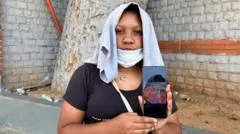
The ground had barely stopped shaking when María Rodríguez, 54, began clawing through the debris of her sister’s home in Los Teques, a town on the outskirts of Caracas. “Where is the government?” she screamed into the dust-filled air. “They have helicopters. They have soldiers. But they are not here.”
Two powerful earthquakes struck Venezuela within hours on Saturday, June 28, 2025 — a 6.8 magnitude tremor followed by a 5.9 aftershock — flattening homes, tearing open roads, and killing at least 42 people, according to official figures. But as the death toll rises, so does fury. Across the affected region, a single accusation echoes: the government has abandoned its people.
Survivors describe a slow, absent response
In San Antonio de los Altos, residents told reporters they waited more than 12 hours for any official rescue team to arrive. “We pulled three children out of the rubble with our own hands,” said a local shopkeeper, José Alvarez. “The army came this morning — to take photos, not to help.”
Videos circulating on social media show groups of men using crowbars and shovels, digging through collapsed concrete under the glow of mobile phone torches. No heavy machinery, no medical tents, no water trucks were visible in the first 24 hours, residents claim.
Why the government’s response is under fire
Venezuela’s state-run emergency management system, already weakened by years of economic crisis and infrastructure decay, appears to have buckled under the scale of the disaster. Critics argue that the government’s focus on political messaging — including televised statements from President Maduro — has come at the expense of on-ground relief.
“They are more interested in controlling the narrative than saving lives,” said a Caracas-based humanitarian worker who spoke on condition of anonymity. “We have reports of entire communities in Miranda state that have not seen a single official aid truck.”
How the earthquakes unfolded
The first quake, centered near the town of Cúa in Miranda state, struck at 2:47 p.m. local time on Saturday. Within hours, a second tremor hit closer to Caracas. The United States Geological Survey (USGS) recorded both as shallow earthquakes, meaning they caused more violent shaking at the surface.
By Sunday morning, the official death toll stood at 42, with more than 200 injured. But local journalists and civil defense volunteers say the real number could be higher, as many remote villages remain cut off by landslides and damaged roads.
Who is affected and what they are losing
The hardest-hit areas are working-class suburbs and rural towns where homes are often built with substandard materials — a legacy of Venezuela’s long-running housing crisis. For families like the Rodríguez family in Los Teques, the earthquake has erased everything: their home, their belongings, and their sense of security.
“We had nothing before. Now we have less than nothing,” said Carlos Rodríguez, María’s brother, standing next to a pile of bricks that was once his bedroom. “And the government tells us to wait. Wait for what? For us to die?”
What the government says
President Maduro addressed the nation on Sunday, declaring three days of national mourning and promising “all necessary resources” for recovery. Defense Minister Vladimir Padrino López said military units had been deployed to all affected areas, but acknowledged that “logistical difficulties” were slowing the response.
“We are doing everything possible,” Padrino said in a televised briefing. “But the damage is extensive, and the terrain is difficult.” Critics, however, point out that Venezuela’s military has long been used for political control rather than disaster relief, and that many of its resources are tied up in internal security operations.
Why the anger runs deeper than the earthquake
For many Venezuelans, the government’s slow response is not a surprise — it is the latest chapter in a long history of institutional failure. Years of hyperinflation, fuel shortages, and crumbling public services have left the state unable to meet basic needs. The earthquake has simply exposed how deep the rot has gone.
“This is not just about an earthquake,” said political analyst Luis Vicente León. “It is about a government that has lost the capacity to protect its citizens. The anger you see is the accumulation of years of neglect.”
Confirmed facts vs what remains unclear
Confirmed: At least 42 dead, 200+ injured, two earthquakes of magnitudes 6.8 and 5.9, widespread structural damage in Miranda state, military deployment announced by government.
Unclear: The exact number of missing persons, whether foreign aid has been formally requested, the full extent of damage in remote areas, and whether the government’s logistical claims are accurate or a cover for incompetence.
Risks and concerns emerging
Humanitarian groups warn that the lack of clean water and medical supplies could lead to disease outbreaks in makeshift shelters. Aftershocks continue to rattle the region, raising the risk of further collapses. There are also concerns that the government may use the disaster to crack down on dissent, as it has done in past crises.
“We are seeing reports of security forces preventing journalists from accessing certain areas,” said a press freedom advocate. “That is deeply worrying.”
A wider pattern of institutional failure
Venezuela’s earthquake response is the latest in a series of disasters — from the 2022 Las Tejerías floods to the ongoing humanitarian crisis — where the state has been accused of failing its people. The pattern is consistent: initial denial or downplaying, followed by slow action, and finally blame-shifting.
International organizations, including the United Nations, have offered assistance, but the Maduro government has historically been reluctant to accept foreign aid, citing sovereignty concerns.
What affected residents should know
For those in affected areas, civil society groups are organizing independent relief efforts. The Venezuelan Red Cross has set up emergency stations in Los Teques and San Antonio. Residents are advised to avoid damaged structures, conserve water, and stay tuned to local radio for updates. International aid agencies are urging the government to allow unimpeded access for humanitarian workers.
What could happen next
The immediate priority is search and rescue, but the window for finding survivors is closing. In the coming days, the focus will shift to shelter, food, and medical care for thousands of displaced families. Politically, the crisis could deepen public anger ahead of any future elections, though the government’s control over state media may limit the spread of dissent.
If the government fails to mount an effective recovery, the accusations of negligence could evolve into a broader legitimacy crisis.
Our Take
The earthquake in Venezuela is a natural disaster, but the suffering that follows is man-made. When a government cannot — or will not — reach its own citizens in their hour of greatest need, it raises fundamental questions about its purpose. The anger in Los Teques is not just about rubble and dust. It is about a state that has, for years, left its people to fend for themselves. This story is not over. The aftershocks, both literal and political, are still coming.
Frequently Asked Questions
Why are Venezuelans accusing the government of negligence after the earthquake?
Survivors say official rescue teams arrived late or not at all, leaving communities to dig through rubble without heavy equipment, food, or medical aid. Many believe the government prioritized political messaging over actual relief.
How strong were the earthquakes that hit Venezuela?
The first earthquake was a magnitude 6.8, followed by a 5.9 aftershock. Both were shallow, causing severe shaking and widespread damage in Miranda state near Caracas.
What has the Venezuelan government said about the earthquake response?
President Maduro declared three days of mourning and promised resources. The defense minister cited logistical difficulties, but critics say the military’s resources are tied up in internal security operations.
Is international aid being sent to Venezuela after the earthquakes?
The UN and other organizations have offered assistance, but the Maduro government has not formally requested widespread foreign help, historically citing sovereignty concerns.