Summary
As Tamil Nadu prepares for the Assembly elections on April 23, 2026, nearly 60,000 Sri Lankan Tamil refugees living in state-run camps will once again be unable to participate. Despite living in India for over four decades and raising families on Indian soil, these individuals remain excluded from the voting process due to a lack of citizenship. This long-standing exclusion has gained new attention following the implementation of the Citizenship Amendment Act (CAA), which provides a path to citizenship for other groups but leaves Sri Lankan Tamils in a legal limbo. The situation highlights a growing gap between social integration and political rights for a community that has known no other home for generations.
Question Answer Who took the action? The Indian electoral system and legal framework What happened? 60,000 refugees remain excluded from the upcoming Tamil Nadu elections When did it happen? Ongoing for 40 years; relevant to the April 23, 2026, election How much changed? Zero change in voting status despite decades of residency Why does it matter? It leaves a large, integrated community without a political voice Who is affected? Sri Lankan Tamil refugees and their Indian-born children What was the earlier level? Over 200,000 refugees lived in India at the peak of the conflict What happens next? Continued political pressure for citizenship and legal recognition
Main Impact
The primary effect of this continued exclusion is the creation of a permanent "outsider" class within Tamil Nadu. While these families are economically and socially part of the state, they have no say in the laws or leaders that govern their daily lives. This gap is most visible during election cycles, where camp residents watch the democratic process from the sidelines. The 2019 Citizenship Amendment Act has made this feel even more unfair, as it offers a fast-track to citizenship for certain religious minorities from neighboring countries but ignores the ethnic and linguistic persecution faced by Tamils in Sri Lanka.
Key Details
What Happened
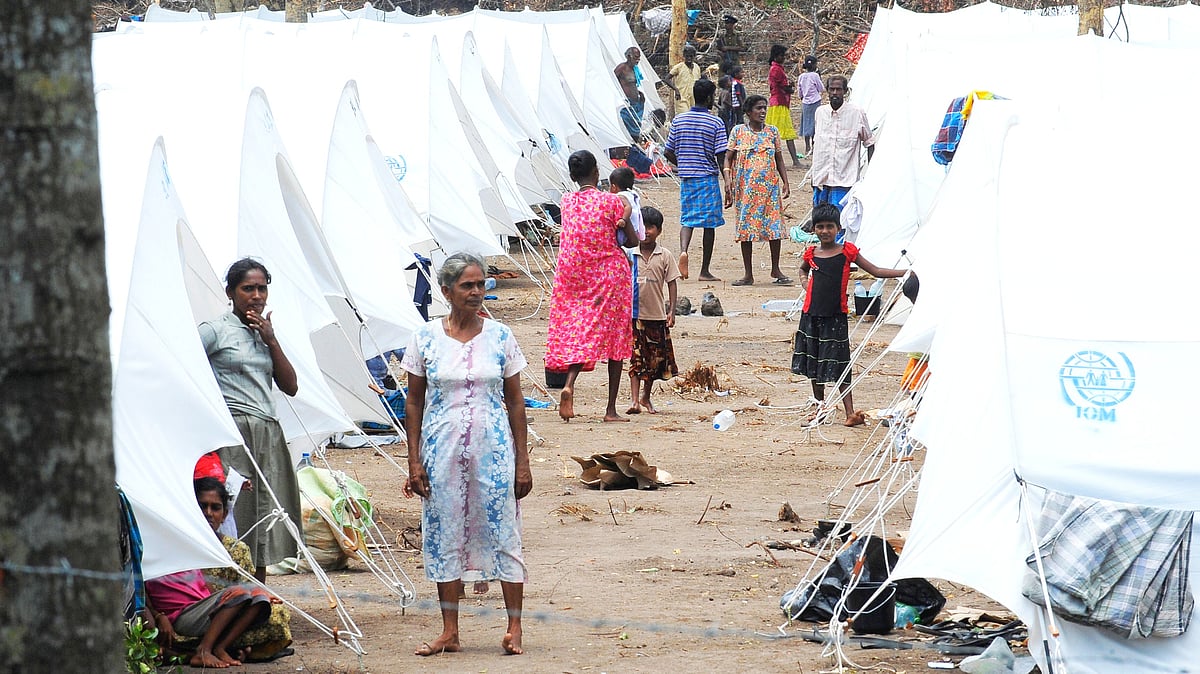
The migration of Sri Lankan Tamils to India began in earnest following the "Black July" riots of 1983. What started as a temporary search for safety turned into a forty-year stay as the civil war in Sri Lanka dragged on. Today, about 58,000 refugees live in 100 government-run camps across districts like Ramanathapuram, Madurai, and Salem. Many of these residents were born in India and have never stepped foot in Sri Lanka. They attend local schools, work in local markets, and speak the local dialect, yet they are legally classified as refugees rather than citizens.
Important Numbers and Facts
The following data points outline the scale of the refugee situation in Tamil Nadu and the legal barriers they face.
Key Fact Value Main group affected Sri Lankan Tamil refugees Election date April 23, 2026 Number of people in camps Approximately 58,000 to 60,000 Number of camps Over 100 across Tamil Nadu Start of major migration July 1983 (Black July) Current legal status Refugees / Non-citizens Main legal barrier Exclusion from the Citizenship Amendment Act (CAA) Next step Advocacy for naturalization and voting rights
Background and Context
To understand why these families are still in camps, one must look back to the ethnic conflict in Sri Lanka. The 1983 riots triggered a massive wave of displacement. India opened its doors on humanitarian grounds, setting up camps that were intended to be temporary shelters. However, India does not have a formal national law for refugees. Instead, it manages different groups through specific administrative orders. This lack of a clear legal path means that even those born in India after 1987 do not automatically get citizenship. They exist in a space where they are allowed to stay but are not allowed to belong.
Real Example or Practical Case
Consider the case of Jeyarani Selvaraj, a resident of the Kottapattu camp near Tiruchirappalli. Born in the camp in the early 1990s, Jeyarani has spent her entire life in Tamil Nadu. She was educated in Indian schools and follows Indian politics closely on television. On election day, while her neighbors head to the polling booths, she must stay home. Despite being culturally and linguistically indistinguishable from any other resident of Tiruchirappalli, her legal identity remains tied to a country she has never seen. Her situation is shared by thousands of young adults who are effectively stateless in the only land they know.
Who Is Affected
The people most affected are the second and third generations of refugees. Unlike their parents or grandparents, who may still have memories of Sri Lanka, the younger generation is entirely rooted in India. They face practical hurdles every day, such as limited access to certain government jobs, restrictions on buying property, and the inability to get a passport. Beyond the practical limits, there is a psychological toll. Being labeled a "refugee" after forty years creates a sense of permanent uncertainty and prevents these individuals from fully contributing to the economy and society.
Public or Industry Reaction
Political leaders in Tamil Nadu have grown increasingly vocal about this issue. Chief Minister M.K. Stalin has formally asked the Union government to grant citizenship to those who have lived in the state for decades. The DMK and other local parties argue that forty years is far too long for a "temporary" stay. On the other hand, legal scholars point out that the central government’s current policy creates a hierarchy where some refugees are prioritized based on religion, while others are left behind. This has led to criticism that the current system is selective rather than based on universal human rights.
Risks, Limits, or What to Watch
The biggest risk is the continued state of "permanent temporariness." Without a change in federal law, these 60,000 people will remain in a legal gray zone. There is also the risk of social frustration among the youth who feel they are being denied the rights they have earned through a lifetime of residency. Observers should watch for any updates to the CAA or new administrative rules that might allow for naturalization on a case-by-case basis. However, as long as citizenship is tied to specific religious criteria that exclude Sri Lankan Tamils, the path forward remains blocked.
What This Means Going Forward
The upcoming election will likely serve as a reminder of this unresolved issue. As political parties campaign, the demand for refugee rights will probably become a talking point in Tamil Nadu politics. In the long term, the Indian government may face pressure to move from a system of "managing" refugees in camps to a system of "integrating" them into the national fabric. For the families in the camps, the hope is that the definition of who belongs in India will eventually expand to include those who have spent their entire lives building the country from the margins.
Final Take
A person’s right to vote is the ultimate sign of belonging in a democracy, and denying that right to people who have lived in a community for forty years creates a hollow spot in the democratic process. These residents are neighbors, coworkers, and friends to many in Tamil Nadu, yet on the day that matters most for the state’s future, they are told their voices do not count.
Frequently Asked Questions
Why can't Sri Lankan Tamil refugees vote in India?
Only Indian citizens are allowed to vote. Since most Sri Lankan Tamil refugees have not been granted citizenship, they are not included in the electoral rolls, even if they have lived in India for decades.
Does the Citizenship Amendment Act (CAA) help these refugees?
No. The CAA specifically applies to non-Muslim minorities from Pakistan, Afghanistan, and Bangladesh. It does not include refugees from Sri Lanka, regardless of their religion or how long they have lived in India.
Can children born in the camps become Indian citizens?
It is very difficult. Under current Indian law, citizenship by birth is generally restricted to those born before July 1, 1987. Those born after that date usually need at least one parent to be an Indian citizen, which leaves most camp-born children in a legal limbo.