
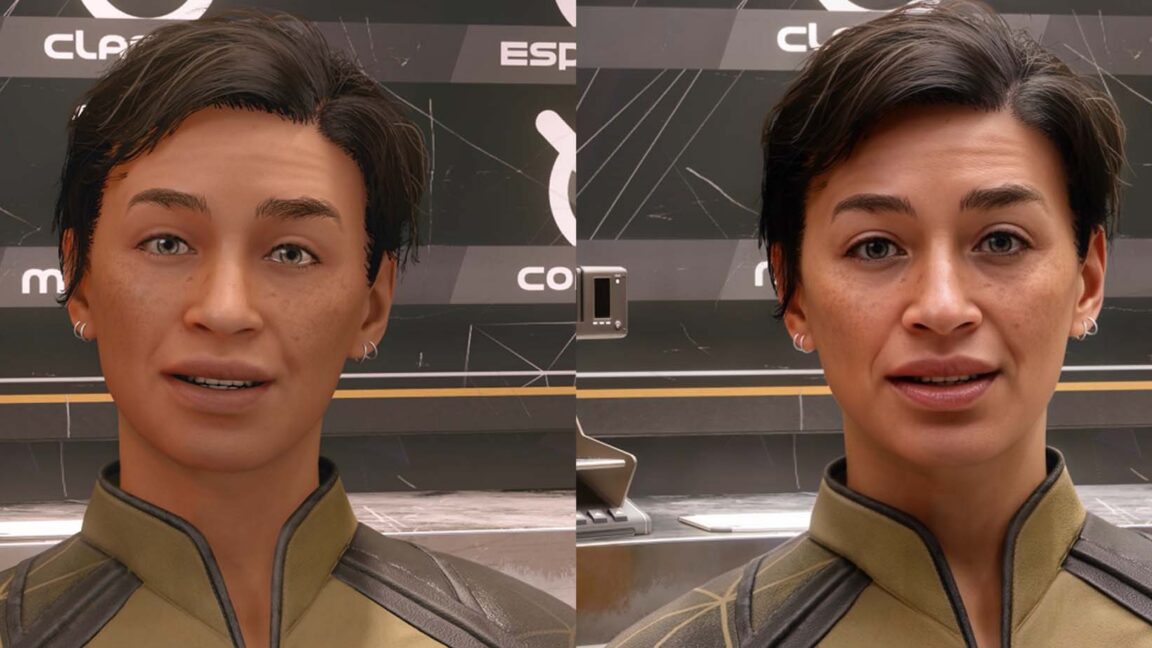
Gamers fear their favorite titles will lose their unique look to automated software. Nvidia CEO Jensen Huang defended DLSS 5 on March 23, 2026, after critics labeled its generative AI features as "AI slop." Huang told the Lex Fridman Podcast that the technology uses artist-guided 3D structures to maintain visual accuracy.
Jensen Huang defends DLSS 5 against "AI slop" claims on Lex Fridman Podcast
Nvidia CEO Jensen Huang addressed the growing backlash against the company's latest graphics technology during a two-hour interview with Lex Fridman. The discussion followed a week of criticism from the gaming community regarding DLSS 5 and its use of generative AI to enhance game visuals. Huang stated that he understands why users are worried because he also dislikes content that looks generic or artificial.
Huang explained that DLSS 5 is "3D conditioned" and "3D guided," which separates it from standard AI image generators. This means the software relies on the actual geometry and textures created by human game developers rather than inventing scenes from scratch. By using the "ground truth structure" of the game, the AI aims to sharpen the image without changing the artist's original vision.
The CEO noted that while many AI-generated images look similar and "beautiful," they often lack the specific intent of a human creator. He argued that DLSS 5 avoids this trap by acting as an enhancement tool for every single frame. This distinction suggests that Nvidia views the technology as a high-tech filter rather than a replacement for manual asset creation.
How Nvidia moved from simple upscaling to generative AI "glow-ups"
Nvidia first introduced Deep Learning Super Sampling (DLSS) to help computers run demanding games at higher resolutions without slowing down. Early versions focused on cleaning up jagged edges and filling in missing pixels using machine learning. Over time, the technology evolved to generate entire frames, a process known as frame interpolation, to make motion look smoother.
The reveal of DLSS 5 last week marked a shift toward "generative AI glow-ups," where the software adds detail that was never there in the first place. This transition mirrors how modern film studios use AI to de-age actors or clean up old footage. However, the gaming community reacted with "overwhelming disgust," according to reports from Ars Technica, fearing that games would start to look like blurry or distorted AI art.
Historical precedents in the industry show that gamers often resist automated changes to visual styles. When developers release "remastered" versions of classic games with AI-upscaled textures, fans frequently complain about the loss of the original atmosphere. Nvidia is now trying to prove that its fifth-generation software can add detail without erasing the soul of the game.
Why PC gamers fear the loss of original artistic intent in modern titles
The primary concern for PC gamers involves the loss of "artistic integrity," where a game no longer looks the way the creators intended. If an AI decides how a sunset or a stone wall should look, the specific choices made by environment artists might disappear. This group of enthusiasts values the "hand-crafted" feel of virtual worlds over the polished but hollow look of generative models.
Game developers also face a potential shift in their daily workflow. If DLSS 5 becomes the standard, studios might feel pressure to rely on AI to fix low-quality textures instead of finishing them by hand. This could lead to a future where games look great on high-end Nvidia hardware but appear unfinished or broken on other devices that lack these AI features.
The "AI slop" label specifically refers to the repetitive, overly smooth, and often nonsensical details found in cheap AI images. Gamers worry that if every game uses the same Nvidia AI model to "glow up" its graphics, every game will eventually look the same. This fear of visual sameness is what Huang attempted to counter by emphasizing the role of the original 3D structure.
How 3D conditioning allows artists to maintain control over AI rendering
The technical core of Huang's defense rests on how the AI interacts with the game engine. Unlike a standard AI that looks at a flat image, DLSS 5 looks at the underlying 3D data. This process ensures that the AI knows exactly where an object is and how it should move before it tries to make it look better.
This approach creates several immediate changes in how the software functions on a user's computer:
- The AI uses depth buffers and motion vectors to track objects in 3D space.
- Artists set the "ground truth" by defining the base textures and lighting limits.
- The software enhances existing details instead of generating entirely new objects or characters.
- Users can likely toggle these generative features on or off depending on their preference for "pure" graphics.
By keeping the AI "conditioned" by the 3D environment, Nvidia claims the software cannot hallucinate extra fingers on a character or put a tree where a building should be. This is like a coloring book where the human artist draws all the lines, and the AI is only allowed to choose the most realistic shades of paint. The goal is to provide a performance boost that looks better than traditional rendering.
The risk of visual "hallucinations" and repetitive AI aesthetics
Despite Huang's reassurances, the risk of AI "hallucinations"—where the software creates visual errors—remains a major concern. In fast-moving scenes, AI often struggles to keep up with changing light, leading to "ghosting" or shimmering effects. If DLSS 5 tries to generate complex details like skin pores or fabric weaves, these errors could become more distracting than helpful.
There is also the uncertainty regarding how this technology handles different art styles. While a realistic game like Cyberpunk 2077 might benefit from AI enhancements, a stylized game like Cuphead or Borderlands could be ruined by "realistic" AI textures. Nvidia has not yet shown how DLSS 5 adapts to non-realistic art, leaving a gap in what the public knows about the software's limits.
Execution risk is another factor, as the technology requires specific hardware to run. If the AI-generated "glow-up" only works on the newest, most expensive graphics cards, it could split the gaming market into two tiers. Those without the latest gear might see a version of the game that feels "unenhanced" or outdated compared to the AI-boosted version.
When developers will begin integrating DLSS 5 into new game engines
Nvidia has not yet announced a firm release date for the public version of DLSS 5. However, the company typically rolls out new versions of its Deep Learning Super Sampling alongside new generations of graphics hardware. Industry analysts expect the first wave of supported games to appear when Nvidia launches its next series of consumer GPUs.
Game developers must manually integrate the DLSS 5 plugin into their engines, such as Unreal Engine 5 or Unity. This means the "glow-up" features will not automatically appear in every old game in a user's library. Instead, studios will need to update their software to support the 3D conditioning that Huang described in his interview.
The next confirmed step for Nvidia is to provide technical documentation to its partners. This will allow developers to test if the AI truly respects their "ground truth structure" or if it requires too much manual tweaking to look right. Public demonstrations of these artist-guided features are expected at upcoming technology trade shows later this year.
Key Numbers and Facts
The confirmed figures behind this story at a glance.
Key Fact Detail Main person or organisation Jensen Huang, CEO of Nvidia Main action or decision Defended DLSS 5 against "AI slop" accusations Date or period March 23, 2026 Location Lex Fridman Podcast (Digital) Amount, figure, or scale Nearly two-hour interview duration Previous status DLSS 4 focused on frame generation Current status DLSS 5 introducing generative AI enhancements Primary effect AI uses 3D data to guide visual "glow-ups" Next confirmed step Developer integration and technical testingThe tension between automated efficiency and human creativity in gaming
The debate over DLSS 5 is about more than just frame rates; it is about who controls the final look of digital art. Jensen Huang's defense suggests that Nvidia is trying to find a middle ground where AI does the heavy lifting while humans keep the steering wheel. This approach acknowledges that while AI can make things "beautiful," it cannot yet replicate the specific, messy, and intentional choices of a human artist.
As rendering becomes more automated, the value of "ground truth" data—the original work of the developer—becomes the only thing preventing games from looking like a generic stream of AI content. The success of DLSS 5 will likely depend on whether gamers can actually tell the difference between an artist's vision and an AI's guess. If the technology works as Huang claims, it could change how games are made, but if it fails, "AI slop" may become the new standard for the industry.
Frequently Asked Questions
What is DLSS 5 and how does it work?
DLSS 5 is Nvidia's latest graphics technology that uses generative AI to enhance the visual quality of video games. It works by analyzing the 3D structure and motion data of a game to add realistic details and textures. Unlike previous versions that mostly focused on resolution, this version can "glow up" a scene by adding new visual information.
Why are gamers calling DLSS 5 AI slop?
Gamers use the term "AI slop" to describe generic, blurry, or repetitive images created by artificial intelligence that lack human artistic touch. The concern is that DLSS 5 will make all games look the same or introduce weird visual errors that ruin the original art style. Critics fear that the software will prioritize artificial polish over the hand-crafted details made by developers.
Can I turn off the generative AI features in DLSS 5?
Nvidia typically designs DLSS features as optional settings within a game's graphics menu. While specific software toggles for DLSS 5 have not been shown yet, previous versions allow users to choose between different levels of quality or turn the feature off entirely. This gives players the choice to see the "pure" game graphics or the AI-enhanced version.