Summary
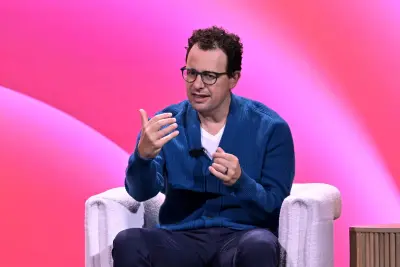
Jensen Huang, the CEO of Nvidia, believes that the rise of artificial intelligence will change the job market slowly rather than all at once. While some people fear that AI will cause immediate and massive job losses, Huang suggests the transition will be gradual. He predicts that as some old roles disappear, strange new industries will emerge, such as a fashion market for robot clothing. This shift marks a move toward "physical AI," where technology moves out of computers and into the real world through robotics.
Main Impact
The primary impact of this trend is the shift toward robotics as a major part of the global economy. Nvidia is now focusing on what they call "physical AI," which involves building the brains for robots that can interact with the physical environment. Huang views this as a trillion-dollar opportunity. This change will likely force workers to move away from repetitive manual tasks and toward roles that require human judgment, creativity, or the maintenance of these new robotic systems.
Key Details
What Happened
During recent public discussions and at Nvidia’s GTC event, Jensen Huang shared his vision for the future of work. He explained that jobs consisting of simple, routine actions are the most at risk. He used the example of a food processor replacing someone whose only job is to chop vegetables. However, he noted that complex professions, such as radiology, are safer. While AI can look at medical images, the human doctor is still needed to interpret those images and make a final diagnosis for the patient.
Huang also introduced the idea that robots will eventually become a part of daily life, leading to a demand for robot personalization. He suggested that people will want their personal robots to look unique, which could create an entirely new industry for robot clothing and accessories. While this sounds like a joke to some, it represents the idea that new technology always creates new, unexpected types of work.
Important Numbers and Facts
The scale of potential change is massive. A study from the Massachusetts Institute of Technology (MIT) indicates that AI is already capable of performing tasks that make up about 12% of all jobs in the United States. This affects approximately 151 million workers who earn a combined total of over $1 trillion in wages. Additionally, financial experts from Bank of America have predicted that by the year 2060, more people will own a humanoid robot than a car. This shows that the market for these machines is expected to grow into the billions.
Background and Context
The conversation around AI and jobs has become a major topic for tech leaders. Some, like Geoffrey Hinton, who is often called the "Godfather of AI," have warned that the technology could lead to high levels of unemployment. They worry that companies will choose cheap software over human workers to save money. Elon Musk, the CEO of Tesla, has gone even further. Musk believes that in the next 10 to 20 years, work will become optional because robots will be able to do almost everything for us. He even suggested that the cost of labor could drop to zero, making traditional money less important.
Nvidia is at the center of this change because they make the powerful computer chips that run AI systems. By focusing on robotics, they are trying to move AI from being a tool on a screen to a machine that can walk, talk, and help people in their homes and factories.
Public or Industry Reaction
The reaction to these predictions is mixed. While tech CEOs are excited about the possibilities, there are growing concerns about safety and privacy. For example, a recent incident where a person gained access to thousands of robot vacuums highlighted the risks of bringing AI into the home. These machines often have cameras and microphones, which could be hacked if not properly secured. Furthermore, the high cost of advanced robotics is currently a barrier. Some robot dogs used for security at data centers cost as much as $300,000 each, meaning it will take time before average people can afford this technology.
What This Means Going Forward
As AI adoption continues, the job market will likely split into two directions. Simple, repetitive jobs will continue to be automated by machines. At the same time, new roles will appear that focus on managing, repairing, and customizing these machines. Workers may need to learn new skills to stay relevant in an economy where they work alongside robots. The transition will not happen overnight, giving society some time to adjust to these new tools. However, the long-term goal for many tech companies is a world where robots handle the hard labor, leaving humans to focus on more creative or personal tasks.
Final Take
The future of work is not necessarily a choice between humans and machines, but rather a shift in what humans do. While the idea of a robot tailor might seem strange today, it serves as a reminder that technology rarely just destroys jobs—it changes them. As AI moves into the physical world, the way we live and work will continue to transform in ways we are only beginning to understand.
Frequently Asked Questions
Will AI cause immediate mass layoffs?
According to Nvidia CEO Jensen Huang, AI adoption will be gradual. While some jobs will change or disappear, he does not expect a sudden spike in unemployment in the near future.
Which jobs are most at risk from AI?
Jobs that involve repetitive, routine tasks are the most likely to be replaced by machines. Roles that require complex thinking, emotional intelligence, or interpretation are much harder for AI to perform.
What is "physical AI"?
Physical AI refers to artificial intelligence that is built into robots or machines that interact with the real world. This is different from digital AI, like chatbots, which only exist on screens or in software.