

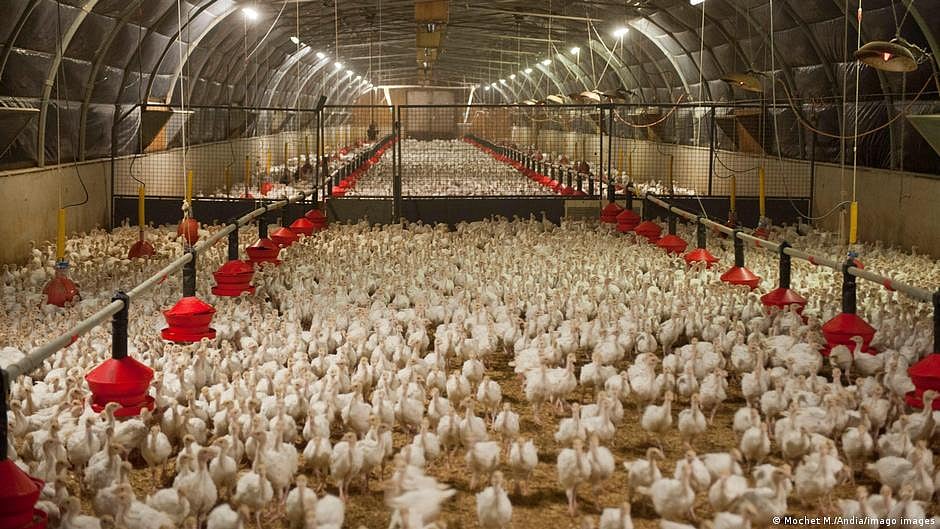
Bilaspur District Collector Sanjay Agrawal ordered the culling of poultry and established containment zones on March 25, 2026, after avian influenza killed 4,400 chickens at a government farm in Koni, Chhattisgarh. This outbreak forces the destruction of all birds and eggs within a one-kilometre radius to stop the virus from spreading to humans or other farms.
Bhopal laboratory confirms avian influenza in Koni poultry samples
Dr GS Tanwar, Joint Director of the Veterinary Department, confirmed that 4,400 chickens died at the state-run facility between March 19 and March 24. The farm originally housed 5,037 birds, meaning nearly 90 per cent of the flock died within five days. This rapid death rate prompted immediate testing to identify the cause of the mass mortality.
The department sent biological samples to specialized laboratories in Bhopal and Pune for testing. The National Institute of High Security Animal Diseases in Bhopal verified the presence of the avian influenza virus in the deceased poultry. This lab confirmation allows the district administration to trigger emergency protocols that are only used for high-risk viral outbreaks.
District Collector Sanjay Agrawal issued the containment order immediately after receiving the lab results. He directed the Veterinary Department and local police to seal the area to prevent any accidental spread of the virus through feathers, droppings, or contaminated clothing. Strict entry and exit rules now apply to the Koni facility and its immediate surroundings.
Rapid Response Teams are now on the ground to handle the disposal of the remaining birds. These teams wear full protective gear to ensure the virus does not transfer from the animals to the workers. Their work includes the culling of the surviving 637 chickens and the deep burial of carcasses in lime-lined pits.
Revised Action Plan of 2021 guides Bilaspur emergency response
The current containment efforts follow the Revised Action Plan for Prevention and Containment of Avian Influenza (2021). This national policy provides a step-by-step guide for state governments to handle bird flu outbreaks. By following this plan, the Bilaspur administration aims to repeat the successful containment seen in previous Indian outbreaks where the virus was stopped at the source.
In past years, bird flu outbreaks in India have often occurred during the spring months when migratory birds move across state borders. These wild birds often carry the virus and pass it to domestic poultry at water sources or open-air farms. The Koni farm outbreak follows this seasonal pattern, which helps officials predict where the virus might appear next.
The 2021 plan requires the creation of two distinct zones to manage the risk. The first is an "infected zone" where the virus is active, and the second is a "surveillance zone" where officials watch for new cases. This dual-zone system acts as a buffer to protect the wider district from a full-scale epidemic.
Poultry owners and farm workers face immediate health and economic impact
The outbreak has a direct effect on the livelihoods of poultry owners located within the one-kilometre infected zone. Under the current orders, all poultry, eggs, and bird feed in this area must be destroyed to remove any trace of the virus. This means local sellers cannot trade their products, leading to a total loss of income for the duration of the quarantine.
The Animal Husbandry Department has stated it will provide compensation to these affected owners. This financial aid helps prevent farmers from hiding sick birds, which would otherwise lead to a wider spread of the disease. Compensation rates are usually set based on the age and type of the birds destroyed during the culling process.
Health officials are also focusing on the workers who were in contact with the infected chickens at the Koni farm. These individuals are undergoing medical checks to monitor for flu-like symptoms such as fever, cough, or sore throat. While bird flu primarily stays within bird populations, the risk of human infection requires constant monitoring of those on the front lines.
The district health department will provide antiviral medicine to any worker showing symptoms of illness. This proactive medical care is a standard safety measure to stop the virus from adapting to human hosts. So far, no human cases have been reported in the Bilaspur district or the wider state of Chhattisgarh.
Strict movement bans and culling operations begin in Koni
The administration has implemented several ground-level changes to control the movement of the virus. These measures affect how poultry is handled and sold across the district. The following changes are now in effect:
- A one-kilometre radius around the Koni farm is declared an "infected zone" where no birds or eggs can enter or leave.
- A ten-kilometre radius is designated as a "surveillance zone" where officials will monitor all poultry for signs of illness.
- All poultry markets within the affected areas are closed until further notice to prevent the sale of potentially infected meat.
- Warning notices and banners are being installed at all entry points to the Koni area to alert the public of the quarantine.
- Police checkpoints are being set up to inspect vehicles carrying livestock or poultry products through the district.
These rules change the daily routine for meat shops and transport companies in Bilaspur. By stopping the movement of birds, the administration cuts off the primary path the virus uses to travel between different farms. This "freeze" on the industry is expected to last until the culling and sanitation processes are fully finished.
Uncertainty remains over the specific viral strain and source
While the Bhopal lab confirmed avian influenza, the specific strain of the virus has not been publicly named in the initial reports. Different strains, such as H5N1 or H5N8, carry different levels of risk for humans and other animals. Knowing the exact strain is necessary for health officials to decide which antiviral treatments will be most effective.
The source of the infection at the government-run farm also remains unknown. Officials have not yet determined if the virus arrived through wild birds, contaminated feed, or the movement of people. Identifying the source is a major challenge because the virus can survive on surfaces like truck tyres or shoe soles for several days.
There is also a risk that the virus could spread to backyard poultry in nearby villages before the surveillance teams can reach them. Small-scale farmers often keep birds in open areas where they can mix with wild birds. This makes it harder to enforce the quarantine compared to a fenced government facility.
Sanitation and farm sealing to follow culling process
Once the Rapid Response Teams finish culling the remaining birds, they will start a deep cleaning of the Koni poultry farm. This involves using chemical disinfectants on all surfaces, cages, and equipment. This sanitation step is required to kill any virus particles that might be lingering in the environment.
After the cleaning is done, the government-run farm will be sealed. No new birds will be allowed into the facility for a period determined by the Veterinary Department. This "rest period" ensures that the virus has completely died out before the farm can start operating again.
Health officials will continue to monitor the 10-kilometre surveillance zone for the next few weeks. If no new bird deaths are reported in this area, the restrictions on poultry markets and transport may be lifted. The District Collector is expected to review the situation after the initial culling and sanitation reports are submitted.
Key Numbers and Facts
The confirmed figures behind this story at a glance.
Key Fact Detail Main person or organisation Government-run poultry farm in Koni / Bilaspur District Administration Main action or decision Culling of poultry and establishment of containment zones Date or period March 19 to March 25, 2026 Location Koni area, Bilaspur district, Chhattisgarh Amount, figure, or scale 4,400 chickens dead; 5,037 total birds at the facility Previous status Normal operations at the state-run poultry farm Current status Infected zone established; culling operations active Primary effect Destruction of poultry, eggs, and feed within 1km radius Next confirmed step Sanitation of the farm and sealing of the facility
Strict enforcement of the surveillance zone is the only way to prevent a district-wide crisis
The outbreak at the Koni farm serves as a reminder of how quickly avian influenza can devastate a poultry population. By losing 90 per cent of its birds in less than a week, the facility showed that the virus is highly aggressive. The government's decision to use the 2021 Revised Action Plan immediately shows that they are treating this as a high-priority threat to both the economy and public health.
The success of this containment depends entirely on the strict enforcement of the 10-kilometre surveillance boundary. If the virus stays within the Koni area, the impact on the rest of Chhattisgarh will be limited. However, any delay in culling or any breach of the transport ban could allow the virus to reach private commercial farms, leading to much larger losses for the state's agriculture sector.
Frequently Asked Questions
Is it safe to buy or eat chicken in Bilaspur right now?
Poultry markets within the 10-kilometre surveillance zone around Koni are closed, but the administration has not issued a district-wide ban. Health officials generally advise that poultry is safe to eat if it is cooked thoroughly at high temperatures, which kills the virus. However, residents should follow all local orders regarding market closures and avoid buying meat from unauthorized sellers in the affected areas.
What should I do if I find a dead bird in my backyard?
Do not touch or move the dead bird with your bare hands. You should immediately report the finding to the local Veterinary Department or the district administration helpline. Officials will send a team to collect the bird safely and test it for avian influenza to see if the virus has spread beyond the current containment zones.
How long will the bird flu restrictions stay in place?
Restrictions usually remain until the culling is finished and a mandatory sanitation period is completed. This process often takes several weeks, as officials must ensure no new cases appear in the 10-kilometre surveillance zone. The District Collector will issue a formal order to lift the movement ban only after the Veterinary Department confirms the area is virus-free.