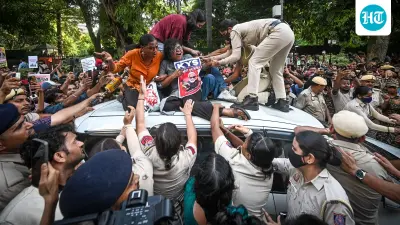
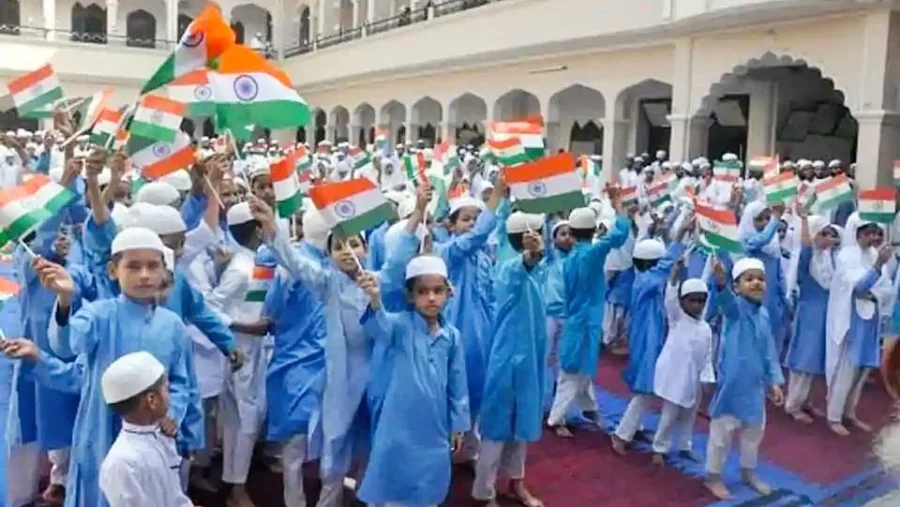
In a move that has already divided opinions across the political and social spectrum, the West Bengal government has made the singing of Vande Mataram compulsory in all recognised madrasas, government schools, SSKs (Siksha Sahayak Kendras) and MSKs (Madhyamik Siksha Kendras) across the state. The directive, issued through an official order from the Directorate of Madrasa Education, mandates the national song be sung during daily morning prayer assemblies. While the government says the decision is aimed at promoting nationalism and patriotism, critics argue that forcing an expression of patriotism — especially in minority institutions — raises uncomfortable questions about freedom and choice.
What the New Order Says About Vande Mataram in Bengal's Madrasas and Schools
The official order, circulated from Bikash Bhavan to all district magistrates, district education officers, the West Bengal Board of Madrasa Education and other concerned departments, is clear in its intent. It states that approval for the decision was obtained from the competent authorities before implementation. Under the new directive, every recognised madrasa, government school, SSK and MSK must include Vande Mataram as a compulsory part of the morning assembly. The order does not specify any exceptions or opt-out provisions, making it a blanket mandate across all state-run and state-aided educational institutions.
Why This Matters Right Now
This is not just about a song. It is about the intersection of education, religion, and state power in one of India's most politically sensitive states. West Bengal has a significant Muslim population, and madrasas — both government-recognised and private — have long been a subject of political debate. By making Vande Mataram compulsory in madrasas, the government is sending a clear signal about national identity. But for many, the question remains: can love for one's country be mandated? And what happens when a symbol of patriotism is perceived as a tool of political messaging? The emotional stakes are high, and the consequences could shape the discourse around secularism and nationalism for years to come.
How the Order Unfolded: From Bikash Bhavan to Every Classroom
The directive was not sudden. Reports suggest that the decision had been under consideration for some time within the state's education department. The official order was finally issued by the Directorate of Madrasa Education, a wing of the state's Minority Affairs and Madrasa Education department. The order was then sent to district-level officials for implementation. The West Bengal Board of Madrasa Education, which oversees the curriculum and administration of recognised madrasas, has been instructed to ensure compliance. The timeline for full implementation is immediate, meaning schools and madrasas are expected to begin the practice from the next working day after receiving the order.
Who Is Affected and What Officials Are Saying
The order directly impacts lakhs of students across West Bengal. This includes students in government schools, government-aided schools, and all recognised madrasas — both senior and junior levels. SSKs and MSKs, which are community-based learning centres, are also covered. The Minister in-charge of Minority Affairs and Madrasa Education, Khudiram Tudu, confirmed the development, stating that the move is part of a broader effort to instil a sense of national pride among students. "Vande Mataram is our national song. Every citizen should feel proud to sing it," he said. However, opposition parties and some Muslim organisations have expressed concern, arguing that the decision could be seen as an imposition on minority institutions.
What We Know So Far — and What Remains Unclear
What we know: The order is official, signed, and circulated. It applies to all recognised madrasas, government schools, SSKs and MSKs. The government has stated that approval was obtained from competent authorities. The minister has publicly supported the move.
What remains unclear: Whether there is any provision for students or institutions that object on religious or personal grounds. The order does not mention any exemption or alternative arrangement. It is also unclear how compliance will be monitored and what penalties, if any, exist for non-compliance. The reaction from the wider Muslim community and madrasa management bodies is still unfolding.
Risks, Concerns, and the Balanced View
Supporters argue: Vande Mataram is a national song, not a religious one. Making it compulsory in all educational institutions promotes unity and national identity. It is already sung in many government schools across India. The move is a step towards integrating madrasa education with the mainstream.
Critics argue: Forcing any expression of patriotism, especially in minority institutions, can be counterproductive. Some Muslim scholars have historically raised objections to certain verses of Vande Mataram, viewing them as conflicting with Islamic monotheism. The lack of an opt-out clause raises concerns about coercion. The move could also be seen as a political gesture ahead of elections.
The balanced view: While promoting national pride is a legitimate goal, the method matters. A compulsory mandate without dialogue or accommodation may create resentment rather than unity. The government could have chosen to encourage the practice rather than enforce it. The long-term impact on trust between the state and minority communities will depend on how sensitively the order is implemented.
Why Similar Debates Are Growing Across India
This is not an isolated incident. In recent years, several states have made Vande Mataram or the national anthem compulsory in schools. Uttar Pradesh, under Chief Minister Yogi Adityanath, has also pushed for mandatory singing of Vande Mataram in all schools. The debate over the song's religious connotations has resurfaced multiple times in Indian history, most notably during the 2006 controversy when some Muslim clerics objected to its singing in madrasas. The issue touches on deeper questions about secularism, majoritarianism, and the definition of Indian identity. As political parties increasingly use cultural symbols to consolidate their base, educational institutions have become a battleground for these larger ideological wars.
- The 2006 controversy saw the All India Muslim Personal Law Board advising Muslims not to sing Vande Mataram, citing religious objections.
- The Supreme Court in 2016 made the national anthem mandatory in all cinemas, sparking its own set of debates.
- Several states have made the national anthem compulsory in schools, but madrasas have often been exempted or left to discretion.
"Vande Mataram is our national song. Every citizen should feel proud to sing it." — Khudiram Tudu, Minister in-charge of Minority Affairs and Madrasa Education, West Bengal
What Students, Parents, and Madrasa Authorities Should Know Now
For students and parents in madrasas and government schools, the immediate takeaway is simple: the singing of Vande Mataram is now a mandatory part of the morning assembly. There is no official exemption process mentioned in the order. Madrasa authorities are expected to comply. However, if any institution or individual has concerns, they may approach the district education officer or the West Bengal Board of Madrasa Education for clarification. It is advisable for madrasa management committees to document any concerns formally and seek written responses from the authorities. Parents who wish to raise objections should do so through proper channels rather than refusing compliance outright, as that could lead to disciplinary action.
What Could Happen Next
The immediate future will likely see a period of compliance mixed with quiet resistance. Some madrasas may comply without protest, while others may seek legal recourse. Opposition parties, particularly the BJP which has been critical of the Trinamool Congress government's handling of minority affairs, may use this issue to attack the government from both sides — accusing it of either doing too little or doing it for the wrong reasons. The matter could also reach the courts if a petition is filed challenging the mandatory nature of the order. In the longer term, the success of the move will depend on whether it fosters genuine patriotism or becomes another flashpoint in India's ongoing culture wars.
Our Take: Why This Story Matters Beyond One Incident
This is not just about a song in a morning assembly. It is about how a state chooses to define nationalism and who gets to decide what patriotism looks like. In a diverse country like India, symbols of national pride can unite or divide depending on how they are used. Making Vande Mataram compulsory in madrasas could be a genuine attempt at integration, or it could be a political move that alienates the very communities it claims to unite. The answer will depend on the spirit in which it is implemented — with dialogue and respect, or with rigidity and force. For now, the debate is open, and the stakes are high.
FAQs
Is Vande Mataram now compulsory in all madrasas in West Bengal?
Yes. The West Bengal government has made singing Vande Mataram mandatory in all recognised madrasas, government schools, SSKs and MSKs during daily morning prayer assemblies. The order was issued by the Directorate of Madrasa Education.
Why is the Vande Mataram mandate in Bengal's madrasas controversial?
The controversy stems from historical objections by some Muslim scholars who view certain verses of Vande Mataram as conflicting with Islamic principles of monotheism. Critics also argue that forcing any expression of patriotism, especially in minority institutions, raises questions about freedom of conscience and choice.
Can madrasas or students opt out of singing Vande Mataram in West Bengal?
The official order does not mention any exemption or opt-out provision. It mandates the singing of Vande Mataram as a compulsory part of the morning assembly. Institutions or individuals with concerns are advised to approach district education authorities or the West Bengal Board of Madrasa Education for clarification.
What does the West Bengal government say about making Vande Mataram compulsory?
The government, through Minister Khudiram Tudu, has stated that the move is aimed at promoting nationalism and patriotism. Officials say Vande Mataram is the national song and every citizen should feel proud to sing it. The order states that approval was obtained from competent authorities before implementation.